

NovaStar TU40 Pro Specifications: Everything You Need to Know
2026-02-26T03:52:39+00:00February 26, 2026|Tags: FAQs NovaStar|
Colorlight X8m Ultra-4K LED Video Processor Review: Performance, Features & Advantages
2026-02-02T03:18:55+00:00February 13, 2026|Tags: FAQs Colorlight|
HUIDU HD-VP620 LED Display All-In-One Video Processor
2026-02-02T03:02:40+00:00February 2, 2026|Tags: FAQs HuiDu|
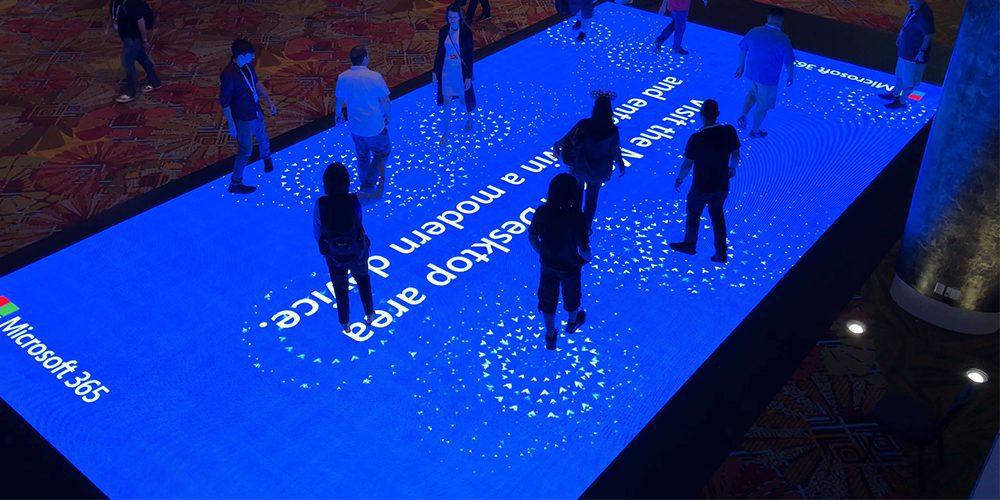
A floor LED screen turns the ground into a dynamic communication surface. Instead of asking people to look up at a wall, the visuals and interactions meet them at floor level, where movement, wayfinding, and attention naturally converge. In retail, a digital interactive floor LED screen for events can guide foot traffic and spotlight products. On stage, a choreographed LED dance floor syncs with lighting and sound for impactful live moments. In exhibits, an interactive LED floor display invites exploration and rewards curiosity.
At its core, a floor LED screen is a modular, walkable LED system built for high loads, close viewing, and frequent cleaning. When interactivity is required, sensor layers map footsteps or motion and trigger content in real time. Because the display sits in a high-traffic zone, the engineering differs from wall screens: sealed electronics, anti-slip surfaces, reinforced frames, and service access from above. The result is not only a screen people notice, but one they use, intentionally.
This guide explains the basics of what floor LED screens are, how they work, important features, the best formats to use, factors that influence the price of LED floor displays, and more.
Table of Content
1.What is a Floor LED Screen?
A floor LED screen is a walkable LED surface built from modular LED floor tiles (or LED floor display panels) that lock together to form a seamless, load-bearing canvas. The tiles integrate a protected LED module, a tempered or polycarbonate wear layer, and a structural frame that distributes weight across cabinets.
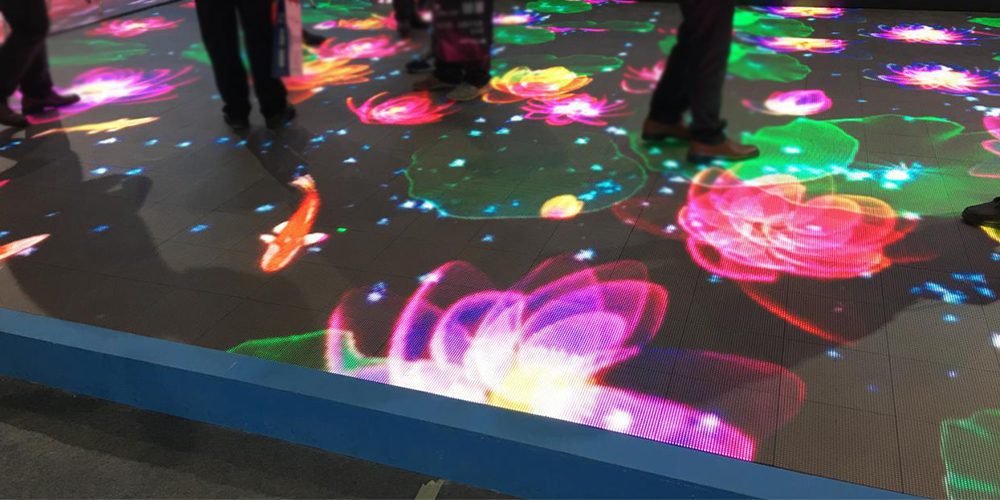
1)How floor builds differ from wall builds
- Surface and traction:Anti-slip, anti-scratch tempered glass or engineered polycarbonate is standard for LED floor screen use. The finish maintains grip after repeated cleaning.
- Load rating:Public deployments typically specify ≥1,000–2,500 kg/m² to withstand dense crowds, stage risers, and rolling flight cases.
- Ingress protection:Sealing and gasketing protect electronics from dust and liquids. Indoor configurations often target IP54; outdoor or wet-mop regimes push to IP65.
- Viewing geometry and pitch:Audiences stand on or right next to the display. Pixel pitches of 2.6–6.25 mm are common, selected by viewing distance and budget.
- Serviceability:Top access is valuable. A single LED floor tile can be lifted for module or power replacement without removing a surrounding grid.
2)What the format enables
- Events and stages:A floor-level LED stage screen extends choreography, adds camera depth, and synchronizes with lighting.
- Retail and showrooms:Immersive LED flooring supports guided paths, product hotspots, and seasonal brand visuals.
- Exhibitions and education:A digital interactive floor transforms passive viewing into discovery, step-to-reveal, zone-based prompts, collaborative effects.
- Hospitality and corporate:Lobbies and experience centers use a floor LED screen to set arrival tone and refresh content without structural change.
In short, a floor LED screen is not a wall turned horizontal; it is a purpose-built system for close viewing, high traffic, and operational reliability, with optional interactivity when the brief calls for it.
2.How Interactive LED Floors Work
When interactivity is required, the interactive LED floor display adds detection and control layers to the standard floor LED screen stack. The goal is consistent sensing, low latency, and content that feels precisely aligned with the user’s movement.
2.1 Typical stack (top to control):
(1)Wear layer:Tempered glass or polycarbonate with a micro-texture (traction) and optical treatments (anti-glare). The surface disperses point loads and resists scratches from varied footwear.
(2)LED module array:RGB modules within the LED floor display panel define pixel pitch and brightness. Indoors, 800–1,500 nits is common; outdoors, 3,500–5,000 nits helps in full sun.
(3)Sensor layer:
-
- Pressure(load mapping per tile) for step-accurate triggers.
- Infrared matricesfor non-contact motion across zones.
- Camera tracking(overhead or embedded) for multi-user interactions and gestures.
Some projects blend modalities to balance precision, responsiveness, and cost.
(4)Support frame and cabling:The frame keeps tiles level, routes power/data safely, and supports top-side service. Cable routing prevents hot spots and signal noise.
(5)Controller and media server: The control system ingests sensor events, maps locations to the canvas, and renders or plays content in real time. For shows, timecode (SMPTE), OSC/MIDI, or DMX/Art-Net syncs the LED interactive display with lighting and audio.
2.2 Interaction flow (step-to-visual):
- Detection:Footfall produces a localized signal; the system resolves a coordinate or zone.
- Mapping:Coordinates translate to content triggers on the same canvas region.
- Playback/composition:The engine composites a ripple, particle bloom, path trace, or branded animation.
- System sync:Optional triggers cue lighting or sound, so the floor LED screen participates in a cohesive scene.
2.3 Design choices that preserve realism
- Latency targets:≤60 ms feels immediate; >120 ms becomes noticeable. Wiring, controller selection, and content engine affect responsiveness.
- Calibration:The physical tile grid must match the logical canvas. Misalignment shifts effects away from the actual step location.
- Zoning:Retail and exhibit deployments often use zone logic (entrance, product bay, exit) to reduce false triggers and keep content legible.
- Content restraint:High-contrast, fast patterns can create glare or visual noise, especially on camera. Effects that “breathe” rather than strobe improve comfort and legibility.
- Safety:Anti-slip ratings, rounded edges, and stability are non-negotiable; spares and top access reduce downtime in public spaces.
The outcome is an LED interactive display that feels intentional: steps register where they land, visuals follow smoothly, and the floor LED screen integrates with lighting, sound, and cameras without visible lag.
3.Key features and importance of floor LED screens
Choosing a floor LED screen comes down to matching real-world conditions with the right hardware and control system. The features below drive performance, usability, uptime, and total cost for any LED floor screen deployment.
3.1 Load capacity (≥1,000–2,500 kg/m²)
High load ratings keep a floor LED screen flat under crowds and rolling gear, maintain tight seams between LED floor tiles, and protect solder joints. On stages with dollies or set pieces, specify the upper end to protect the LED stage screen over time.
3.2 Ingress protection (IP54–IP65)
Dust, cleaning liquids, and spills are routine on a floor LED screen. IP65 LED floor screens (dust-tight, water-jet resistant) suit outdoor plazas and wet-mop interiors; IP54 fits many dry indoor venues. Proper sealing extends the life of LED floor display panels and keeps brightness consistent.
3.3 Surface finish and slip resistance
Anti-slip micro-texture and anti-glare coatings reduce incidents and reflections, critical on a LED dance floor, in retail aisles, and along museum paths. A safer surface keeps the interactive LED floor display usable without compromising image quality.
3.4 Pixel pitch (2.6–6.25 mm typical)
Tighter pitch keeps text and patterns crisp at close range for retail and exhibits (2.6–3.9 mm). Larger atriums and stages can use 4.8–6.25 mm to balance clarity and cost. Correct pitch minimizes moiré for cameras pointed at the floor LED screen.
3.5 Brightness and optics
Indoors, ~800–1,500 nits preserves legibility without glare; outdoors, 3,500–5,000 nits cuts through sunlight. Optics that direct light slightly upward improve readability for people standing on the LED floor screen and help cameras render the immersive LED flooring cleanly.
3.6 Sensor architecture
- Pressure sensors deliver step-accurate triggers for choreography on a LED stage screen.
- IR grids provide robust, low-complexity zone detection for public flow on a floor LED screen.
- Camera tracking enables multi-user scenes and gesture control for a more advanced interactive LED floor display (requires careful lighting and calibration).
Choose the simplest sensing that meets the brief; simpler stacks are more reliable in high-traffic LED floor tile deployments.
3.7 Controller and software
An interactive LED floor display depends on low latency and precise mapping. Select controllers that support real-time composition, show-control sync (timecode/OSC/DMX/Art-Net), and remote diagnostics so the floor LED screen remains responsive and maintainable.
3.8 Serviceability and spares
Top-side access and hot-swappable power reduce repair time. Keep spare LED floor display panels on site (2–5% is common) so a floor LED screen in public areas returns to service quickly.
3.9 Thermal behavior
Floors trap heat differently than walls. Designs that vent laterally and monitor temperatures help a LED floor screen maintain uniform color and brightness during long operating hours.
3.10 Compliance
Electrical/EMC compliance plus anti-slip and fire-rating documentation speeds approvals. Proper certification protects venues using a floor LED screen for events, retail, and exhibits.
4.Application of floor LED screen
4.1 Events & Stage Design
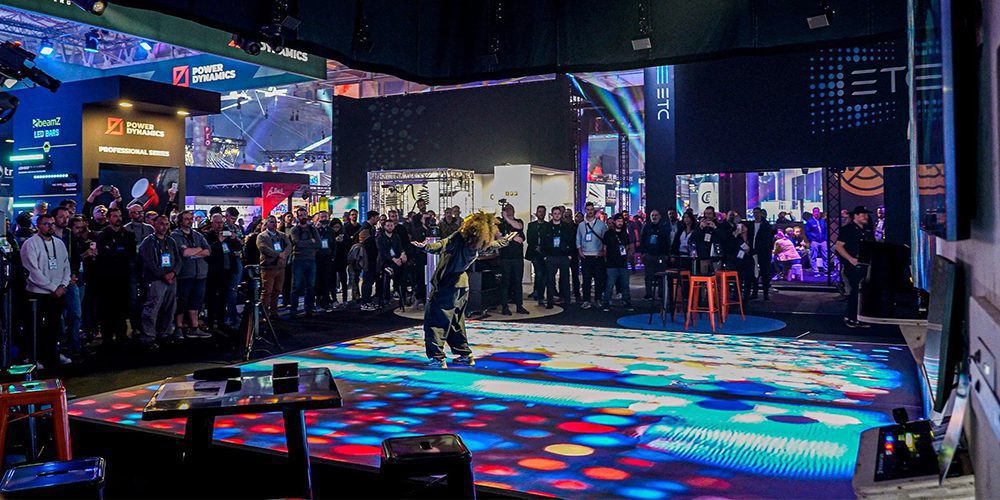
A choreographed LED dance floor does more than add color, it provides timing cues, extends blocking, and looks better on camera than a dark deck. A floor LED screen can mirror performers’ steps, display motion-tracked patterns, or frame a stage with zone effects. For touring, modular LED floor tiles simplify pack-in, swap-outs, and repair between shows.
4.2 Retail & Showrooms
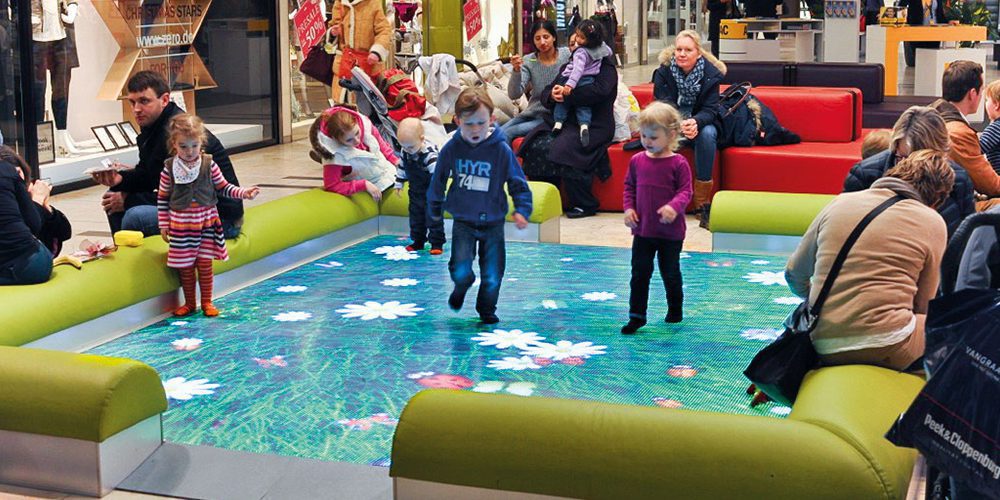
An interactive LED floor display directs customers to featured products, triggers short product clips as shoppers approach, and animates seasonal themes. Because the LED floor screen sits in the path of travel, content must be legible at a glance. Correct pixel pitch and anti-glare finishes keep copy readable at arm’s length on a floor LED screen.
4.3 Exhibitions & Museums
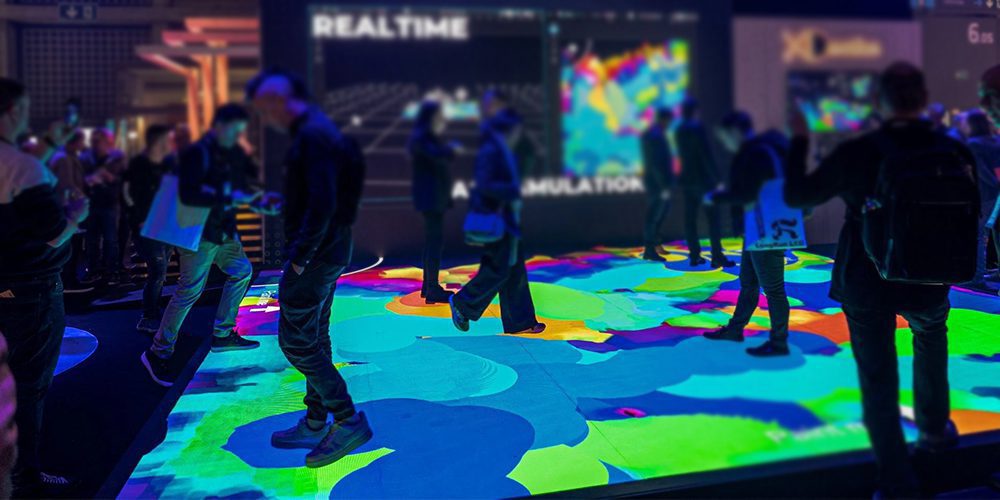
In gallery spaces, a digital interactive floor supports collaborative learning: step on markers to reveal context, walk a timeline, or follow a projected trail to the next exhibit. Zoning prevents accidental triggers in busy rooms. Anti-slip finishes and documented load ratings help curators secure approvals for a walkable LED floor screen.
4.4 Theme Parks & Attractions
Parks use immersive LED flooring to guide guests through queues, build anticipation, and host mini-games that fit crowd flow. Durable, IP-rated LED floor tiles withstand weather, frequent cleaning, and varied footwear while keeping the floor LED screen bright.
4.5 Corporate, Hospitality & Transit
Lobbies, conference centers, hotels, and airports deploy LED floor screens to reinforce branding, present live information, and stage calendar-based moments. Uptime is essential; top-access service and spares keep a floor LED screen operational during business hours.
5.What Affects Floor LED screen Costs
LED floor display price depends on the canvas size, pixel pitch, sensor complexity, IP rating, brightness, and the control/software stack. Installation method, site conditions, and content development also influence the final number.
5.1 Primary cost drivers
- Pixel pitch and brightness:Tighter pitch and higher nits cost more but improve close-range clarity and outdoor visibility.
- Interactivity:Pressure, IR, or camera systems, plus licenses for real-time engines, add hardware and engineering.
- Ingress protection:IP65 LED floor screens require additional sealing and robust materials.
- Control stack:Real-time composition, show-control sync, and monitoring features carry a premium.
- Structural integration:Subfloor leveling, ramps/edging, and ADA considerations add to install scope.
5.2 Common add-ons
- Content development:Branded effects, time-of-day scenes, product triggers, and integration with POS or QR flows.
- Rigging and power distribution:Clean cable routing, surge protection, and backup power planning.
- Operations:On-site support during events, preventive maintenance, and spares.
Think of LED floor display price in terms of avoided failure modes. Paying for the right pitch, traction, and IP rating can prevent downtime, reduce incidents, and protect the appearance on camera, outcomes that matter to marketing and operations alike.
6.What to Look for in an Floor LED Display Provider
Selecting the right interactive floor LED display supplier is as important as choosing the hardware itself. Use this checklist to separate capable partners from generalists and ensure your LED floor tile system performs reliably in the real world.
6.1 Proven floor deployments (not just wall projects)
- Ask for recent, walkable installs of a floor LED screen: photos, short videos, and a contactable reference.
- Confirm environment match: indoor retail vs. outdoor plaza, dry mop vs. wet-mop cleaning, live stage vs. museum traffic.
6.2 Specs that match your site
- Documented load rating (≥1,000–2,500 kg/m²), anti-slip surface data, and ingress protection (IP54–IP65).
- Pixel pitch and brightness sized to viewing distance and lighting (e.g., 2.6–3.9 mm indoors; 3,500+ nits outdoors).
- Optical treatments (anti-glare) and thermal behavior suitable for your lighting/camera plan.
6.3 Interactivity competence
- Clear description of sensing method (pressure, IR matrix, camera) and why it suits your use case.
- Latency targets (≤60 ms preferred) and a mapping workflow that aligns physical tiles and the logical canvas.
- Show-control and AV integration: timecode, OSC/MIDI, DMX/Art-Net, media server compatibility for a cohesive interactive LED floor display.
6.4 Serviceability & spares
- Top-access module replacement and hot-swappable power where possible.
- Documented spares plan (2–5% extra LED floor display panels on site) and time-to-recover commitments during public hours or events.
6.5 Compliance & safety
- Electrical and EMC compliance (e.g., CE/FCC/UL where applicable).
- Anti-slip, fire-rating, and edge-transition documentation (ramps/edging) suitable for your venue and insurers.
6.6 Warranty & support
- Transparent coverage for LED modules, power, and control gear; defined SLAs for events and public venues.
- Remote diagnostics and monitoring options; named points of contact for show days.
6.7 Content workflow
- Toolchain that lets designers update scenes, schedules, and zone logic without re-engineering the system.
- File specs and best-practice guides for legibility on a LED floor screen (contrast, motion, color).
6.9 What a strong proposal should include
- Site plan with load assumptions, power and cable routing, and ramp/edge details.
- Pixel-pitch study tied to viewing distance and camera tests.
- Interactivity diagram (sensor → controller → content → lighting/audio).
- Commissioning plan, training, and preventive maintenance schedule.
6.10 Red flags
- Vague specs (“event grade” with no numbers), no floor references, or latency hand-waving.
- “We’ll fix it in content” answers to traction, glare, or camera moiré issues.
- No on-site spares or top-access strategy for a high-traffic deployment.
7.Why Choose EagerLED Floor LED Screen
EagerLED builds floor LED screen systems for high-traffic spaces with fast service and predictable daily operation.
7.1 Engineered for heavy use:Reinforced modular LED floor tiles, anti-slip surface, and ≥1,000–2,500 kg/m² load ratings keep seams tight under crowds and rolling gear.
7.2 Protected & easy to maintain:IP options up to IP65 for wet-mop interiors and semi-outdoor areas; sealing preserves brightness and longevity.
7.3 Sharp at standing distance:Pixel-pitch choices from 2.6–6.25 mm with anti-glare/controlled emission for clear viewing and clean camera output.
7.4 Interactive when you need it:Pressure, IR, or camera sensing with show-control sync (timecode/DMX/Art-Net/OSC) for cohesive staging.
7.5 Built for uptime:Top-access swaps, hot-swappable power, 2–5% spares on site, plus remote diagnostics to minimize downtime.
7.6 Approval-ready:CE/FCC/UL (where applicable), anti-slip and fire-rating docs to speed venue approvals.
7.7 End-to-end support:Pitch studies, site layout, ramp/edge design, commissioning, and clear handover so your team runs the system confidently.
8.FAQs – Common Questions About LED Floors
Q:Is a floor LED screen safe for high-traffic use?
Yes, provided it meets the correct load rating, anti-slip standard, and IP protection for the site. Proper edging and cleaning protocols matter as much as the panel itself.
Q:Can I use a floor LED screen outdoors?
Yes. For exterior plazas or semi-covered spaces, specify IP65 LED floor screens with appropriate brightness, thermal management, and weather-tolerant edging.
Q:What pixel pitch should I choose?
Match pitch to viewing distance. For close-range retail and exhibits, 2.6–3.9 mm is common; for larger atriums and stages, 4.8–6.25 mm can be sufficient and more cost-efficient.
Q:How does an interactive LED floor display detect movement?
Most systems use pressure sensors, IR matrices, camera tracking, or a combination. The right choice depends on precision needs, lighting conditions, and budget.
Q:What affects LED floor display or floor LED screen price the most?
Pixel pitch, brightness, interactivity stack, IP rating, and the controller/software ecosystem. Installation complexity and content development also contribute.
Q:Can I rent a LED dance floor for an event?
Yes. Many event providers offer rental LED dance floors and stage decks. For touring or frequent use, purchasing a modular system can be more cost-effective over time.
Q:How is maintenance handled?
Top-service tiles allow quick swaps. Keep a small spare stock and a routine for connector checks, thermal logs, and brightness calibration.
9.Conclusion
A floor LED screen changes how people encounter digital content: not as passive viewers, but as participants moving through a space. When the hardware matches the environment and the interaction brief is clear, an interactive LED floor display delivers more than novelty, it delivers practical outcomes: guided paths, cleaner stage shots, and memorable moments that translate into shareable assets and stronger brand recall.
Choose the LED floor screen configuration that fits your reality: the right pixel pitch for distance, the right IP rating for cleaning and weather, the right sensing method for your interaction goals, and a control stack that designers can update quickly. Plan the install with safety and service in mind, and keep spares on hand so the visual story stays uninterrupted.
If you’re evaluating options now, outline the use case, audience distance, and operating hours first. From there, it’s easier to select LED floor tiles, controllers, interactivity, and content that will perform reliably, today and over the long term.
Ready to turn your concept into a working floor LED screen? Share your site plan (area, viewing distance, lighting) and the interaction you want to achieve. We’ll recommend an LED floor tile system, pixel pitch, sensing, control, and service plan, that fits your space and budget, then walk you through a quick demo so you can see the interactive LED floor display respond in real time.
 Indoor LED Screen: Everything You Need to Know
 Newest Top 10+ Largest LED Displays in the World!