

EagerLED stadium LED screen brings live events to life with vibrant visuals, perfect for live video, advertising, and scoreboards at football fields, basketball courts, running tracks, and more. With a variety of sizes and custom options available, we make it easy to find the ideal solution to showcase your venue with stunning clarity and reliability.
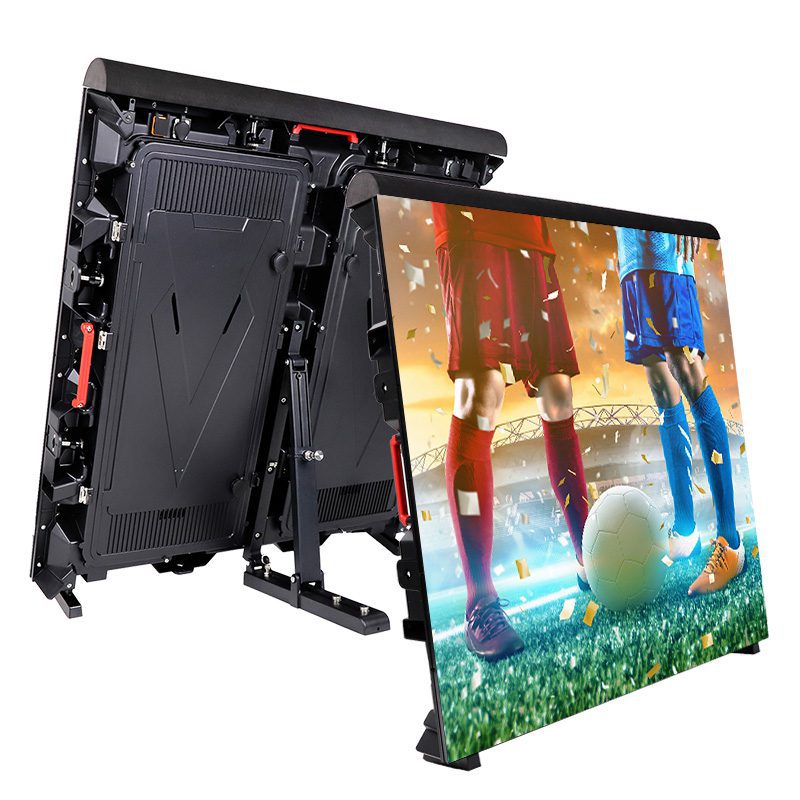
Categories
Stadium LED Screens Explained: The Complete 2026 Guide
Stadium LED screens have become a core component of modern sports venues. From football stadiums to esports arenas, these large-format displays deliver live video, instant replays, real-time statistics, and dynamic advertising—enhancing both fan experience and event operations.
In this complete 2026 guide, you’ll learn what stadium LED screens are, their types, applications, key features, and how to choose the right solution.
Table of Contents
- 2026 New LED Display Price for You
- 1.What Is a Stadium LED Screen?
- 2.Why Stadium LED Screens Are Essential
- 3.Types of Stadium LED Screens
- 4.Main Types of Stadium LED Screens
- 5.Key Technical Features of Stadium LED Screens
- 6.How to Choose the Right Stadium LED Screen
- 7.Stadium LED Screen Price Guide
- 8.FAQs
- 9.Conclusion
- Get Quote Free
1.What Is a Stadium LED Screen?
A stadium LED screen is a large digital display system designed for sports venues and large public events. It uses high-brightness LED technology to ensure clear visibility even in direct sunlight and across long viewing distances.
These screens are typically modular, meaning they are built from multiple LED panels that can be assembled into various sizes and shapes based on venue requirements.
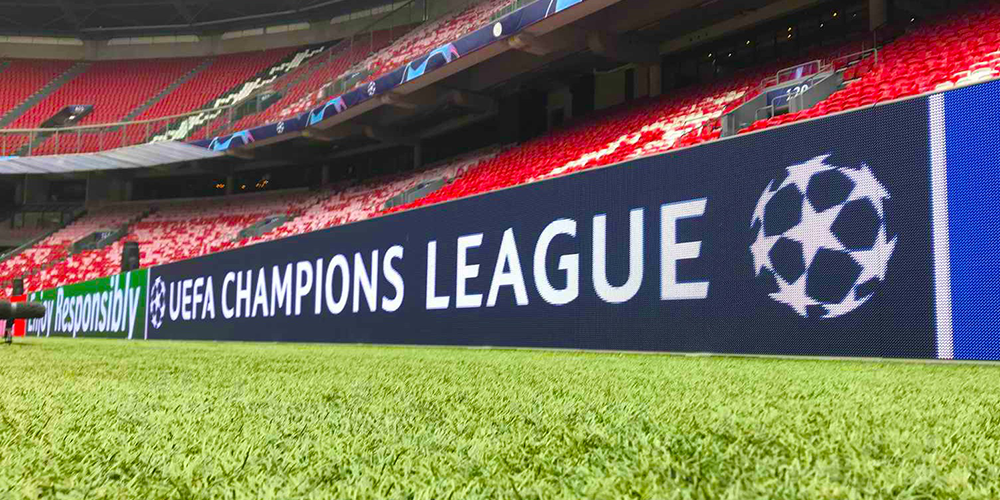
2.Why Stadium LED Screens Are Essential
Stadium LED screens have evolved from simple scoreboards into powerful visual communication systems that enhance fan engagement, improve operations, and generate revenue.
2.1 Enhanced Fan Experience
One of the biggest advantages of stadium LED screens is their ability to dramatically improve the spectator experience. With ultra-bright displays and high refresh rates, fans can enjoy close-up shots, slow-motion replays, and detailed visuals even from the farthest seats.
2.2 Real-Time Communication
Stadium LED screens act as a central information hub, delivering real-time updates to thousands of people simultaneously. They display scores, match time, player statistics, and important announcements instantly.
2.3 Advertising Revenue
LED displays—especially perimeter boards and large video walls—are among the most valuable advertising assets in a stadium. They allow sponsors to display dynamic, full-color content that can be updated in real time.
2.4 Multi-Event Flexibility
Modern stadiums are multi-purpose venues, hosting not only sports events but also concerts, exhibitions, ceremonies, and esports tournaments. Stadium LED screens make this flexibility possible.
2.5 Built for Harsh Environments
Stadium LED screens are engineered to operate reliably in demanding conditions. Outdoor models feature robust, weatherproof designs with IP65 protection, allowing them to withstand rain, dust, and extreme temperatures.
3.Types of Stadium LED Screens
There are various types of stadium LED screens designed to meet different applications in sports venues.
Here are the main types of stadium LED screens:
3.1 Main Stadium LED Screens (Center Display)
The main stadium LED screen is the core visual display in any sports venue. It is typically installed at the center (center-hung) or at the ends of the stadium.
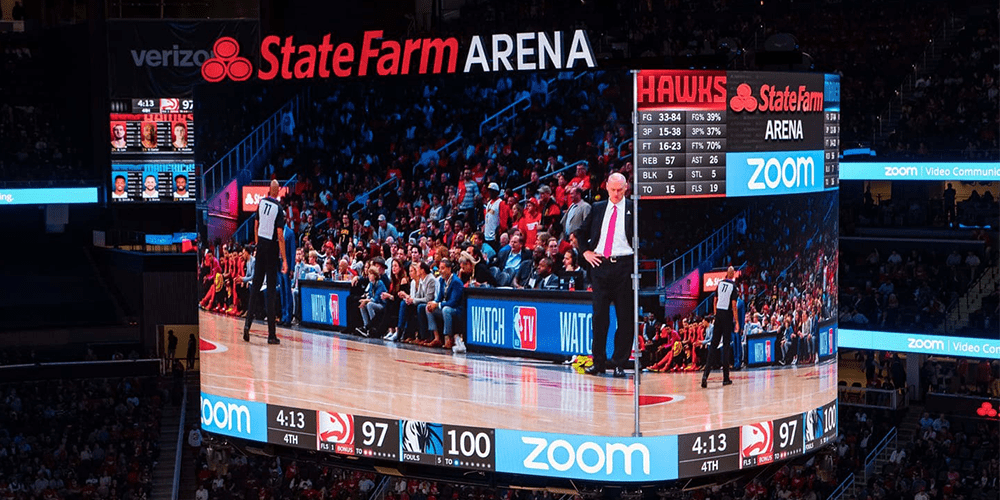
These large-format LED video walls are used for:
- Live match broadcasting
- Instant replays and slow motion
- Player introductions and highlights
Modular LED design allows these screens to be customized into different sizes and shapes, making them suitable for both indoor arenas and outdoor stadiums.
3.2 LED Scoreboards
LED scoreboards are essential in all sports venues, providing real-time game information.
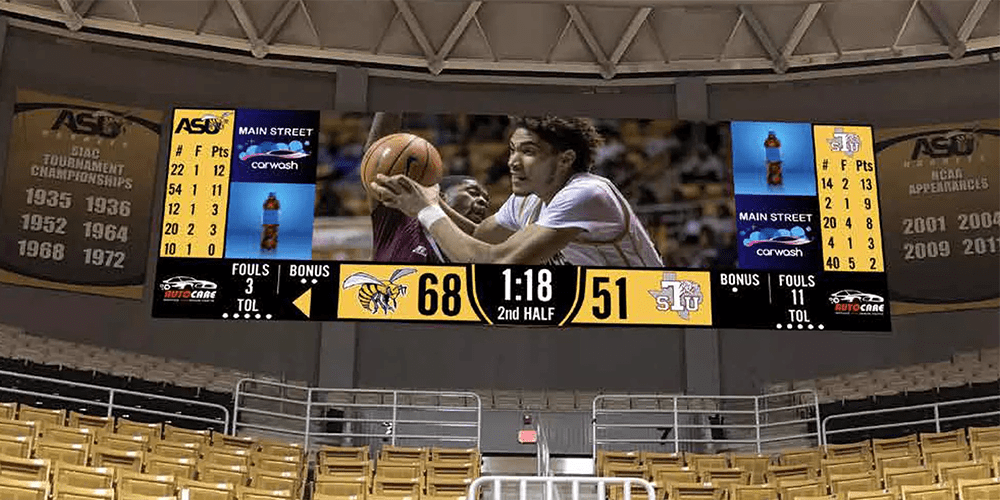
Traditional scoreboards display:
- Scores
- Match time
- Team names and stats
Advanced multifunction scoreboards can also:
- Show video content and replays
- Display advertisements and announcements
- Integrate with timing and referee systems
They are widely used in basketball courts, tennis arenas, swimming venues, and school stadiums.
3.3 LED Ticker Displays
LED ticker displays are long, narrow screens designed for scrolling text and continuous updates.
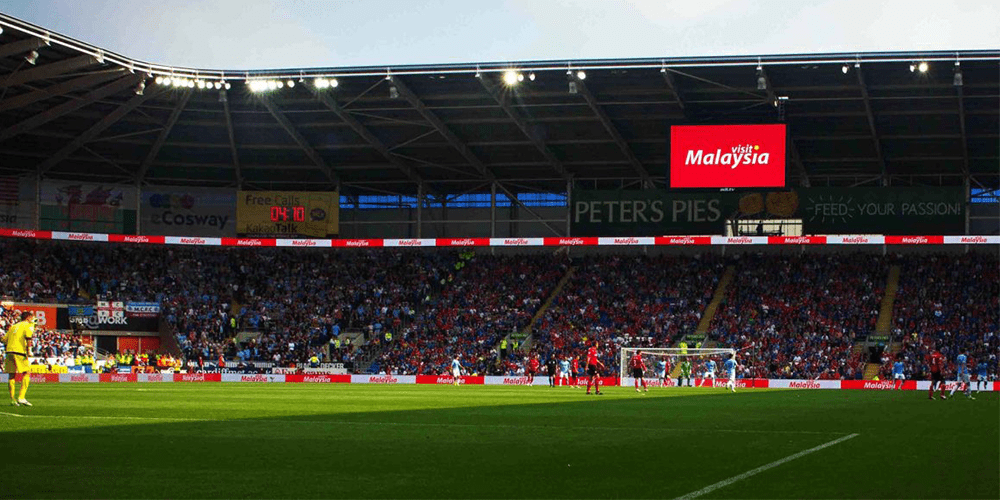
They are commonly used to show:
- Live scores and match updates
- News, alerts, and announcements
- Sponsor messages and branding
These displays are ideal for delivering real-time information across large venues in a simple and efficient format.
3.4 Perimeter LED Displays
Perimeter LED displays are installed around the edge of the field or court and are mainly used for dynamic advertising and sponsorship exposure.
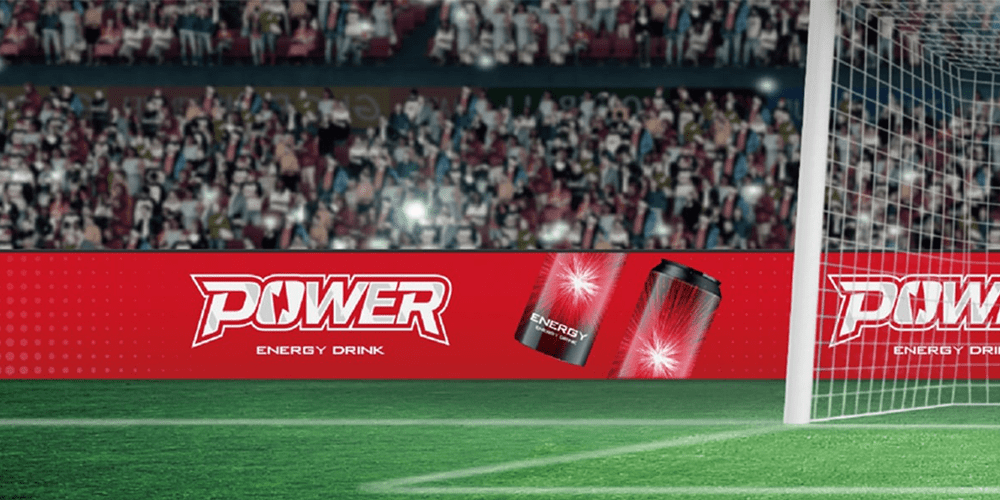
Key features include:
- High brightness for outdoor visibility
- Soft protective masks to prevent player injury
- Adjustable viewing angles for better audience coverage
They are widely used in football, rugby, and racing events, creating high-value advertising space.
3.5 Ribbon LED Displays
Ribbon boards are long, horizontal LED screens mounted along stadium tiers, balconies, or concourses.
They are used for:
- Continuous score updates
- Sponsor advertisements
- Crowd engagement visuals
Their wide coverage makes them perfect for keeping spectators informed no matter where they are seated.
3.6 Portable LED Screens
Portable LED screens are flexible, modular solutions designed for temporary events and mobile applications.
Common types include:
- Mobile LED trailers
- Foldable or collapsible LED screens
They are ideal for:
- Outdoor sports events
- Fan zones and public viewing areas
- Roadshows and temporary tournaments
Their quick installation and easy transportation make them highly practical.
3.7 360-Degree LED Screens
360-degree LED screens are circular or cube-shaped displays usually installed in the center of indoor arenas.
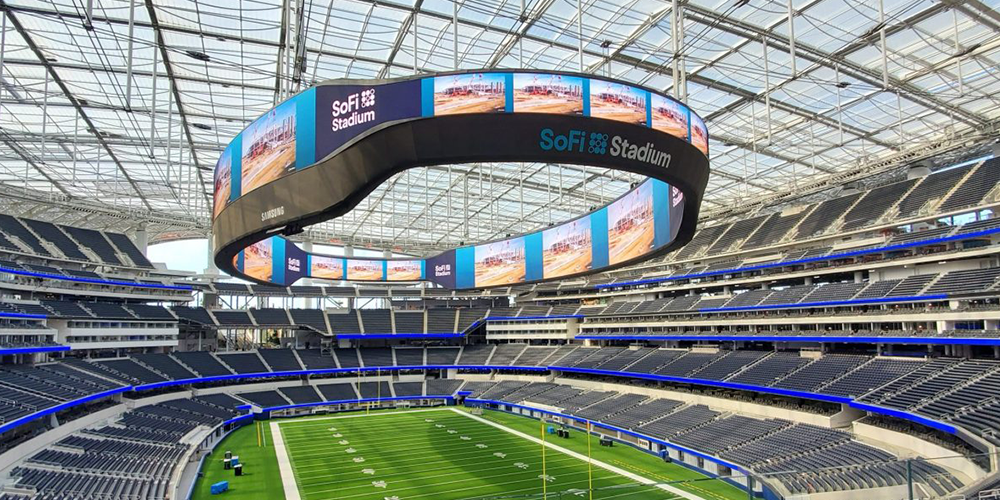
They provide:
- Full-angle visibility for all spectators
- Immersive viewing experiences
- Simultaneous display of multiple content sources
These are commonly seen in basketball arenas and large indoor stadiums, ensuring no audience misses the action.
4.Main Types of Stadium LED Screens
| Type | Description | Best For |
| Main Video Wall | Large central display for live video | Football, basketball stadiums |
| Perimeter LED Screen | Advertising boards around field | Soccer, racing events |
| LED Scoreboard | Displays scores and timing | Indoor & outdoor sports |
| Ribbon Display | Long strip screens around stands | Branding & announcements |
| Center-Hung LED | Suspended 360° screens | Indoor arenas |
| Mobile LED Screen | Portable LED solutions | Temporary events |
5.Key Technical Features of Stadium LED Screens
5.1 High Refresh Rate (≥3840Hz)
A refresh rate of 3840Hz or higher is essential for smooth motion display. It eliminates flickering and scan lines during live broadcasts, slow-motion replays, and camera recording, ensuring broadcast-grade visual quality.
5.2 Wide Viewing Angle (140°–160°)
Stadium screens must deliver consistent image quality from all seating positions. A wide viewing angle of up to 160° ensures that spectators across different tiers can clearly see scores, replays, and advertisements without color distortion.
5.3 High Brightness (5,000–8,000 nits)
For outdoor stadiums, high brightness is crucial to maintain visibility under direct sunlight. Typical stadium LED screens range from 5,000 to 8,000 nits, ensuring clear and vivid content in all lighting conditions.
5.4 Modular and Flexible Design
Stadium LED screens are built with modular LED cabinets, allowing flexible assembly into different sizes, curves, and layouts. This makes installation easier and enables fast replacement of individual panels during maintenance.
5.5 Player Safety Protection
Safety-focused designs include soft masks, rubber padding, and anti-collision structures. These features reduce impact injuries for athletes and protect the LED modules from damage during high-intensity sports events.
5.6 Redundant Power and Signal Systems
To ensure uninterrupted performance during live matches, stadium LED screens often include dual power supplies and backup signal systems. This redundancy minimizes downtime and guarantees stable operation even in case of technical failure.
6.How to Choose the Right Stadium LED Screen
Start by defining the screen’s role in the venue: main video board, scoreboard, perimeter advertising, ribbon display, entrance display, or a synchronized multi-screen system. Each role has different requirements for viewing distance, camera performance, brightness, protection, structure, and content control.
Prepare the audience distances and sightlines, visible screen dimensions, content sources, live-production workflow, installation position, maintenance access, local weather, wind-load requirements, and event schedule before selecting a model. Use the LED pixel pitch calculator for an initial pitch comparison, then confirm it against the venue layout and camera plan.
6.1 Viewing Distance & Pixel Pitch
Pixel pitch is one of the most important factors in stadium LED screen selection because it directly affects image clarity.
- Outdoor stadiums:P6–P10 (long viewing distance, large audiences)
- Indoor arenas:P3–P5 (closer viewing, higher resolution required)
A general rule is that the farther the audience is from the screen, the larger the pixel pitch can be without losing visual quality.
6.2 Brightness Requirements
Brightness determines whether the screen remains visible under different lighting conditions.
- Outdoor stadium LED screens:High brightness required (typically 5,000–8,000 nits) for direct sunlight visibility
- Indoor stadium screens: Lower brightness is sufficient, but higher contrast and color accuracy are important
6.3 Installation Location
The installation position affects both screen type and structural design:
- Central screens:Ideal for large video playback and live broadcasting
- Perimeter screens: Used for advertising and sponsor branding around the field
- Suspended screens: Common in indoor arenas for 360° visibility
6.4 Environmental Conditions
Stadium LED screens must operate reliably in challenging environments.
Key factors include:
- Waterproof and dustproof rating (typically IP65 for outdoor use)
- Temperature resistance for extreme weather conditions
- Anti-corrosion and wind resistance for long-term outdoor installations
6.5 Control System
A powerful control system ensures smooth content management during live events.
Look for systems that support:
- Multi-source input (live video, ads, scoring, graphics)
- Real-time switching and scheduling
- Synchronous playback across multiple screens
6.6 Maintenance & Support
Easy maintenance is crucial for reducing downtime during events.
- Front or rear maintenance design for quick servicing
- Modular cabinet structure for fast replacement
- Reliable after-sales service and spare parts availability
7.Stadium LED Screen Price Guide
A stadium LED system is a site-specific construction and broadcast project, so physical screen area alone cannot determine the final budget. Pixel density, brightness, weather protection, cabinet design, structural engineering, electrical distribution, video processing, redundancy, installation access, commissioning, and long-term service all affect the installed cost.
The ranges below are broad early-planning references only. They are not supplier quotations and may include different technical and installation scopes. Use them to set an initial budget category, then compare proposals based on the same project specification.
| Project Size | Estimated Price Range |
|---|---|
| Small (≤100㎡) | $20,000 – $200,000 |
| Medium (100–300㎡) | $100,000 – $500,000 |
| Large (300㎡+) | $500,000+ |
In most cases, small community stadiums only require basic scoreboard or perimeter LED systems, while professional sports venues often invest in large-scale integrated solutions that include main video boards, ribbon displays, and perimeter advertising screens.
A comparable stadium quotation should identify the complete project scope:
- Main screens, scoreboards, perimeter or ribbon displays, spare modules, power supplies, receiving cards, and backup signal paths.
- Video processors, control room interfaces, scoring and broadcast integration, monitoring, content scheduling, and system redundancy.
- Steel structure, wind-load engineering, access platforms, lifting equipment, electrical distribution, grounding, lightning protection, cooling, and cable routes.
- Transport, installation labor, testing, calibration, commissioning, operator training, event support, spare-parts ratio, response time, and warranty terms.
For a project quotation, send the venue type and location, screen role, target width and height, closest and farthest viewing distances, installation position, content sources, camera use, and project destination through the contact page.
8.FAQs
Q1.What pixel pitch is best for stadium LED screens?
The ideal pixel pitch depends on viewing distance and application:
- Outdoor stadiums: P6–P10 for long-distance viewing
- Indoor arenas:P3–P5 for higher resolution and closer viewing
Choosing the right pixel pitch ensures a balance between image clarity and cost efficiency.
Q2.Are stadium LED screens waterproof?
Yes. Most outdoor stadium LED screens are designed with IP65 protection or higher, making them resistant to rain, dust, and harsh environmental conditions.
Q3.Can stadium LED screens display multiple contents at the same time?
Yes. Modern LED control systems support multi-window display, split screens, and layered content, allowing simultaneous playback of live video, advertisements, and real-time data.
Q4.How long do stadium LED screens last?
High-quality stadium LED screens typically have a lifespan of over 100,000 hours, depending on usage conditions and maintenance practices.
Q5.Do stadium LED screens support live broadcasting?
Absolutely. Stadium LED displays are built for real-time video processing, supporting live broadcasts, instant replays, and synchronized data display with high refresh rates (≥3840Hz) for smooth playback.
9.Conclusion
Stadium LED screens are no longer optional—they are essential for modern sports venues. They enhance fan engagement, improve communication, and create powerful advertising opportunities.
Whether for a football stadium, indoor arena, or esports venue, choosing the right LED display solution in 2026 will directly impact performance, audience experience, and long-term ROI.