

Shop LED Screen Recommendation
Compare shop LED displays for indoor walls, entrances and retail windows. Choose the screen around viewing distance, daylight, message size, mounting and service access.
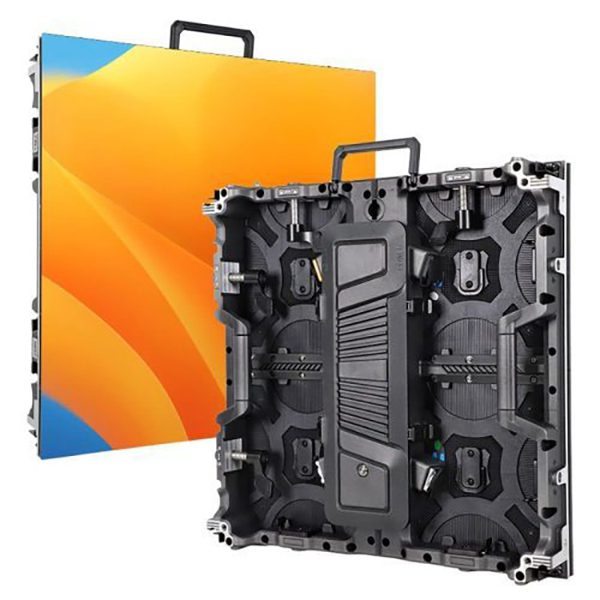
EA500C6 Rental LED Display Screen
6000 nits of brightness, Refresh rate reaches 3840Hz
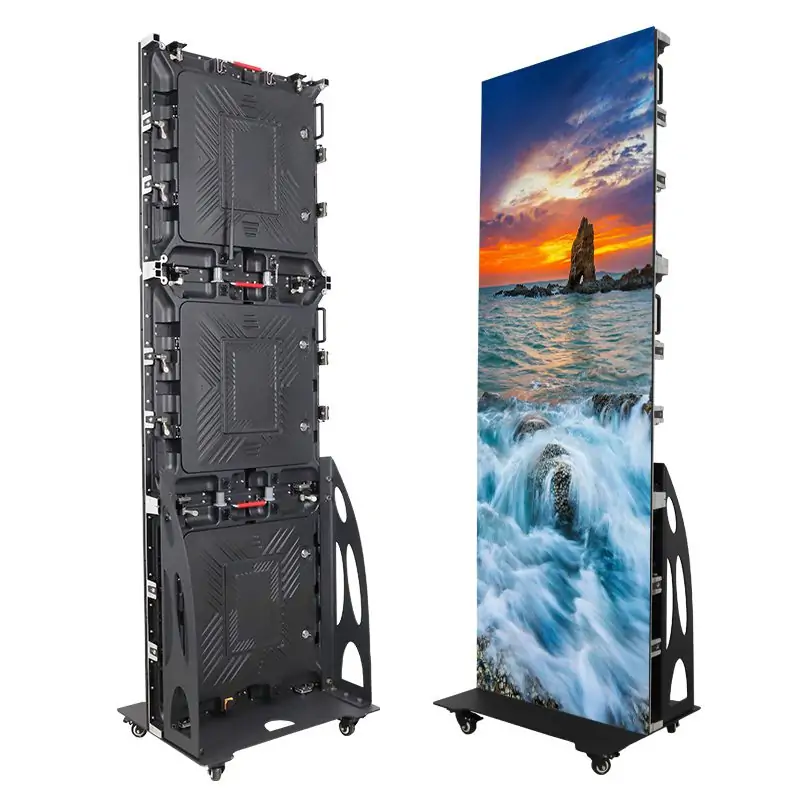
Mobile with 4 bottom wheels, three modular rental screens splicing
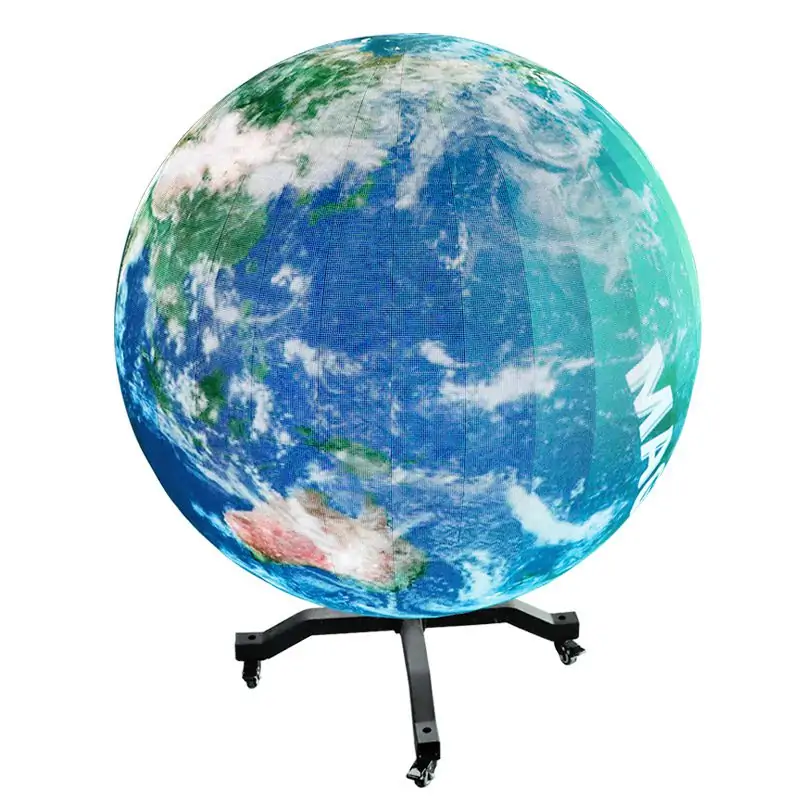
360-degree viewing experience, 500-700 CD/㎡ high brightness performance
The Best LED Display Solution for You
Where Can Shop LED Display Board Be Used?
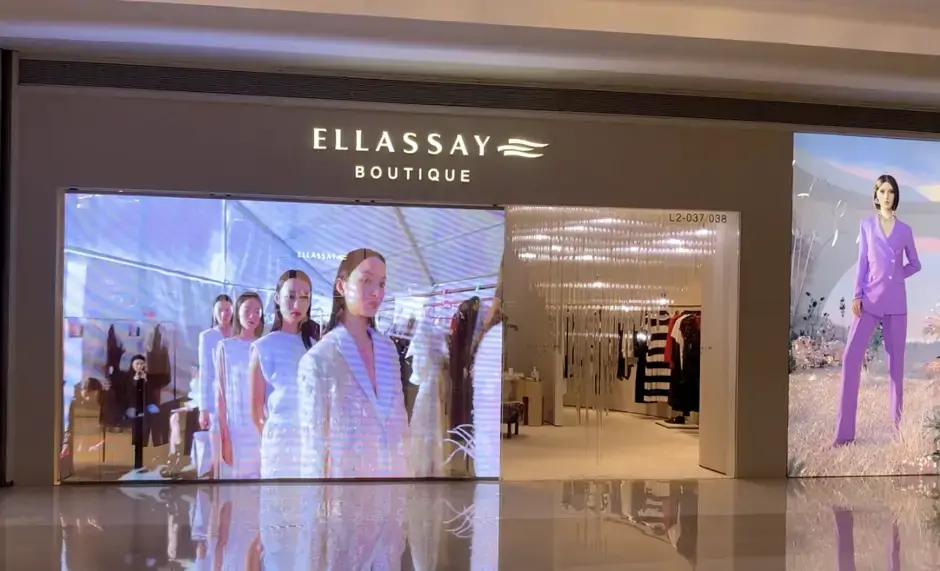
Storefront Windows
Shop LED display boards are often placed in storefront windows to attract passing customers. Their high brightness ensures visibility even under direct sunlight, making promotions, discounts, and new arrivals instantly noticeable from a distance.
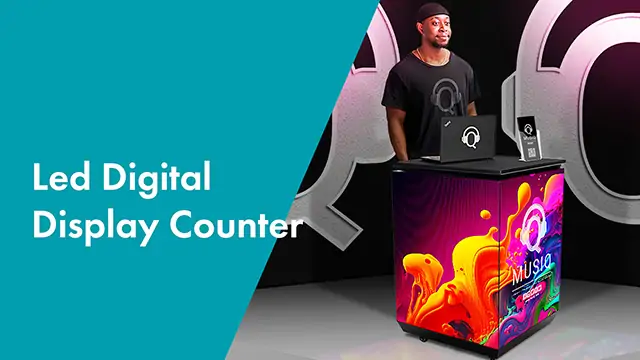
Retail Counters and Checkout Areas
Placing LED displays near checkout counters helps businesses promote add-on products, loyalty programs, or limited-time offers. These screens engage customers while they wait, increasing upsell opportunities and improving the shopping experience.
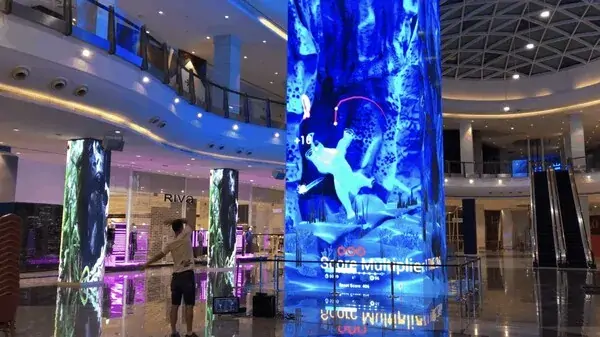
Shopping Mall Stores
In malls, LED display boards serve as dynamic signage to make stores stand out among heavy competition. With eye-catching visuals and animations, they guide foot traffic into the store and reinforce brand identity.
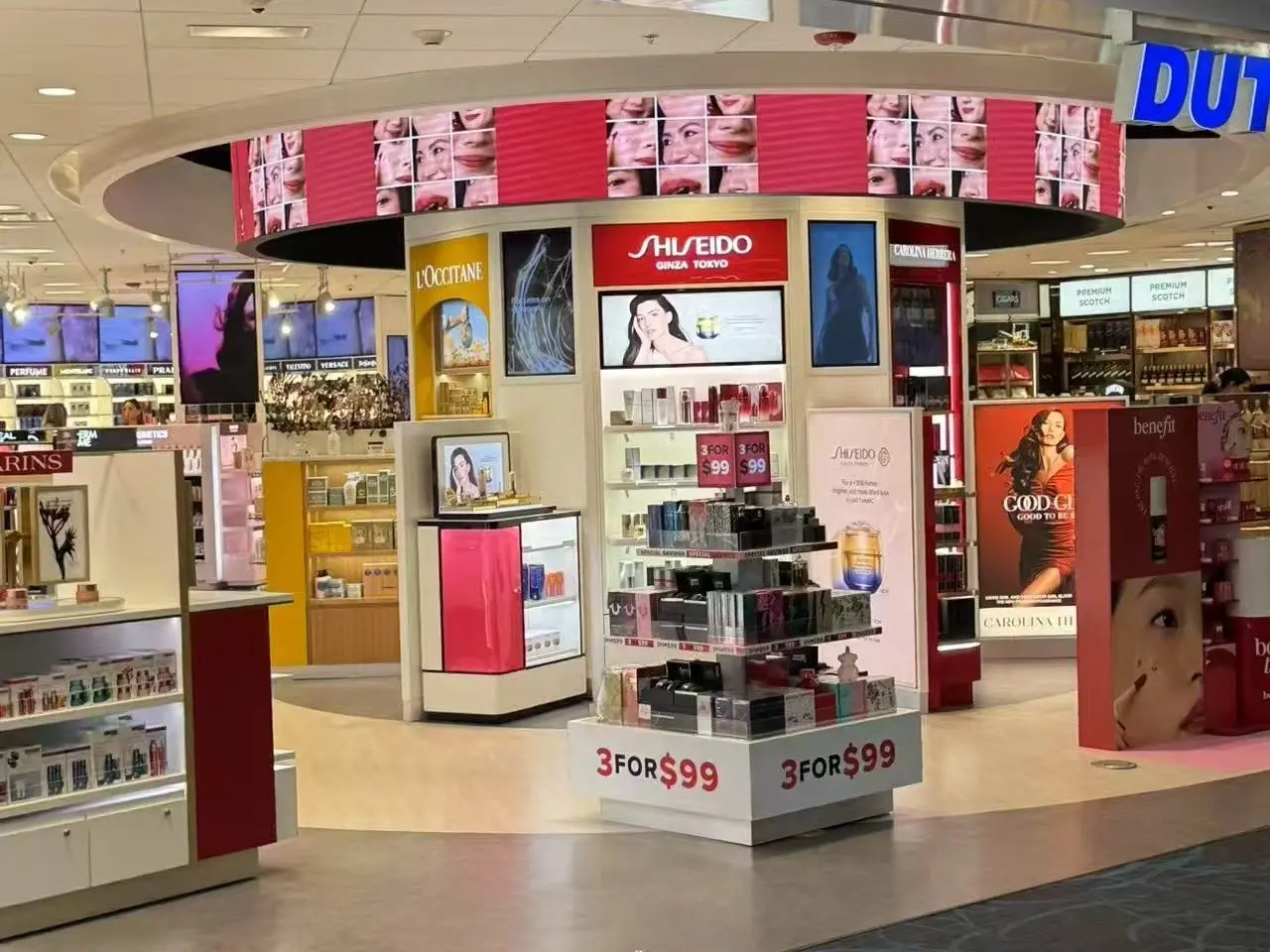
Inside Product Display Zones
LED boards positioned near product shelves or displays can provide product features, comparisons, or usage demonstrations. These visual cues help customers make buying decisions faster and more confidently.
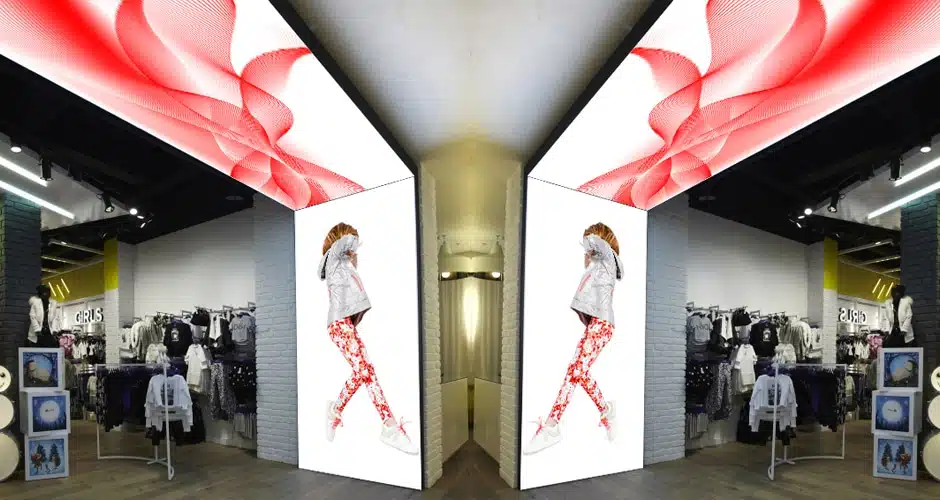
Fashion and Clothing Stores
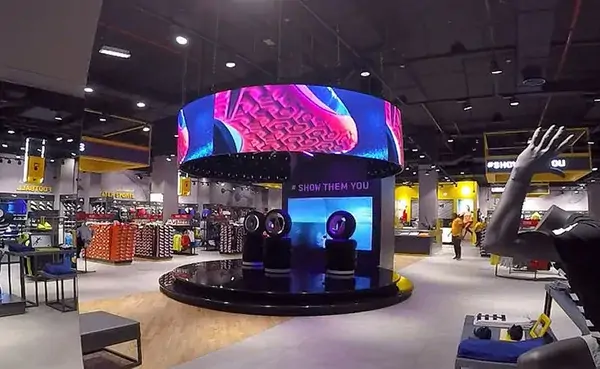
In apparel shops, LED displays are used to showcase runway videos, seasonal collections, and brand visuals. Their immersive presentation style enhances the store’s atmosphere and elevates the brand’s premium image.
Food & Beverage Shops
Restaurants, cafés, and bakeries use LED boards as digital menu boards or promotional screens. They can quickly update prices, images, and specials, making them ideal for fast-changing food environments.
Plan Your Shop LED Display
Shop LED Display Videos
- High-Resolution Display
- Dual-Sided Maintenance Design
- Integrated Power Supply Box
- Precision Arc Lock for Curved Displays
- 140° Wide Viewing Angle
- Durable Anti-Collision Corner Guards
- Gob Led Module Design
- Front Service Design
- Storage Volume Reduced By Up To 50%
- Creative Double-Sided Folding Design
- 4 Wheels At The Bottom Of The Stand
EA-IFilm Transparent LED Display
- 90% Transparency for Clear Background View
- Ultra-Slim 5mm Panel Thickness
- Lightweight Design at 6kg/m²
- Flexible Cutting and Curved Installation
- High Brightness 5000 nits Performance
- 140° Wide Viewing Angle Coverage
Shop LED Display Selection and Installation Guide
A shop LED display can present product demonstrations, store information and scheduled campaigns. An indoor video wall, freestanding poster and transparent window display solve different problems; shortlist the format before selecting a model.
This guide covers retail display types, specification checks, installation responsibilities and everyday content management. For a window project, use the retail window installation checklist to assess glazing, sightlines and sample content.
Table of Contents
1. 6 Types of Retail LED Screens
Retailers today can choose from a variety of retail LED screen options, each designed to fit different store environments and display needs. Whether you want to attract foot traffic, enhance product promotion, or create immersive store visuals, the right shop LED display board can make a major impact.
1.1 Indoor Fixed LED Screens
Indoor fixed LED screens are commonly used in boutiques, showrooms, and shopping malls where continuous, stable content playback is required. They offer high brightness and excellent color performance, making them ideal for product advertising and brand storytelling.
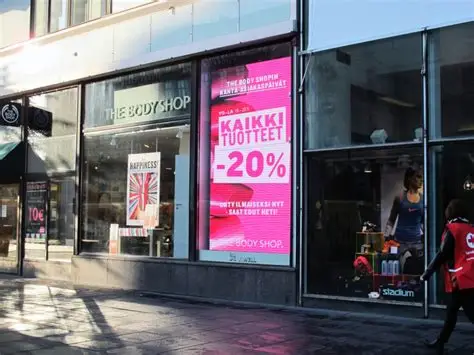
1.2 Window LED Displays
Window-facing displays must be tested against sunlight, reflections and the actual glass. An opaque cabinet blocks the area behind it; a transparent model preserves only a partial view. Confirm night-time dimming, local signage rules and safe mounting before selection.
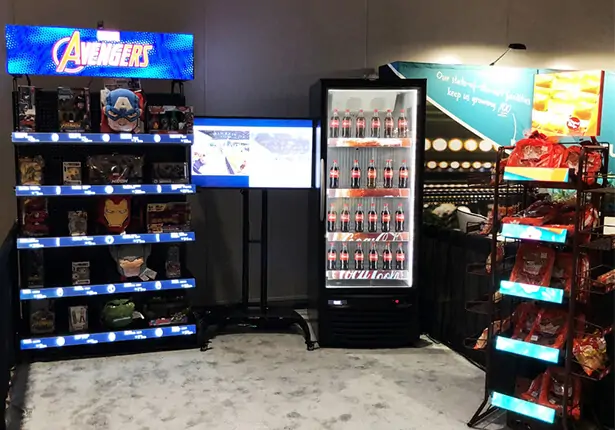
1.3 LED Poster Displays
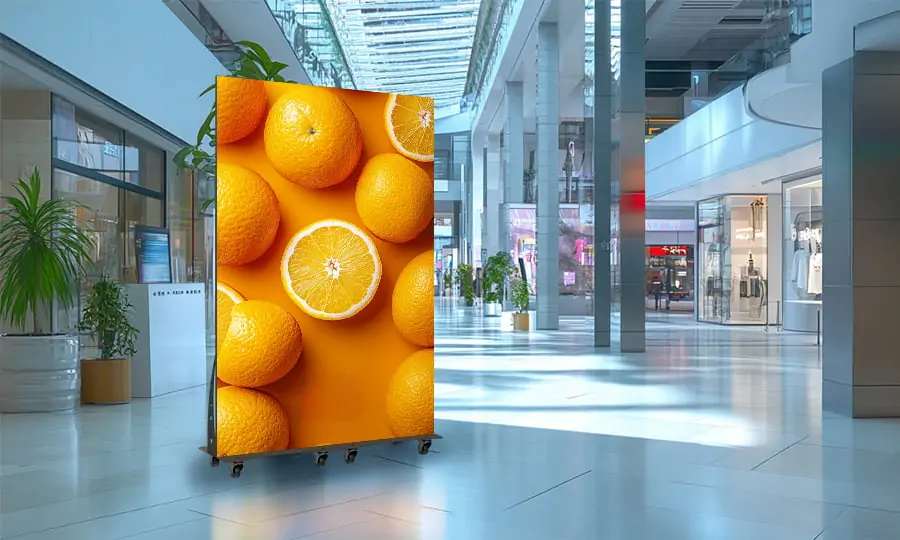
LED poster screens are lightweight, portable, and perfect for retail promotions or product highlights. They can be placed at store entrances or product areas, and their plug-and-play design makes installation extremely simple for daily marketing activities.
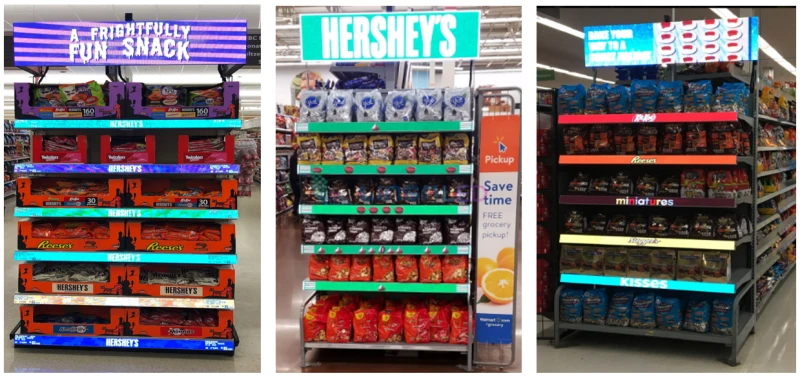
1.4 Shelf Edge LED Screens
Shelf LED displays are designed to present prices, promotions, or product information directly on store shelves. These small yet impactful screens help retailers enhance visual merchandising and deliver instant updates without replacing traditional printed labels.
1.5 Transparent LED Screens
Transparent LED screens preserve a partial view through the display. Image contrast depends on the backdrop and lighting. Compare cabinet and film structures and obtain approval for the actual glazing and support arrangement.
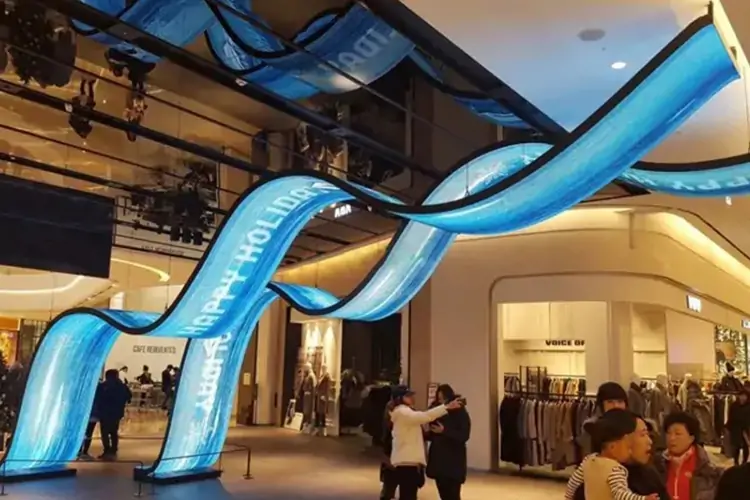
1.6 Flexible LED Screens
Flexible LED modules can form approved curves within model-specific bend limits. They are not freely foldable or cuttable; the frame, module orientation and service method must be designed for the selected product.
2. What Does Shop LED Display Bring to You?
Digital displays offer reusable, scheduled communication. Results depend on placement, readable content and the campaign. The screen itself does not guarantee sales growth or a financial return.
2.1 More Foot Traffic
A readable storefront message can make a campaign more visible. Measure actual store visits against a comparable baseline rather than assuming all passersby become customers.
2.2 Stronger Brand Identity
Use approved logos, colours and consistent templates. Test their appearance on the native pixel canvas so fine brand details remain legible.
2.3 Agility in Promotions
Retailers often need to react quickly to inventory changes or seasonal trends. With a Shop LED Display, you can update promotions instantly without waiting for print jobs. This flexibility helps you stay competitive and ensures your offers are always current.
2.4 Deeper Customer Engagement
Short product demonstrations can explain features while customers browse. Interaction requires additional compatible hardware and software; it is not a standard property of every LED screen.
2.5 Reusable Campaign Content
A digital screen can reduce repeated printing for the messages it replaces. Include power, content preparation, maintenance and replacement parts when evaluating operation; savings are project-dependent.
2.6 Better Communication with Customers
Retailers can use Shop LED Displays to share more than promotions — store hours, events, or community messages. This builds stronger connections with customers and positions your shop as approachable and customer-focused.
2.7 Measure Campaign Outcomes
Track a defined outcome, such as campaign-linked enquiries or store visits, alongside the content schedule. Compare equivalent periods and account for other promotions; do not attribute all sales changes to the display.
3. Core Specifications You Should Notice Before Buying
When choosing the best shop LED display, understanding the core specifications is essential to ensure excellent performance, long-term reliability, and the right visual effect for your store. The following key factors will help you make a smart decision when selecting an LED Display for Shop applications.
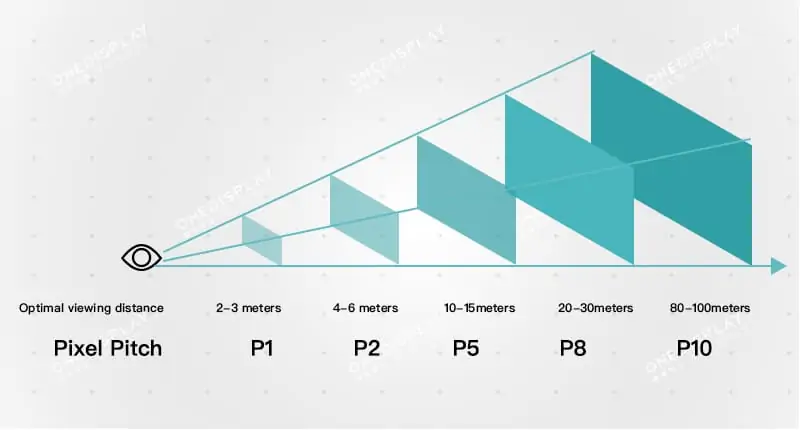
- Pixel pitch and resolution: measure the closest viewing position and test the smallest text. Calculate width and height in pixels using the actual cabinet matrix, not just a nominal pitch.
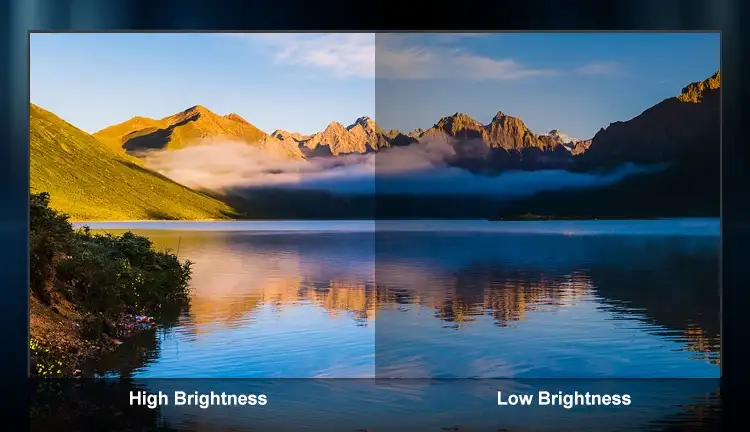
- Brightness: evaluate daytime and evening lighting. Confirm adjustable output; a fixed nit recommendation does not fit every window or shop.
- Refresh and cameras: LED refresh rate is different from video frame rate. Test camera frame rate, shutter and display settings together; no refresh number guarantees a flicker-free recording.
- Dimensions: match the cabinet grid and aspect ratio to the available space and content. Review the LED display size guide.
- Mounting and service: confirm structural supports, ventilation and safe front or rear maintenance.
- Power and control: obtain maximum electrical load, controller capacity and supported content formats. Cloud, Wi-Fi and USB features depend on the player and software supplied.
4. How to Choose the Best Shop LED Displays Board?
Prepare a site brief before requesting a model recommendation: photographs, window orientation, screen dimensions, viewing distances, sample content, operating hours and maintenance access. Use the pixel pitch calculator for an initial comparison, then verify the real cabinet layout.
4.1 Define Your Display Purpose
Before buying a shop LED display, clarify whether it will be used for promotions, branding, or product highlights. This ensures you pick a screen with the right resolution and brightness. A clear purpose helps you maximize the impact of your retail LED screen.
4.2 Understand Pixel Pitch Requirements
Pixel pitch directly affects clarity, especially when customers view the screen up close. A smaller pixel pitch on a shop LED display board ensures crisp, professional visuals. This leads to better engagement and improved presentation of your products.
4.3 Check Brightness Levels
Different retail environments demand different brightness levels for optimal visibility. A retail LED screen in a shop window must be bright enough to overcome sunlight. Meanwhile, indoor shop LED displays require balanced brightness to avoid eye strain.
4.4 Evaluate Installation Space
Every store layout is unique, so your screen size and installation method must match the available space. A slim and lightweight Shop LED Display Board makes it easier to mount in tight areas. This ensures the display integrates naturally into your store design.
4.5 Focus on Content Control Options
The ability to update content quickly is essential for retail businesses. A flexible retail LED screen should support cloud control, USB updates, or Wi-Fi connectivity. This makes your shop LED display easy to manage during daily promotions.
4.6 Prioritize Durability and Stability
A high-quality shop LED display board should offer long-term reliability, even under continuous operation. Look for features like stable power supply systems and excellent heat dissipation. These factors ensure your retail LED screen performs well without frequent maintenance.
4.7 Compare Vendor Experience and Support
Choose a supplier with proven experience in retail installations. A professional vendor ensures your shop LED display board is configured correctly and performs at its best. Reliable after-sales service also protects your investment in the retail LED screen.
5. How to Install and Maintain Shop LED Displays?
Use qualified installers and the model-specific manual. The steps below coordinate the project; they do not replace structural or electrical design. See the LED installation planning guide for the full scope of responsibilities.
5.1 Prepare the Installation Area
Record the wall or window construction, fixing points, display weight, service clearances and public access. Obtain landlord consent and any required structural assessment. A clean or level surface alone does not establish load capacity.
5.2 Choose the Right Mounting Method
Different store environments require different installation solutions. You may use wall-mount brackets, hanging bars, or floor-standing frames depending on your design. Make sure the mounting accessories match your shop LED display model to ensure safety and optimal viewing angles.
5.3 Connect Power and Signal Cables Properly
Have a qualified electrician confirm supply capacity, circuit protection, isolation and earthing using the maximum rated load. Protect power and signal cables from public contact and damage; never size circuits from average content consumption alone.
5.4 Configure the LED Control System
Configure the native pixel map and approved content player. Test smallest text, colours, scheduled playback and day/night brightness. Back up settings, document recovery after a power interruption and train the designated operator.
5.5 Perform Routine Cleaning
Regular cleaning prevents dust buildup, which can affect brightness and heat dissipation. Use a soft microfiber cloth to gently wipe the surface of the screen. Avoid harsh chemicals or spraying liquids directly onto the LED screen retail.
5.6 Check for Loose Connections
Only trained service personnel should open cabinets, inspect internal connections or tighten electrical components after safe isolation. Record visible damage or loose mounting concerns and take unsafe equipment out of service.
5.7 Monitor Temperature and Ventilation
Good airflow is essential for protecting LED components. Make sure the area around the shop LED display has proper ventilation and is not blocked by decorations or shelves. Overheating can shorten lifespan and reduce performance.
5.8 Update Content and Software Regularly
Keep campaign dates and messages current. Before firmware or control-software updates, check compatibility, back up settings and agree a rollback procedure; do not apply untested changes just before an important promotion.
5.9 Schedule Professional Maintenance
While basic cleaning and inspection can be done in-store, professional technicians should check the display periodically. They can perform deeper diagnostics, replace modules, and ensure long-term reliability. This ensures your shop LED display stays in excellent condition.
6. Options to Evaluate Before Expanding
Extra features should solve a defined retail need. Validate compatibility and operating responsibilities before buying optional control, interaction or display upgrades.
6.1 Higher Resolution and Ultra-Fine Pixel Pitch
Finer pitch can improve close-view detail at the same display size. Compare it with a conventional LCD for small information screens and test actual content before deciding that an LED wall is necessary.
6.2 AI-Driven Content and Personalization
Audience-responsive campaigns require compatible software, approved data handling and a clear operational purpose. Avoid collecting customer data without an appropriate privacy review; simple scheduling may meet the requirement.
6.3 Transparent LED and Window Displays
Window displays require a test of visibility through the screen and message contrast under actual lighting. Do not assume transparent LED film can be fitted to any glass or cut into any shape.
6.4 Integration With Smart Retail Ecosystems
Confirm whether the selected player supports the required content-management system and APIs. Test permissions, scheduling, offline playback and recovery before rolling out to multiple stores.
6.5 Immersive and Interactive Experiences
Touch, motion sensing and augmented-reality features require additional components and integration. Test reliability, accessibility and safe public use before treating them as part of the display specification.
6.6 Energy-Efficient and Eco-Friendly Displays
Compare measured energy use under the same brightness, content and operating hours. Include serviceability and replacement parts; a newer screen does not automatically consume less power in every application.
7. FAQs
8. Conclusion
Start with the shop layout and real content, then confirm a suitable display format, pixel matrix, brightness and installation plan. For compact freestanding signage, compare LED poster displays; for fixed walls, review indoor LED screens. Submit site photographs and dimensions for a model-specific proposal.