

LED Advertising Screen Solutions for Real Campaigns
Plan an LED advertising screen around the campaign, site, and operating workflow. Start with audience direction, viewing distance, ambient light, content duration, installation structure, service access, and local operating rules. These inputs determine which display format can deliver the message reliably.
Use the advertising LED board product guide to shortlist hardware, then document active dimensions, resolution, brightness, refresh rate, IP rating, controller, maximum and typical power, content sources, maintenance access, spare parts, and warranty in one project brief. Use the LED pixel pitch calculator for an initial pitch comparison.
Plan Your LED Advertising Screen Budget
Build an LED Advertising Screen Project Brief
A successful advertising screen project connects campaign goals to an installable, serviceable system. Give every supplier the same written brief so proposals can be compared on the same scope:
- Verified display configuration: Active size, exact resolution, pixel pitch, brightness, refresh rate, ingress protection, cabinet and LED technology, controller, maximum and typical power, and camera requirements.
- Engineering and installation: Mounting structure, wind-load or venue requirements, electrical distribution, grounding, signal routes, cooling, maintenance access, installation labor, testing, and commissioning.
- Content and operation: Input sources, processor capacity, remote publishing, scheduling, monitoring, redundancy, operator training, and configuration-file handover.
- Commercial scope: Packing, freight, delivery terms, spare-parts ratio, warranty coverage, response times, exclusions, and replacement-part availability.
Use the requirements of the indoor LED screen, advertising LED board, transparent LED screen, or LED poster display as the starting point for the relevant application.
LED Advertising Screen Project Examples
The examples below show different advertising screen formats and installation contexts. Use them to identify useful questions about viewing distance, cabinet format, content workflow, service access, and installation time; they do not replace a project-specific technical proposal.
Plan Your LED Advertising Screen Budget
How many kinds of Advertising LED Screens
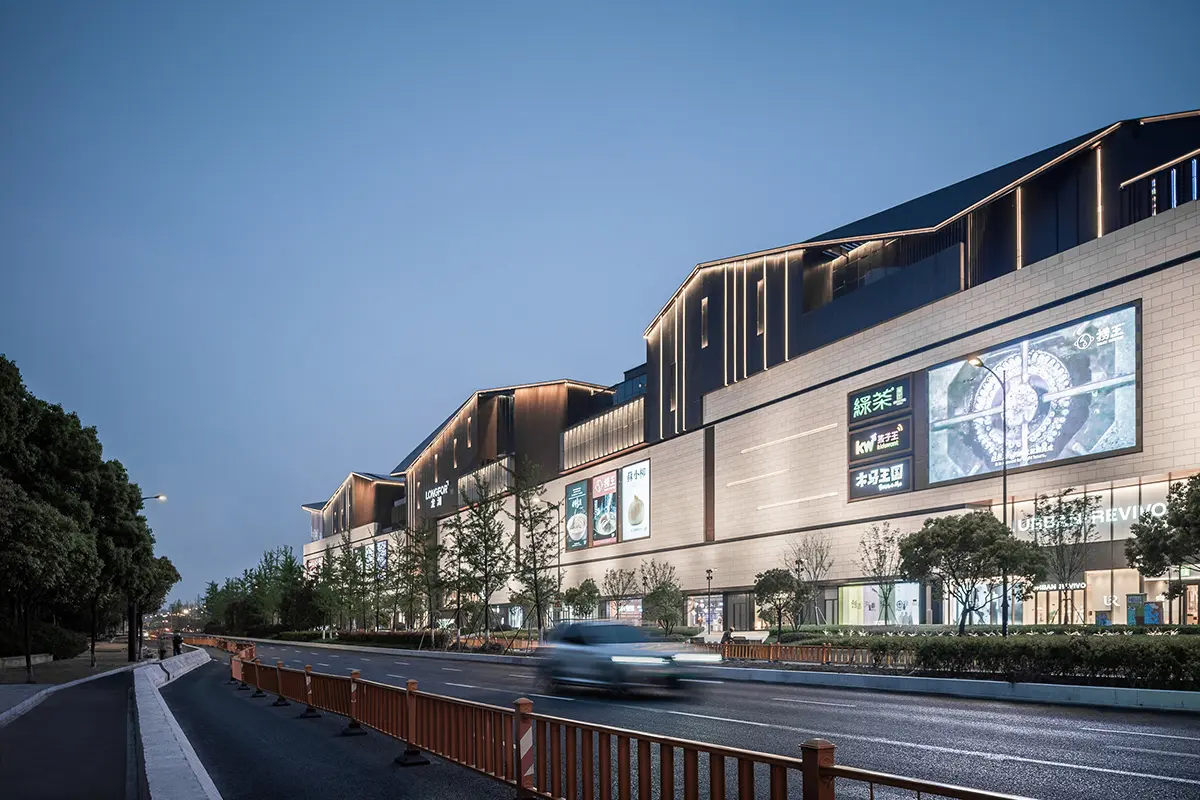
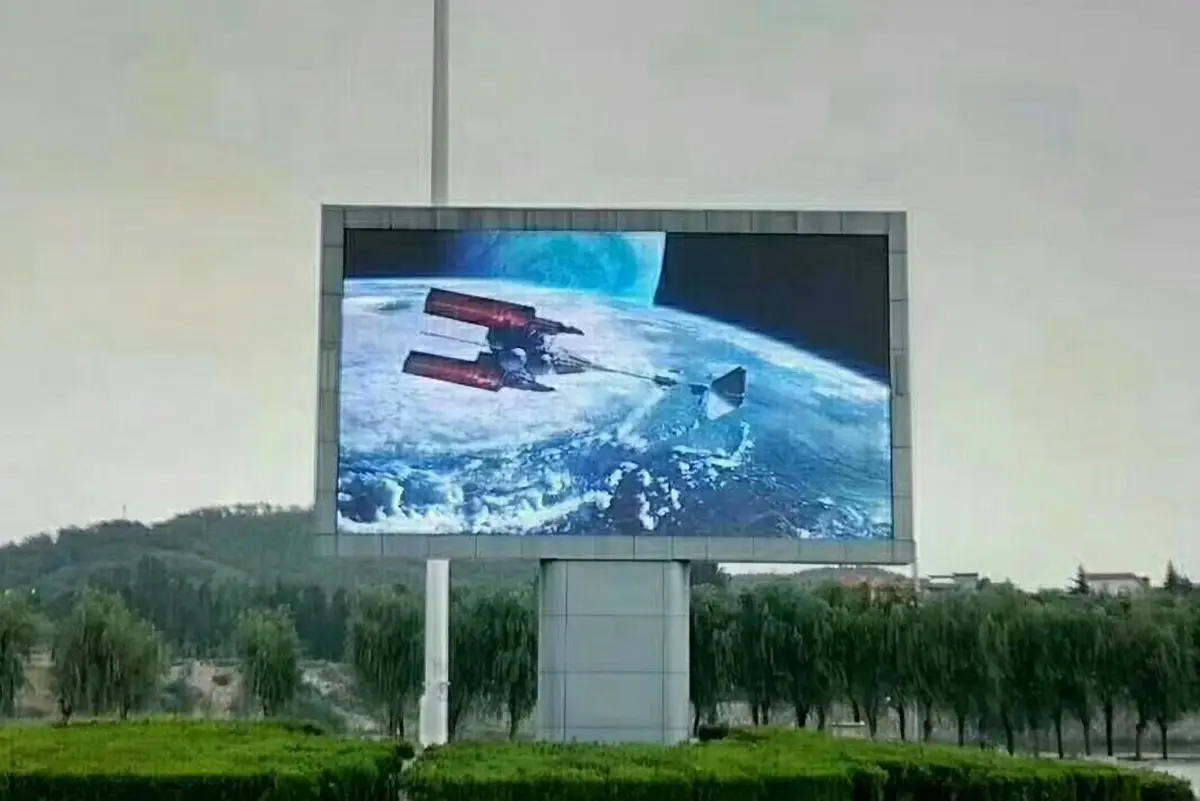
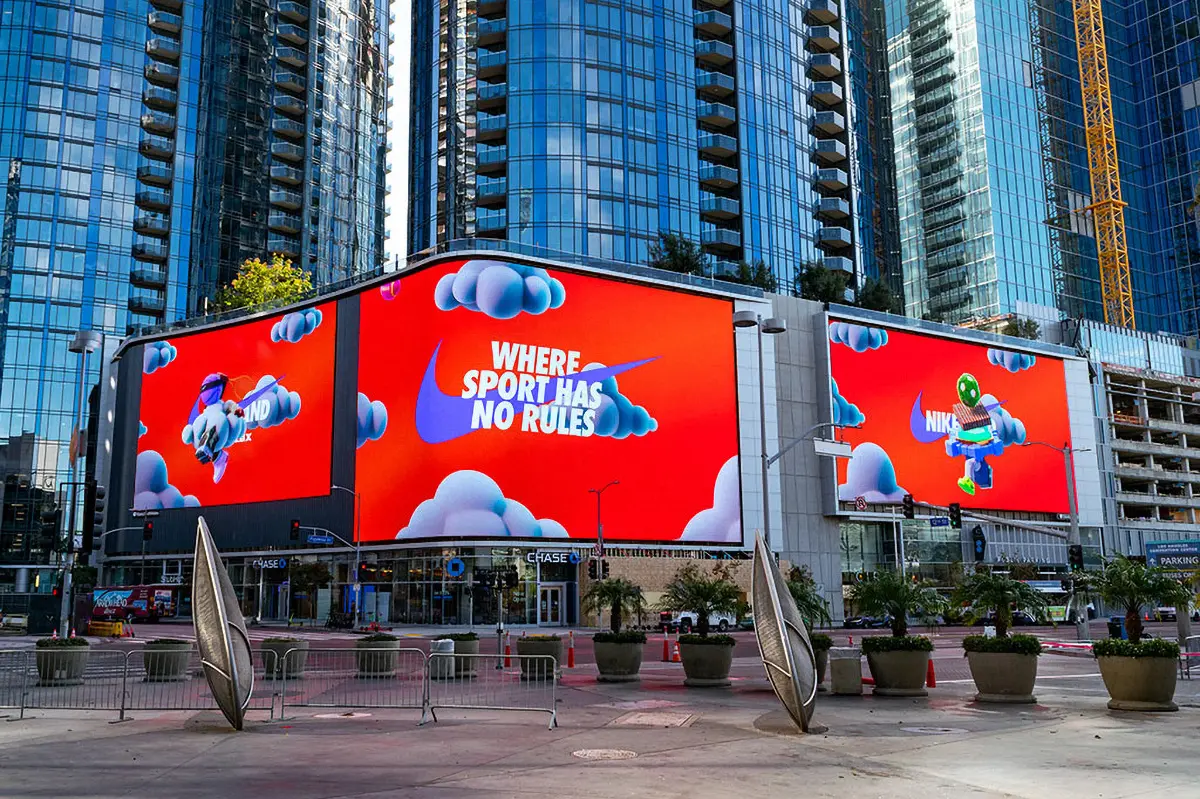
outdoor Wall-mounted LED Screen
Application Scenarios: Exterior LED walls of shopping malls, mall atriums, airport terminals, subway passages, high-end office lobbies.
Effect:
At prime high-traffic locations, the massive screen size and high-definition picture quality firmly capture the attention of pedestrians, turning your brand message into a visual focus and powerfully enhancing your brand’s premium image.
With one-click remote content updates, your promotional messages and brand videos can accurately reach target customers anytime, anywhere.
Pillar LED Screen
Application Scenarios: Crossroads in shopping centers, large exhibition venues, airport baggage claim areas.
Effect:
It cleverly uses the column structure to achieve double-sided or wrap-around display, ensuring your ad is visible to customers no matter which direction they come from.
Whether day or night, it provides clearly visible ad content, delivering 24/7 high exposure.
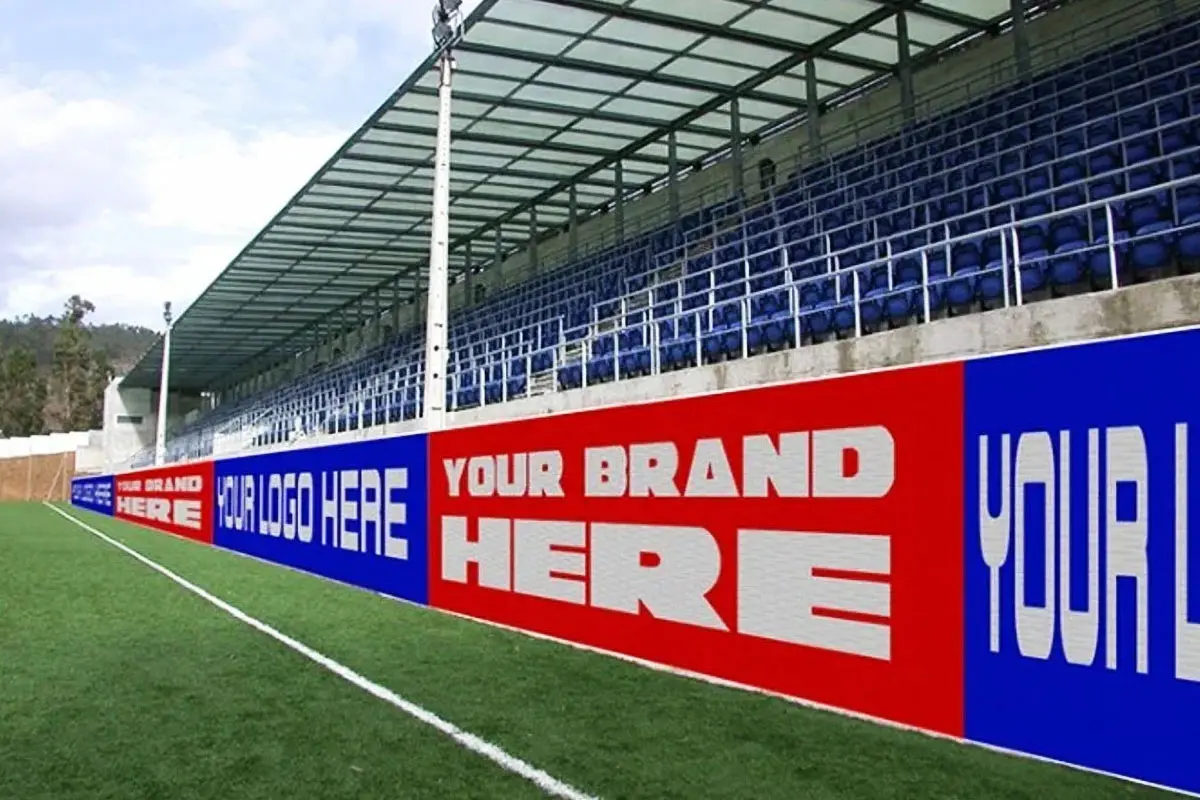
Fence LED Screen
Application Scenarios: Around large sports event venues, music festivals, exhibitions, and celebratory events.
Effect:
Showcase exciting moments from games or performances, advertisements, sponsor information, etc. It not only adds to the visual appeal but also boosts marketing profits as a part of your strategy.
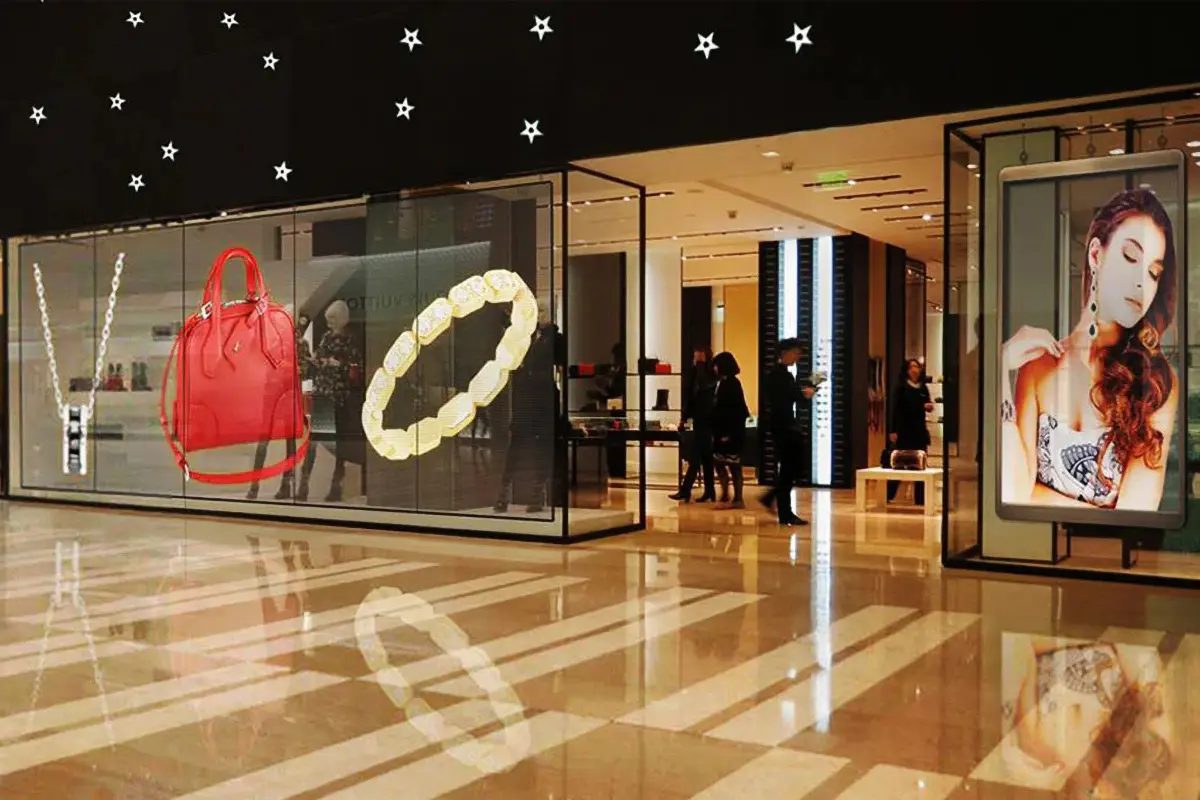
LED Window Display
Application Scenarios: Brand retail store windows, shopping mall glass railings, car dealerships’ glass curtain walls.
Effect:
It displays dynamic ads on transparent glass, seamlessly blending the real products in the background with virtual effects in the foreground to create a magical visual experience that makes people stop and stare.
During the day, it maintains the transparency of the glass without blocking the store view or natural lighting. At night, it transforms into a stunning, high-tech advertising screen.
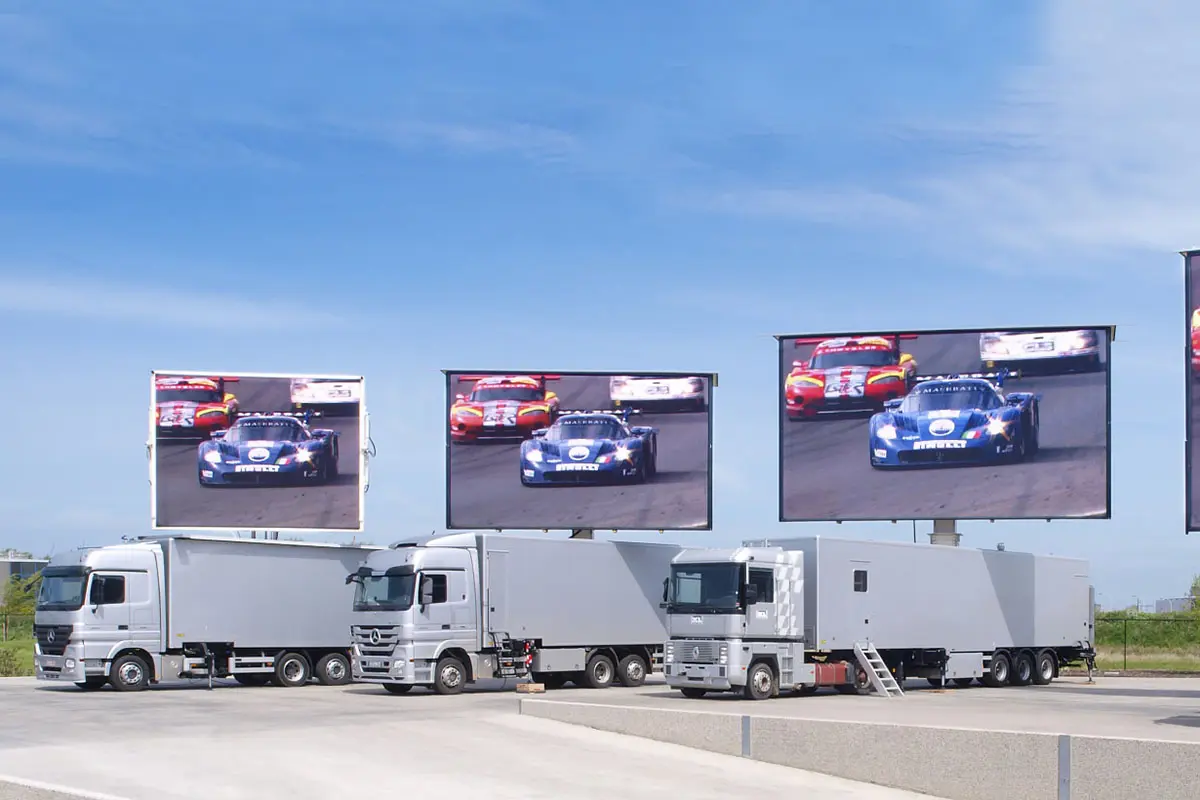
Car Advertising Screen
Application Scenarios: Installed on trucks, vans, or other specialized vehicles.
Effect:
Let your brand message move through the city, reaching specific target areas and audiences, such as high-end office buildings, business districts, or exhibition venues, with precision.
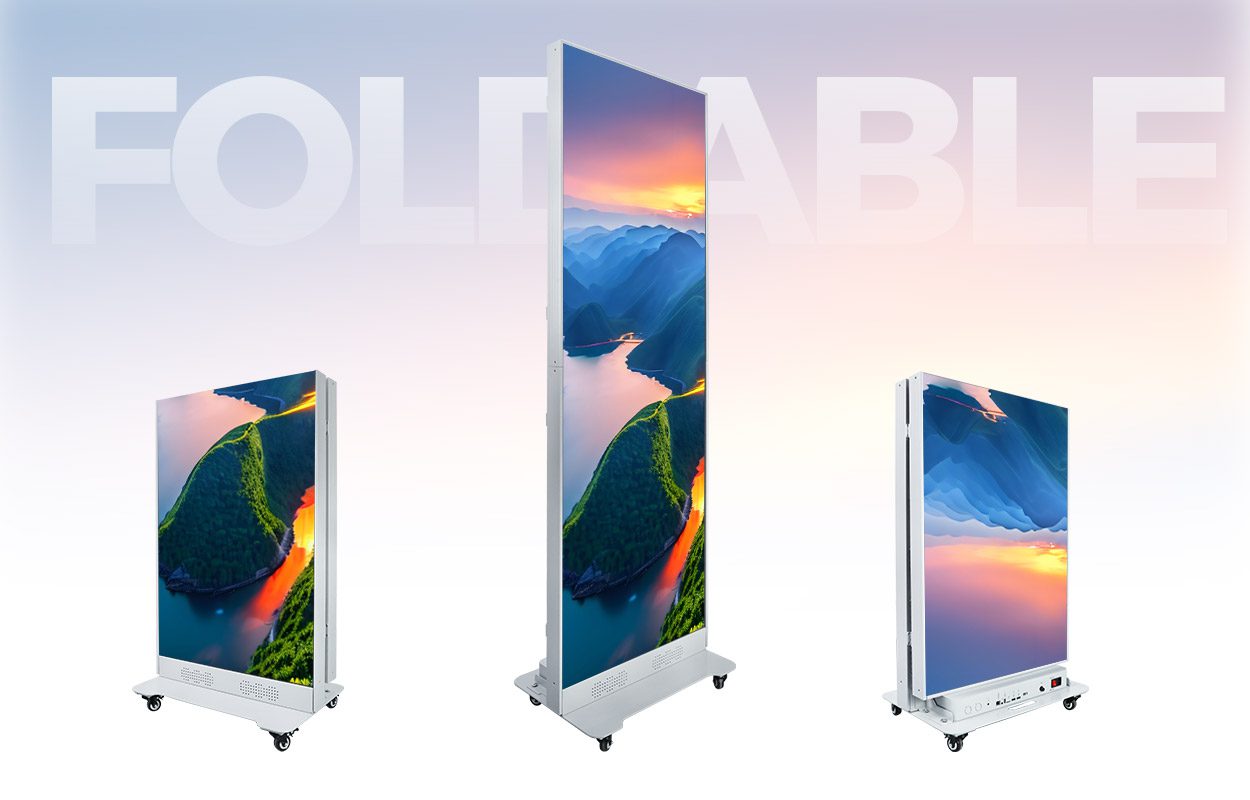
Digital LED Poster
Application Scenarios: Exhibitions, convenience store entrances, restaurant waiting areas, elevator lobbies, movie theater halls.
Effect:
Update your ad content as easily as changing your phone wallpaper. Instantly remove outdated promotions and launch new campaigns immediately.
At key locations where customers make final purchasing decisions—such as near the checkout counter or beside product shelves—use vibrant animated visuals and ultra-high-definition details to effectively stimulate impulse buys and directly boost sales conversion rates.
Plan Your LED Advertising Screen Budget
LED advertising screen recommendations
The Essential Buyer’s Guide for Your LED Advertising Screen
To help you avoid unnecessary pitfalls when choosing an LED advertising screen, we’ve put together a buying guide. This guide will cover everything from budget and screen types to the crucial pixel pitch choice and ongoing maintenance. Our goal is simple: to make sure your money is spent wisely and that every penny of your investment delivers the expected advertising results.
catalogue
- 1.Why Your Business Needs an LED Advertising Screen?
- 2. How Much Does It Cost to Install an LED Billboard?
- 3.What are the contemporary creative LED Advertising Screens?
- 4. What’s the Difference Between Indoor and Outdoor LED Advertising Screens?
- 5.Choosing the Right Pixel Pitch for Your LED Advertising Display
- 6.Content Creation Tips to Maximize Your LED Advertising Screen’s Impact
- 7.How to Maintain and Care for Your LED Advertising Screen
- 8. FAQ
- 9. Conclusion
1.Why Your Business Needs an LED Advertising Screen?
An LED advertising screen is much more than just a display device. It’s a powerful marketing tool and one of today’s most popular dynamic digital signage solutions.
Achieve Unmissable Advertising Impact
An LED advertising screen boosts brand or product visibility like no other. Compared to traditional billboards, dynamic visual content grabs more attention. A high-brightness outdoor LED display can show your ads in full HD, even under the sun, making your endorser look just as captivating and stopping passersby in their tracks.
Increase Foot Traffic and Sales All Day Long
Installing an LED advertising screen outside your store is one of the most effective ways to drive foot traffic. It works like a 24/7 salesperson, attracting customers with engaging product videos and live promotions. For retail store and restaurant advertising, this dynamic method has proven to directly increase sales.
Endless Flexibility with Easy Real-Time Updates
The flexibility of content is the biggest advantage of digital advertising screens. No more high costs for traditional printed ads. With a central control system, you can easily update content in real-time, switch promotions in minutes, or tailor content for different times of day (like rush hour or lunchtime).
Highly Competitive Cost-Effectiveness and ROI
Over time, an LED advertising screen is a highly cost-effective marketing tool. It eliminates the recurring costs of printing, and as time goes on, the cost per display drops significantly, leading to a lower cost per exposure. This makes it not just an expense, but a smart business investment that delivers ongoing returns.
2. How Much Does It Cost to Install an LED Billboard?
LED advertising screen cost depends on the complete installed system, not only the LED display area. A compact indoor poster, a building-mounted outdoor billboard, and a landmark media facade have different structures, electrical work, controllers, access requirements, commissioning, and long-term service needs.
Early Planning Ranges and Quotation Scope
The existing ranges below are broad early-planning examples, not supplier quotations:
- A compact digital poster used for menus or promotions may be planned around $500-$5,000, depending on active size, pitch, controller, stand, software, packing, freight, and warranty.
- A fixed outdoor billboard may be planned around $20,000-$100,000+ when the screen, steel structure, electrical work, installation access, control system, testing, and commissioning are included.
- A landmark-scale media facade can reach hundreds of thousands to more than one million dollars when it requires custom structure, permits, engineering, high-capacity processing, redundancy, complex installation, and long-term service.
Compare quotations only when the active dimensions, technical configuration, structure, power and signal scope, installation, commissioning, freight, spare parts, and warranty are defined on the same basis.
What factors affect the price of an advertising screen?
Type
Indoor LED displays are like home TVs—they don’t need to handle harsh weather,so they tend to be cheaper.Outdoor LED displays, on the other hand, must withstand sun, rain, and temperature changes.They need higher brightness, waterproofing, and better heat resistance,which makes outdoor LED billboards naturally more expensive.
Pixel Pitch
A P3 screen is much more expensive than a P10 screen.The goal isn’t always the sharpest clarity—it’s about choosing the right pixel pitch based on the typical viewing distance. If your screen is along a highway where people only see it from far away, there’s no need to pay for extremely high resolution.
Size & Installation
The size of the screen determines how many LED modules are needed,so bigger screens generally cost more—that’s straightforward.But many people overlook installation costs. It’s not just about hanging the screen—it may involve structural support, electrical work, and more. All of this adds to the cost.
3.What are the contemporary creative LED Advertising Screens?
Today’s LED advertising screens are no longer just simple rectangles. They are turning into stunning works of art and landmarks. If you think advertising is just about “playing a video,” the following innovations will completely change your mind.
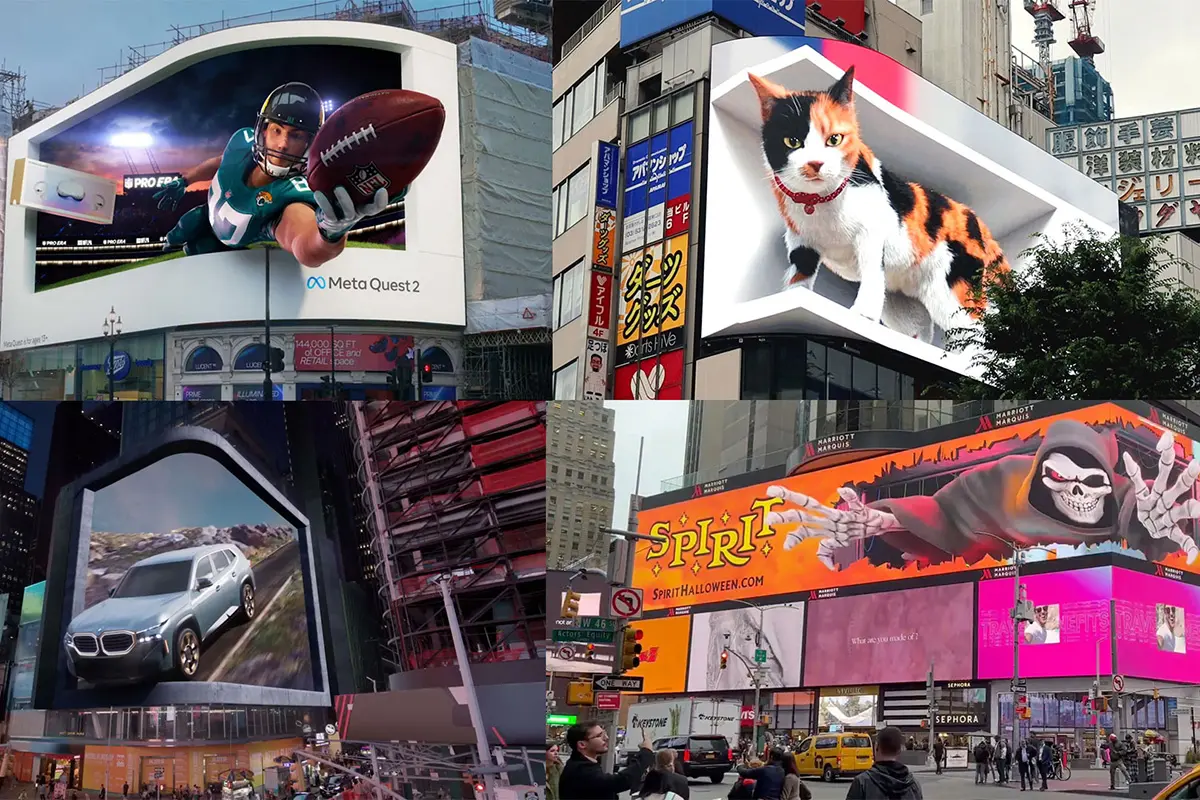
Landmark 3D billboard
This is probably the hottest form of creative LED display right now. It uses special video content and perspective calculations to create incredibly realistic 3D effects on ultra-high-definition 3D LED screens. The visual impact and social media buzz from this immersive advertising experience are something traditional ads can’t match. It can turn an ordinary building facade into a viral landmark overnight.
Transparent LED Screens
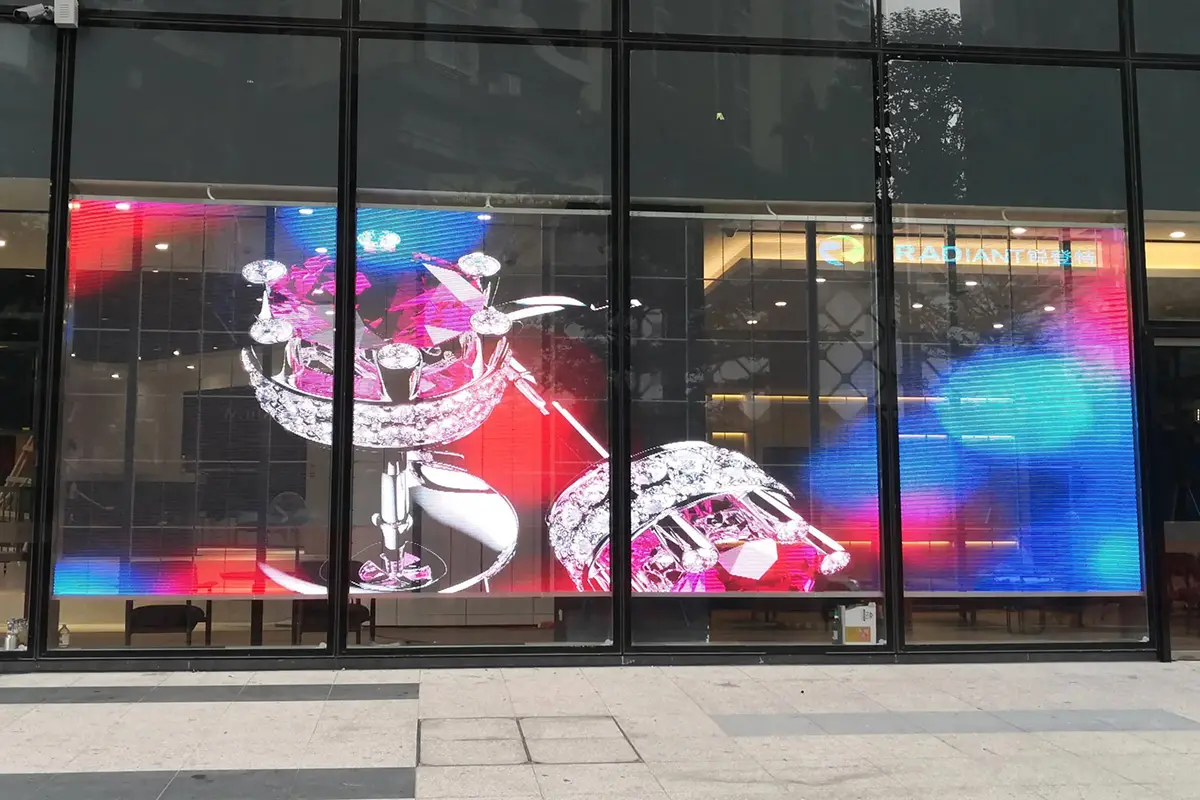
A Transparent LED display is like a high-tech film applied directly to your store’s window glass. When turned off, it’s almost invisible, letting natural light in and maintaining the view inside the store. When turned on, dynamic ad content appears to float on the glass, creating a fascinating mix with the real products behind it. This see-through digital signage perfectly blends the digital and real worlds. It’s a powerful tool for elevating the style and tech appeal of retail store advertising.
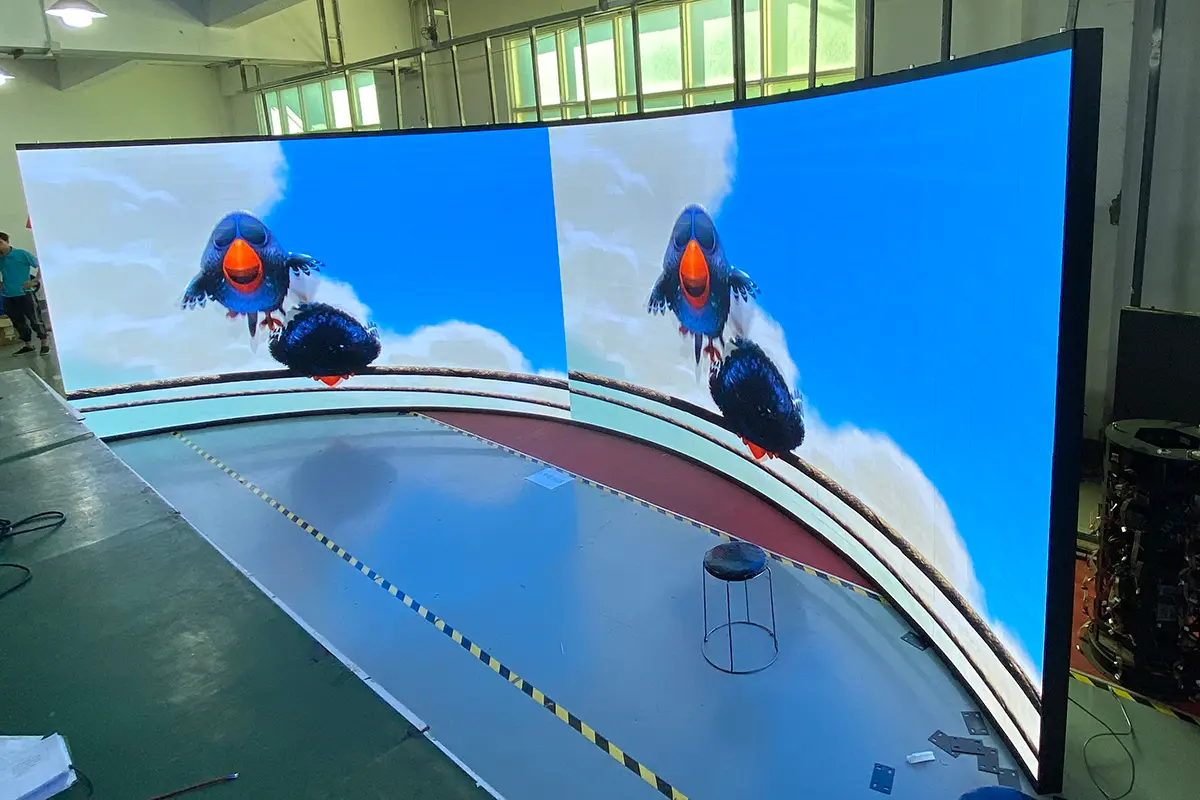
Curved and LED Circular Screens
Moving beyond flat surfaces, curved LED screens and 360-degree LED displays use flexible LED modules to create more immersive and enveloping visual spaces.
Flexible Creative LED Screens
Using flexible LED technology, screens can become as soft as fabric. This means they can be made into wave shapes, spheres, or even wrapped around unusual sculptures. Even cooler, this has led to LED wearables – models can walk the runway wearing clothing made from flexible screens, with patterns and videos flowing on the fabric. This is undoubtedly the most eye-catching focus for a fashion show or brand pop-up event.
4. What’s the Difference Between Indoor and Outdoor LED Advertising Screens?
Think of an LED advertising screen like a car. An indoor screen is like a comfortable family sedan, while an outdoor screen is like an off-road vehicle built for tough terrain. Their core tasks are different, and their design standards are worlds apart.
To choose the right type of LED screen for your business, you must first understand the difference between them.
| Feature | Indoor Screen | Outdoor Screen |
|---|---|---|
| Brightness | 800 – 1,500 nits | 5,000+ nits |
| Protection Rating | IP20 / IP30 (basic dust protection) | IP65 or higher (fully waterproof and dustproof) |
| Pixel Pitch | Small (e.g., P1.2 – P3) | Standard (e.g., P6 – P10+) |
Key Difference 1: Brightness
Indoor Screen:
It’s like your home TV, with soft light. Its brightness is typically between 800-1,500 nits. This is enough for clear viewing under indoor lighting, but if placed in direct sunlight, it instantly becomes “invisible.”
Outdoor Screen:
It must be a “sunlight warrior.” Its brightness is usually as high as 5,000+ nits, and can even reach 8,000-10,000 nits, ensuring it remains clear and visible even under the midday sun.
Key Difference 2: Protection Rating
Indoor Screen:
It operates in a comfortable environment and generally only needs basic dust protection. Its IP rating is typically IP20 or IP30.
Outdoor Screen:
It must withstand rain, wind, sun exposure, and dust accumulation. It requires a protection rating of at least IP65 (fully dustproof and resistant to low-pressure water jets).