

NovaStar TU40 Pro Specifications: Everything You Need to Know
2026-02-26T03:52:39+00:00February 26, 2026|Tags: FAQs NovaStar|
Colorlight X8m Ultra-4K LED Video Processor Review: Performance, Features & Advantages
2026-02-02T03:18:55+00:00February 13, 2026|Tags: FAQs Colorlight|
HUIDU HD-VP620 LED Display All-In-One Video Processor
2026-02-02T03:02:40+00:00February 2, 2026|Tags: FAQs HuiDu|
- 1. Màn hình LED là gì? kích thước?
- 2. Màn hình LED thông dụng kích thước và kịch bản ứng dụng
- 3. Đèn LED tiêu chuẩn trưng bày kích thước
- 4. Các yếu tố ảnh hưởng đến kích thước of Màn hình LED
- 5. Làm thế nào để tính toán kích thước màn hình LED?
- 6. Các đơn vị khác nhau của Kích thước màn hình LED
- 7. LED trưng bày tỷ lệ kích thước
- 8. Trong kết luận
- Nhận báo giá miễn phí
Whether you’re building a captivating visual wall at an exhibition or selecting the right display terminal for a conference room, the LED Display Size is a crucial factor that should not be overlooked.
If the size is too small, the audience may not be able to see the details clearly; if it’s too large, it could lead to wasted budget or space constraints.
But here comes the question: what size is just right? Are there standard LED Display Size options? Is it worth customizing the size for your project? And is the conversion between millimeters, inches, and square meters complicated?
In this guide, we will thoroughly break down all the key information about LED Display Size to help you easily choose the most suitable solution. Ready to dive in? Let’s get started!
Table of Content
- 1. Màn hình LED là gì? kích thước?
- 2. Màn hình LED thông dụng kích thước và kịch bản ứng dụng
- 3. Đèn LED tiêu chuẩn trưng bày kích thước
- 4. Các yếu tố ảnh hưởng đến kích thước of Màn hình LED
- 5. Làm thế nào để tính toán kích thước màn hình LED?
- 6. Các đơn vị khác nhau của Kích thước màn hình LED
- 7. LED trưng bày tỷ lệ kích thước
- 8. Trong kết luận
- Nhận báo giá miễn phí
1. What is the LED display size?
LED Display Size refers to the physical display area of the screen, typically expressed as width × height, and is determined by a combination of module dimensions and pixel pitch.
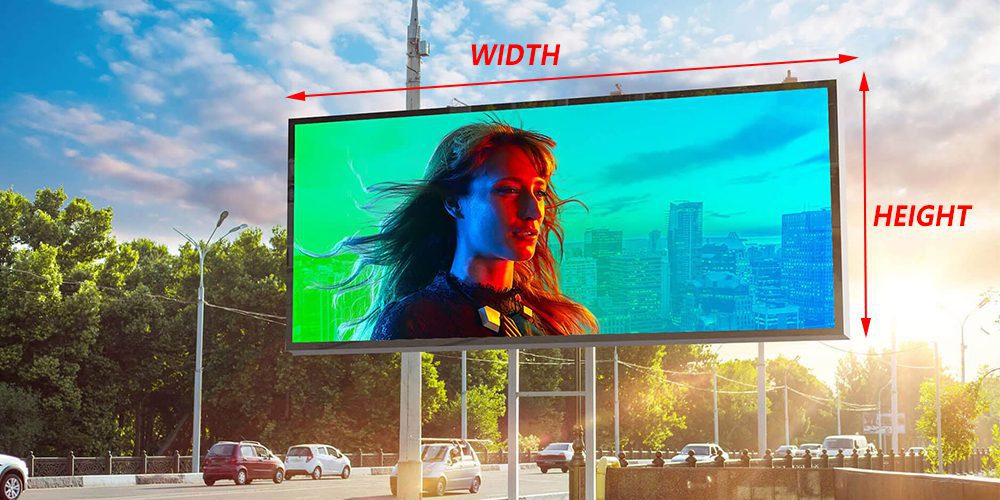
Unlike regular televisions, LED displays are usually assembled from multiple modules, each with fixed specifications such as 320mm × 160mm or 250mm × 250mm. The pixel pitch (such as P2, P4) affects image clarity and viewing distance, and also indirectly influences the overall size.
A correct understanding of LED Display Size is the first step in purchasing an LED screen.
2. Common LED display sizes and application scenarios
LED Display Size plays a crucial role across a wide range of applications, from commercial and public spaces to entertainment environments.
Choosing the right LED Display Size can significantly enhance visual experiences and optimize budget allocation.
2.1 Small LED Display Size
Application scenarios: Retail signage, small meeting rooms, exhibition booths, store windows
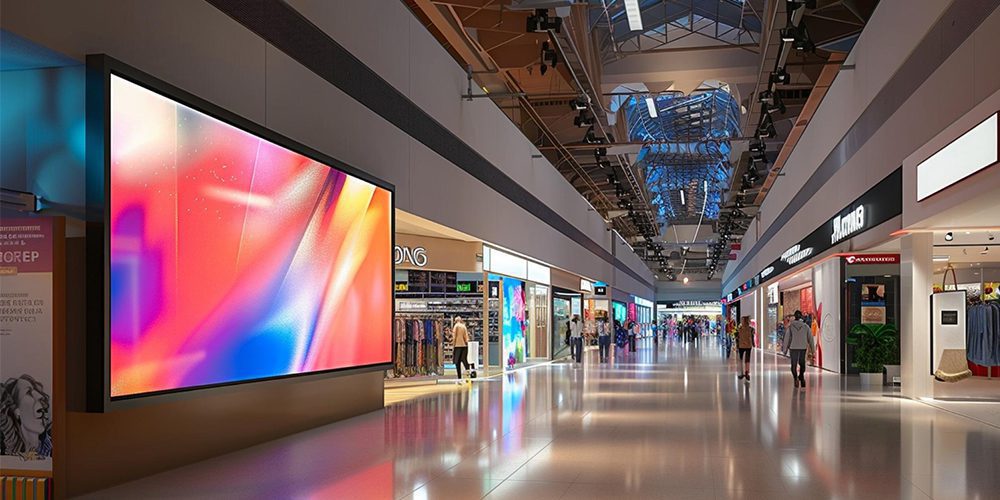
Designed for close viewing, small LED displays are ideal for indoor applications where space is limited but high resolution is required. They are compact and flexible to install, and are often used to display promotional information, brand logos, or conference content.
Common pixel pitches: P2.5mm, P2mm, P1.25mm
2.2 Medium LED Screen Size
Application scenarios: shopping mall atrium, stage background, church podium, company exhibition hall, auditorium multimedia screen

Medium-sized LED displays are suitable for environments with medium viewing distances and are usually used as visual focal points or background displays. They can be used to display static content, as well as support video playback, live broadcasts, and real-time interactions.
Common pixel pitch: P3.91mm, P4m, P6mm
2.3 Large LED display
Application scenarios: outdoor billboards, stadiums, station/airport information screens, city squares, concert main screens
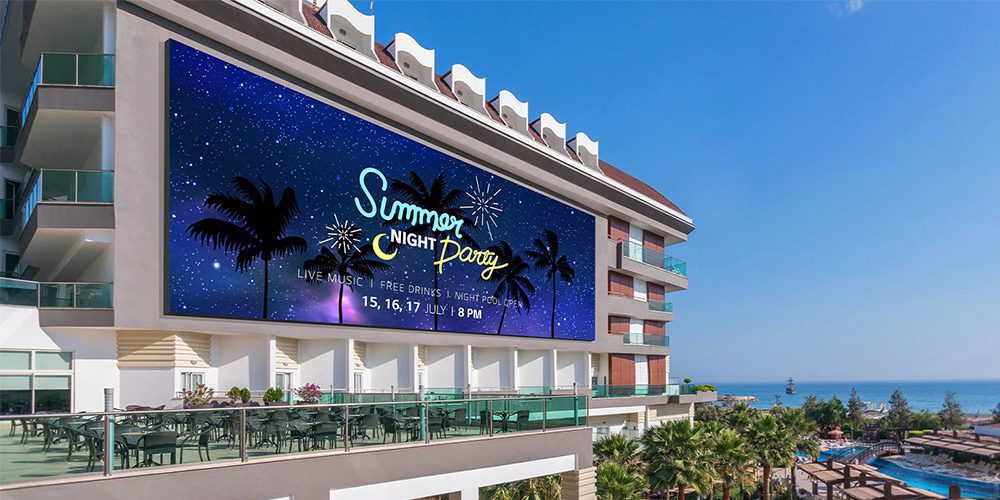
Large LED Display Sizes are intended for long-distance viewing (over 8 meters) and serve as powerful tools for maximizing visual impact and information delivery. These are frequently used in outdoor elevated signage, large-scale events, and busy transit hubs.
Common pixel pitch: P8mm, P10mm
3. Standard LED display size
An LED display is composed of modules and cabinets, and both parts typically follow standardized dimensions. A well-designed LED Display Size standard not only simplifies project planning and design but also greatly improves installation and maintenance efficiency.
Typically, LED Display Size standards are discussed from two perspectives: LED module size and LED cabinet size.
3.1 LED module size
LED modules are the most basic unit components of LED displays, usually composed of multiple pixel points arranged and connected through circuit boards. The choice of module size directly affects the overall size, resolution and clarity of the final display.
Common standard module sizes are as follows:
320mm × 160mm: The most widely used standard size, common in indoor and outdoor screens with pixel pitches such as P2.5, P3.91, P4, and P5. It offers strong compatibility and flexible assembly, making it suitable for various LED Display Size configurations.
250mm × 250mm: Common in rental LED displays, especially high-resolution screens such as P2.976 and P3.91, which are easy to install and maintain in an arc shape.
192mm × 192mm: Mostly used for small-pitch LED screens (such as P1.25, P1.56), suitable for indoor conferences, monitoring centers, studios and other scenes with high requirements for display accuracy.
256mm × 128mm, 160mm × 160mm: These sizes are mostly used for outdoor P10 and P8 displays. They are suitable for large advertising screens, are moderately priced, and are easy to mass produce.
Different manufacturers may also make minor adjustments based on these standards, but most modules remain compatible for easy replacement or upgrade.
3.2 LED Cabinet Size
The LED cabinet is a structural unit composed of multiple LED modules, usually with power supply, receiving card, heat dissipation structure and other accessories, which is the actual installation and transportation unit. Standardized cabinet size facilitates quick installation and disassembly, especially in the rental market.
Common box sizes are as follows:
640mm × 480mm (4:3 ratio): commonly used in small-pitch LED screens, such as P1.25, P1.86, P2.5, etc., suitable for indoor applications such as conference rooms, exhibition halls, command centers, etc.
500mm × 500mm (square box): A widely used standard in rental LED displays. It offers flexible installation and supports curved, hanging, and flat setups. This LED Display Size format is popular in stages and live performance venues.
500mm × 1000mm: A taller rectangular box that can reduce joint gaps and improve display consistency. It is very popular in outdoor advertising and stage rental.
960mm × 960mm: A common size for traditional fixed-installation LED displays, mainly used for outdoor P10, P8 and other displays, with good stability and protection performance.
4. Factors affecting the size of LED screens
There are many factors that influence the LED Display Size, all of which directly determine the screen’s actual visual performance, installation method, and overall project cost. When planning an LED display project, fully considering these key factors will help achieve the desired visual presentation.
4.1 Actual space size of the installation site
The LED Display Size must first be compatible with the physical constraints of the installation environment. Whether it’s a wall, stage backdrop, or outdoor billboard, the available space dictates the maximum screen size. For example, indoor conference rooms are limited by ceiling height and wall width, which typically only allow for small or medium LED Display Sizes. In contrast, outdoor squares or large stadiums can accommodate large or even extra-large LED displays.
4.2 Viewing distance and visual range
Viewing distance plays a critical role in selecting the appropriate LED Display Size. Generally, the greater the viewing distance, the larger the pixel pitch required, and the larger the screen must be to ensure clarity and a quality viewing experience. For instance, background screens at concerts or major conferences are typically large enough to allow rear-row viewers to see the content clearly. On the other hand, screens for close-range indoor viewing should not be too large to avoid visible pixelation.
4.3 LED dot pitch (pixel pitch)
Pixel pitch refers to the distance between the centers of two adjacent pixels and is commonly expressed as a “P” value, such as P2.5 or P3.91. The smaller the pitch, the higher the pixel density and image clarity. At the same resolution, a smaller pixel pitch allows for a smaller LED Display Size, while a larger pitch requires a larger screen to achieve similar clarity. Therefore, pixel pitch is one of the core parameters that directly influence the selection of LED Display Size.

4.4 Content Display Requirements
The type of content to be displayed also affects the design of the LED Display Size. For example, if the screen is only used to show text or simple icons, a smaller size may be sufficient. However, for dynamic content such as HD videos, live feeds, or animations, a larger LED Display Size is necessary to accommodate content ratio and deliver an immersive visual experience.
4.5 Installation method (fixed installation or rental installation)
The installation method also impacts the required LED Display Size. Fixed installations are designed for long-term use and focus more on structural integrity and aesthetics. In contrast, rental LED displays require standardized dimensions for easy assembly and disassembly—typically using 500×500mm or 500×1000mm cabinets—resulting in more standardized overall LED Display Sizes.
4.6 Project Budget
The larger the LED Display Size, the more LED modules, cabinets, power supplies, control systems, and other components are required—leading to a significant increase in overall cost. Therefore, budget constraints often become one of the key factors in determining the appropriate LED Display Size in real-world projects. Striking a reasonable balance between project requirements and budget helps in identifying the most suitable LED Display Size solution.
5. How to Calculate LED Display Size?
In real-world projects, accurately calculating the LED Display Size is a critical step to ensure both installation precision and an optimal visual experience. Depending on design requirements and screen structure, the LED Display Size can be measured and calculated using several methods.
5.1 Measure by width and height (standard rectangle method)
This is the most basic and intuitive approach. It involves directly measuring the physical width and height of the LED display area and is suitable for standard rectangular displays.
Example:
If you plan to install a screen that is 3000mm wide and 2000mm high:
LED Display Size = 3000mm × 2000mm
Formula:
Width (W) = Actual measured width (mm)
Height (H) = Actual measured height (mm)
LED Display Size = Width × Height
5.2 Measuring Using Module Dimensions
An LED display is assembled from multiple modules. You can calculate the overall LED Display Size by multiplying the module dimensions by the number of modules spliced together.
Example:
If one LED module measures 320mm × 160mm and there are 8 modules horizontally and 6 vertically:
Total Width = 320mm × 8 = 2560mm
Total Height = 160mm × 6 = 960mm
LED Display Size = 2560mm × 960mm
Formula:
Total Width = Module width × Number of horizontal modules
Total Height = Module height × Number of vertical modules
LED Display Size = Total Width × Total Height
5.3 Calculating by Cabinet Size and Quantity
The LED cabinet is a structural unit containing multiple modules and is the basic installation and transport unit. This method is ideal for fixed installation or rental screen projects.
Example:
If each cabinet measures 500mm × 1000mm and you use 4 horizontally and 3 vertically:
Total Width = 500mm × 4 = 2000mm
Total Height = 1000mm × 3 = 3000mm
LED Display Size = 2000mm × 3000mm
Formula:
Total Width = Cabinet width × Number of horizontal cabinets
Total Height = Cabinet height × Number of vertical cabinets
LED Display Size = Total Width × Total Height
5.4 Calculating by Pixel Pitch and Pixel Count
This method is ideal for situations where precise resolution control is required, such as video playback or high-definition content display.
Example:
If an LED display has a resolution of 1024 × 512 pixels and the pixel pitch is 2.5mm:
Width = 1024 × 2.5mm = 2560mm
Height = 512 × 2.5mm = 1280mm
LED Display Size = 2560mm × 1280mm
Formula:
Width = Horizontal pixels × Pixel pitch
Height = Vertical pixels × Pixel pitch
LED Display Size = Width × Height
5.5 Measuring Irregular Screens (Curved/Custom Shapes)
For curved, circular, L-shaped, or other creative irregular LED Display Size designs, a rectangular formula cannot be used directly. Instead, break the structure into regular geometric units for calculation.
Example:
A circular LED screen with a diameter of 4000mm can be approximated as a square area:
LED Display Size ≈ 4000mm × 4000mm
For complex wave-shaped or folding screens, divide them into smaller rectangles or arc segments and sum the areas.
Method:
- Divide the overall irregular screen structure into measurable rectangles/sectors/arcs
- Measure each unit and calculate their areas individually
- Add all areas to get the total LED Display Size
- CAD drawings or modeling software can assist with accurate calculations
6. Different units of LED Display Sizes
LED Display Size can be expressed in various units. Depending on the region, application scenario, and industry standard, the units used to measure LED Display Size may vary. Understanding the conversion between these units is crucial for ensuring project compatibility, screen accuracy, and proper content scaling.
This section explores how common units—millimeters (mm), centimeters (cm), meters (m), feet (ft), inches (inch), and pixels—are applied in measuring LED Display Size, along with their conversion methods.
6.1 LED Display Sizes in Millimeters (mm)
Millimeter is the most commonly used unit for LED Display Size in the industry. Whether designing LED modules, cabinets, or full screens, millimeters are typically the base measurement.
Common LED module and cabinet sizes are as follows:
| LED Module Size | LED Cabinet Size |
| 320mm × 160mm | 500mm × 500mm / 500mm × 1000mm |
| 250mm × 250mm | 640mm × 480mm |
| 192mm × 192mm | 960mm × 960mm |
Most LED display screens are designed based on millimeters, so this is one of the most important reference dimensions when selecting and installing them.
6.2 LED Display Sizes in Centimeters (cm)
In daily descriptions or non-technical user communication, centimeters can also be used to express LED screen size. The conversion between millimeters and centimeters is very simple:
Centimeters = Millimeters ÷ 10
Example:
960mm × 960mm = 96cm × 96cm
1920mm × 1080mm = 192cm × 108cm
Common LED display cabinet dimensions (in centimeters) and their compatible pixel pitches are as follows:
| Size (cm) | Common Pixel Pitches (mm) |
| 96 × 96 | P2.5, P3.07, P4, P5, P6.67, P8, P10 |
| 64 × 48 | P1.25, P1.53, P2, P2.5 |
| 50 × 100 | P2.9, P3.9, P4.8, P5 |
| 100 × 250 | P1.25, P1.56, P2.5, P3.91 |
Expressing the size of LED display screens in centimeters can help non-professionals understand the size of the screen more intuitively.
6.3 LED Display Sizes in Meters (m)
For large projects, the size of LED display screens is often expressed in meters (m), which is especially suitable for scenes such as billboards, outdoor large screens, and stage backgrounds.
Meter = millimeter ÷ 1000
Example:
9600mm × 5400mm = 9.6m × 5.4m
3840mm × 2160mm = 3.84m × 2.16m
Meters are particularly common in construction drawings, site measurements and rental plans, helping to quickly understand the overall LED display size range.
6.4 LED Display Sizes in Feet
In North America, the United Kingdom and other countries, feet (ft) is a common unit for describing the size of LED displays, especially in stage rental, building facades and sports stadium projects.
Feet = Meters × 3.281
Example:
4m × 3m LED screen ≈ 13.1ft × 9.8ft
12m × 6m advertising screen ≈ 39.4ft × 19.7ft
In event planning and venue layout, it is very practical to use feet to estimate the size of the LED display.
6.5 LED Display Sizes in Inches
Inches are often used in all-in-one LED displays, retail displays or conference room LED screens to indicate the diagonal length of the screen or the pitch between modules.
Inches = millimeters ÷ 25.4
Example:
1920mm × 1080mm ≈ 75.6″ × 42.5″
3840mm × 2160mm ≈ 151.2″ × 85.0″
6.6 LED Display Sizes in Pixel Pitch
In addition to physical size, pixel size is the core indicator of LED display quality, which is determined by the pixel pitch (P) and the number of pixels.
Calculation method:
Screen width (pixels) = width (mm) ÷ pixel pitch (mm)
Screen height (pixels) = Height (mm) ÷ Pixel pitch (mm)
Example (P4 screen):
Dimensions: 3840mm × 2160mm
Pitch: P4 = 4mm
Resolution = 960 × 540 pixels
7. LED display size ratio
When choosing an LED display, it is not just about “how big” that matters, but more importantly, the aspect ratio of the LED display. The aspect ratio determines the visual presentation of the screen, content compatibility, and overall spatial adaptability, and is the core factor that affects the size configuration and actual effect of the LED display.
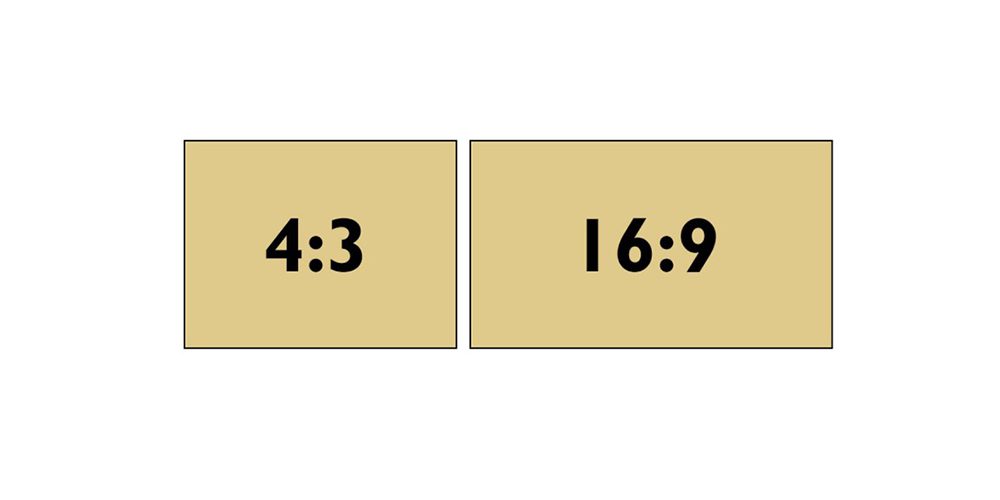
7.1 16:9 LED display size ratio
If you are not sure which ratio to choose, 16:9 is the most common and recommended LED display size ratio. It is the industry standard for today’s video, conference systems, advertising displays and other scenes, and it perfectly fits modern HD (1080p) and UHD (4K/8K) content.
| Size ratio | Common resolutions | Application Scenario |
| 16:9 | 1920×1080 (Full HD), 3840×2160 (4K), 7680×4320 (8K) | Video wall, conference screen, stage background, outdoor advertising LED display, indoor digital signage |
Why choose 16:9 LED display size?
1)Highly match video content: Most media content is in 16:9 format and does not need to be cropped or deformed during playback .
2)Strong compatibility: adapt to various signal sources, players and LED control systems.
3)Balanced visual effects: Especially suitable for large-area LED displays, providing high-definition and wide-viewing-angle viewing experience.
7.2 4:3 LED display size ratio
Before 16:9 became mainstream, 4:3 was the early mainstream video and display ratio. Although it is less common now, it is still used in some scenarios where the LED display size is narrow or needs to be compatible with traditional content.
| Size ratio | Common resolutions | Application Scenario |
| 4:3 | 1024×768 (XGA), 1600×1200 (UXGA) | Teaching LED display, government agencies, industrial control panels, traditional projection replacement screens |
Why choose 4 : 3 LED display size?
(1)Compatible with old format content: Avoid black edges or stretching when displaying traditional PPT or old movies.
(2)Suitable for sites with limited vertical space: such as monitoring rooms, industrial equipment panels, etc.
(3)Still used in some professional systems: such as government and enterprise demonstrations, military command screens, etc.
7.3 Other LED display size ratios
Sometimes, standard size ratios cannot meet complex or creative application requirements. Here are several common non-standard LED display size ratios, each with its own unique advantages:
| Size ratio | describe | Common Applications |
| 21:9 (Ultrawide) | Similar to cinema screen ratio, providing immersive experience | High-end theater, e-sports stage, immersive exhibition hall, luxurious conference room |
| 32:9 (Extremely Wide) | For multi-task data display or wide-angle monitoring | Command center, financial screen, dispatch center, stock exchange |
| 1:1 (square) | Unconventional but artistic proportions for digital signage | Retail windows, fashion advertising, social media video displays, LED poster screens |
| Custom scale | Can be designed arbitrarily according to project requirements, such as special-shaped screens and curved screens | Building exteriors, interactive exhibitions, stage design, brand launches |
8. In conclusion
In general, understanding and choosing the right LED display screen size ratio is a key step in creating an efficient visual experience. Different application scenarios and content forms have different requirements for the ratio – whether it is the classic 16:9, traditional 4:3, or creative 1:1 and ultra-wide ratios, finding the right size can maximize the effect of the LED display.
After reading this guide, you should now have a solid grasp of how LED display sizes affect visual impact, installation, and budget planning.
Still unsure which LED screen size is best for your project? Contact EagerLED today and get expert guidance on selecting the optimal LED display size based on your venue, application, and content goals. Let us help you bring your vision to life.
 Transparent LED Screen: Benefits, Costs & Installation for Retail Use