

NovaStar TU40 Pro Specifications: Everything You Need to Know
2026-02-26T03:52:39+00:00February 26, 2026|Tags: FAQs NovaStar|
Colorlight X8m Ultra-4K LED Video Processor Review: Performance, Features & Advantages
2026-02-02T03:18:55+00:00February 13, 2026|Tags: FAQs Colorlight|
HUIDU HD-VP620 LED Display All-In-One Video Processor
2026-02-02T03:02:40+00:00February 2, 2026|Tags: FAQs HuiDu|
- 1.The Largest LED Displays in the World (Top 10+ List)
- 2. Technology Behind largest LED displays
- 3. The Rise of the Largest LED Display
- 4.Applications of the Largest LED Displays
- 5. Key Benefits of the Largest LED Display Technology
- 6. The Future of Largest LED Screens
- 7. Cost and Feasibility of the World’s Largest LED Displays
- 8. FAQs
- 9.Conclusion
- Get Quote Free
From the bustling streets of Times Square to the futuristic skylines of Asia, the world’s largest LED displays have become more than just advertising tools—they are landmarks of innovation, creativity, and sheer scale. These massive screens captivate millions daily, transforming ordinary cityscapes into dazzling stages for brands, entertainment, and cultural moments.
The fascination lies not only in their size but also in the cutting-edge technology that powers them, delivering breathtaking visuals and immersive experiences that leave audiences in awe.
Today, the largest LED display has become a landmark attraction, reshaping how cities showcase innovation and creativity.
In this guide we’ll delve into the world of the largest LED display in the world.
Table of Content
- 1.The Largest LED Displays in the World (Top 10+ List)
- 2. Technology Behind largest LED displays
- 3. The Rise of the Largest LED Display
- 4.Applications of the Largest LED Displays
- 5. Key Benefits of the Largest LED Display Technology
- 6. The Future of Largest LED Screens
- 7. Cost and Feasibility of the World’s Largest LED Displays
- 8. FAQs
- 9.Conclusion
- Get Quote Free
1.The Largest LED Displays in the World (Top 10+ List)
1.1 The MSG Sphere, Las Vegas (U.S.)
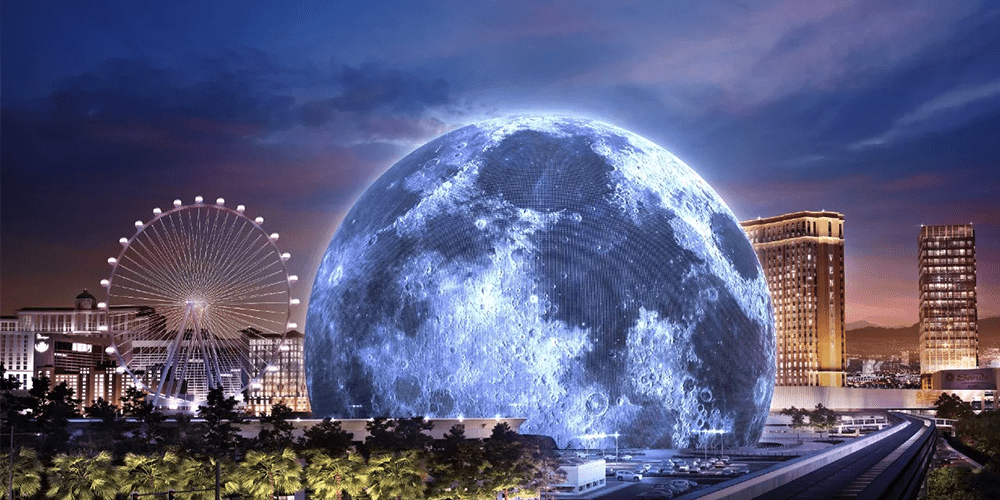
- Location:Las Vegas, USA
- Type:Spherical Media Architecture (Exterior & Interior)
- Key Spec:580,000 sq ft (Exterior); 160,000 sq ft (Interior)
- Distinction:World’s largest spherical structure and highest-resolution LED screen.
1.2 Suzhou Sky Screen (China)
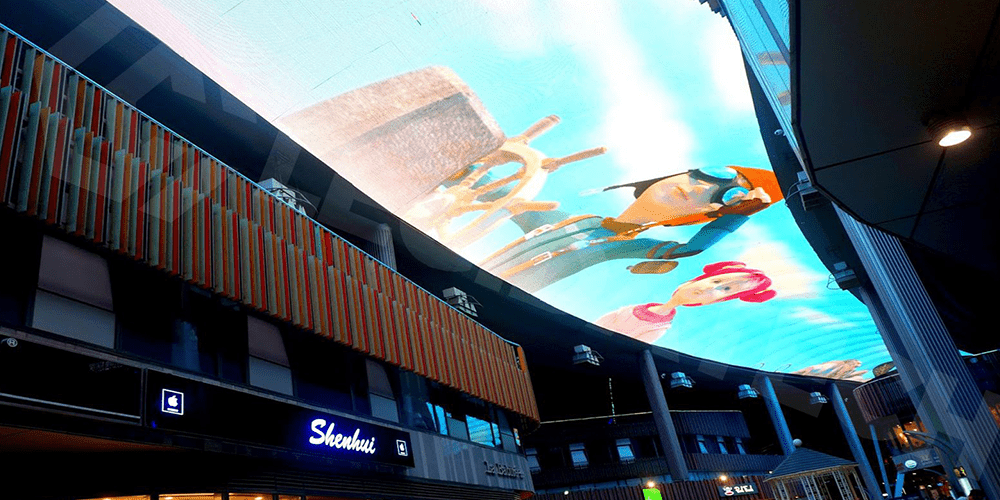
- Location:Suzhou, China
- Type:LED Canopy / Sky Screen
- Key Spec:1,640 ft (500m) long
- Distinction:Guinness World Record holder for largest LED display by surface area.
1.3 Fremont Street Experience, Las Vegas (U.S.)
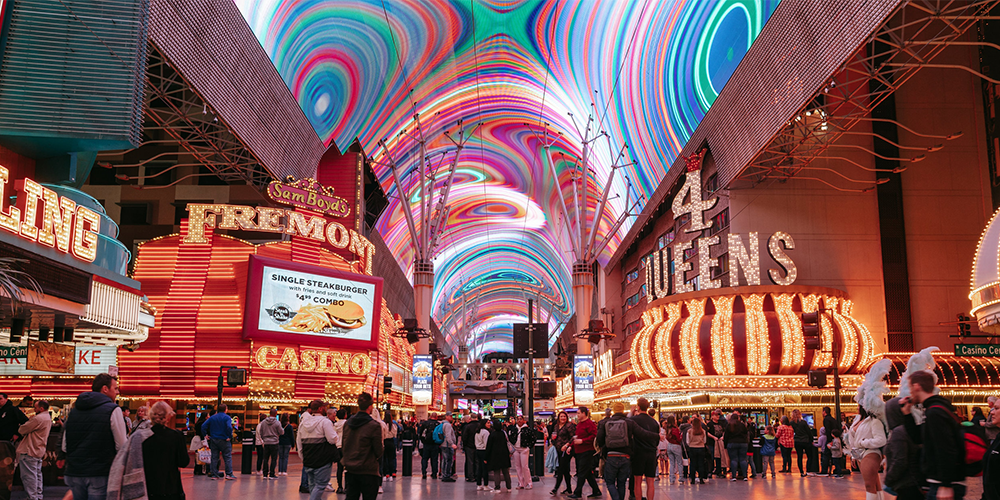
- Location:Las Vegas, USA
- Type:LED Canopy / Barrel Vault
- Key Spec:1,375 ft long, 90 ft wide
- Distinction:World’s largest video screen in a pedestrian mall and a first of its kind urban attraction.
1.4 The Place Sky Screen, Beijing (China)
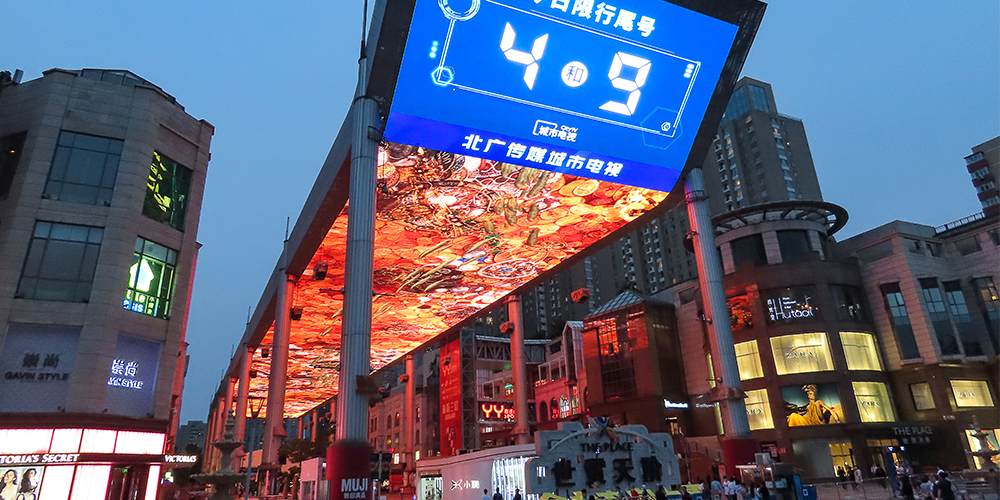
- Location:Beijing, China
- Type:LED Canopy / Sky Screen
- Key Spec:820 ft x 98 ft
- Distinction:Famous for its 3D visual effects and role in urban revitalization.
1.5 Resorts World, Las Vegas (U.S.)
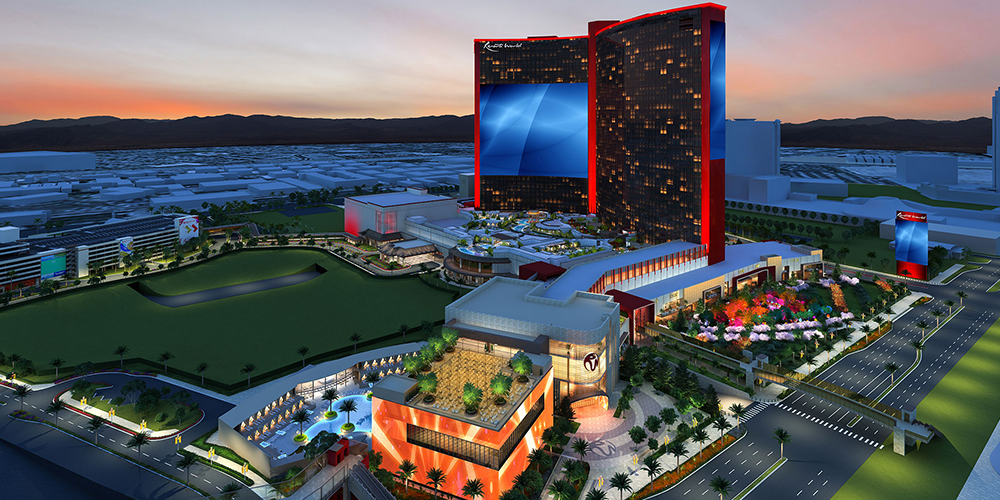
- Location:Las Vegas, USA
- Type:Building Facade Media Wall
- Key Spec:100,000 sq ft
- Distinction:Largest single building facade LED display in the world.
1.6 Mercedes-Benz Stadium Halo Board, Atlanta (U.S.)
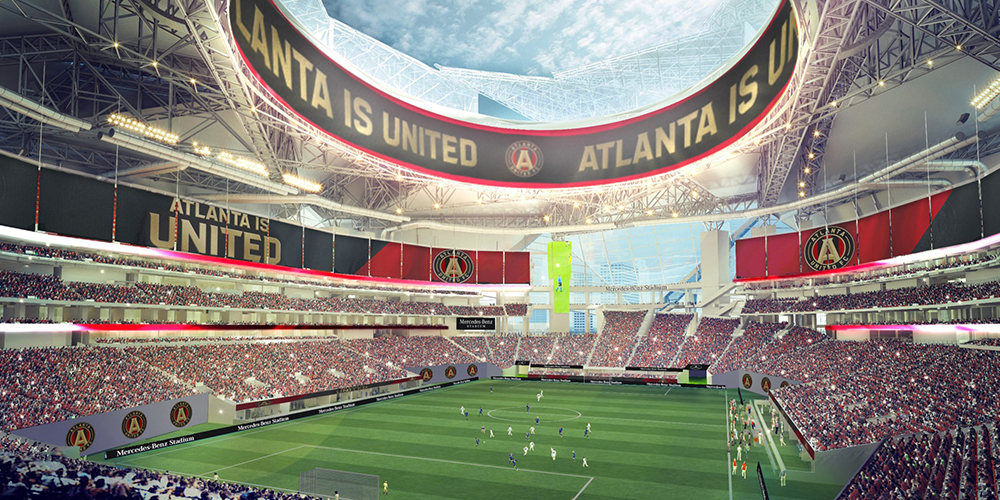
- Location:Atlanta, USA
- Type:360-Degree Halo Display
- Key Spec:63,000 sq ft
- Distinction:First and largest 360-degree halo board in a professional sports stadium.
1.7 Mall Taman Anggrek, Jakarta (Indonesia)
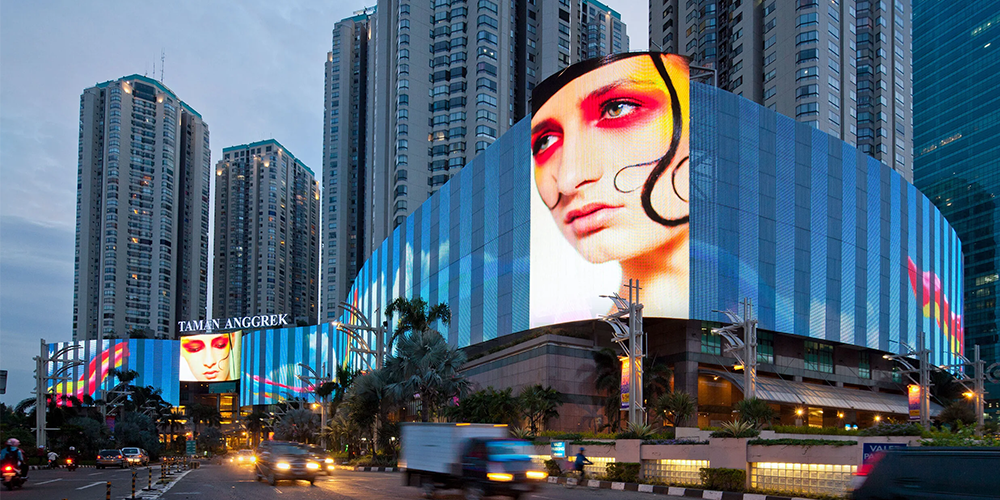
- Location:Jakarta, Indonesia
- Type:Building Facade Media Wall
- Key Spec:92,213 sq ft
- Distinction:Former Guinness World Record holder for the largest illuminated facade.
1.8 SoFi Stadium Infinity Screen, Los Angeles (U.S.)
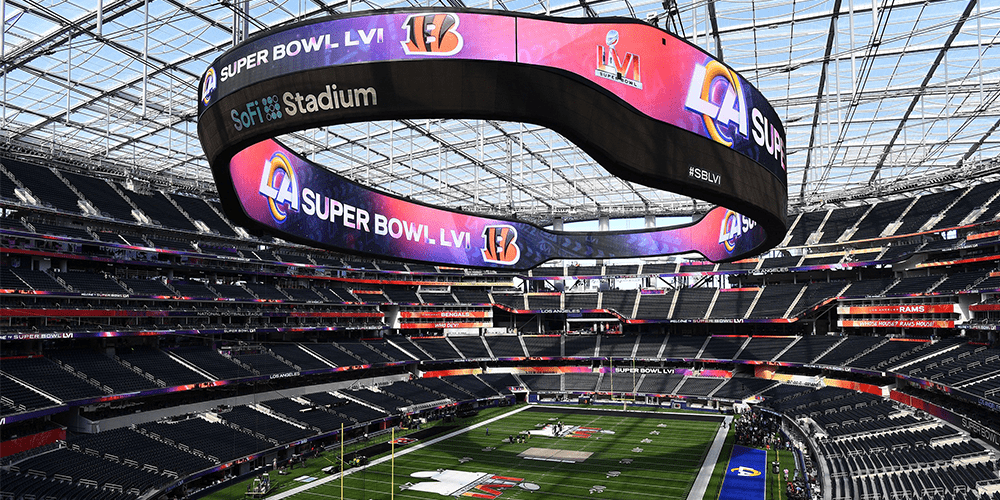
- Location:Los Angeles, USA
- Type:Dual-Sided Suspended Video Board
- Key Spec:70,000 sq ft
- Distinction:Largest 4K end-to-end video board in sports.
1.9 Times Square Displays, New York City (U.S.)
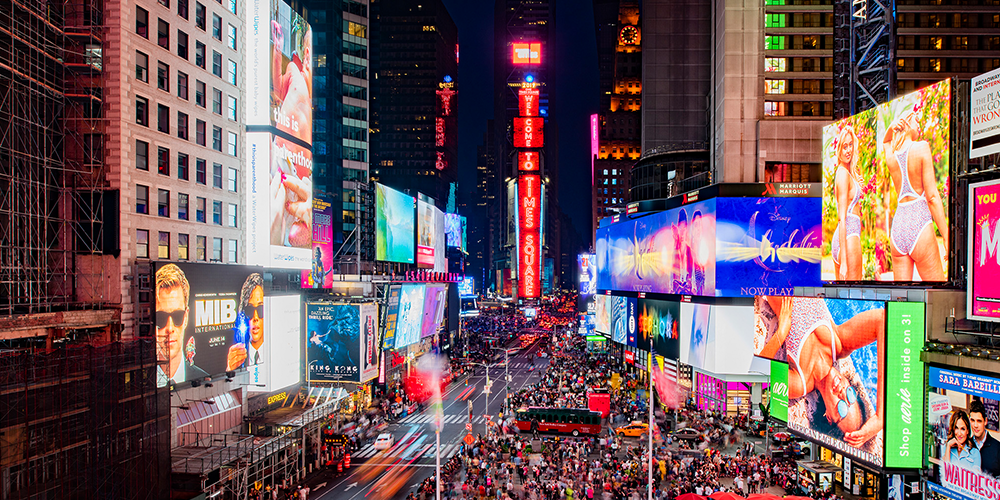
- Location:New York City, USA
- Type:Multi-Screen Urban Environment
- Key Spec:Dozens of screens, largest over 25,000 sq ft
- Distinction:The world’s most famous and concentrated hub for digital advertising.
1.10 Arena Ciudad de México (Mexico City, Mexico)
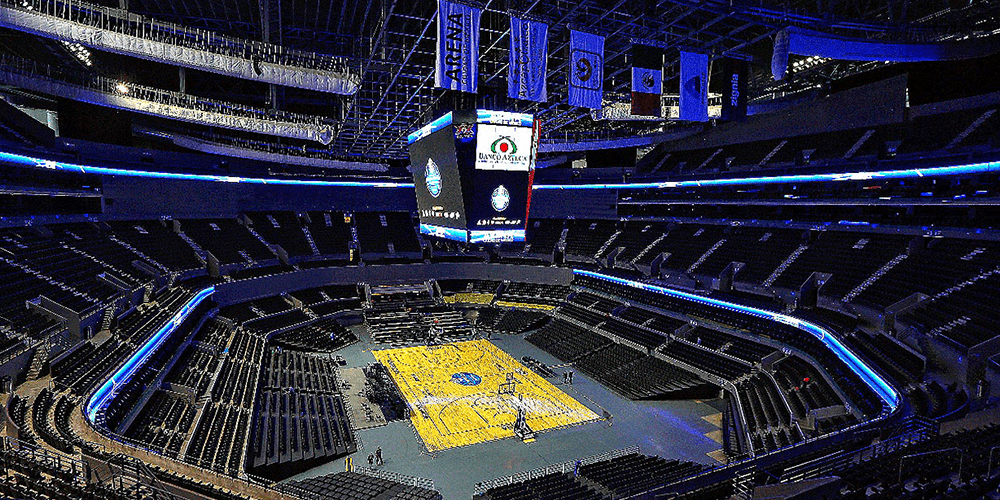
- Location:Mexico City, Mexico
- Type:Indoor Arena Center-Hung Display
- Key Spec:37,500 sq ft
- Distinction:Largest indoor LED screen in a multipurpose arena.
2. Technology Behind largest LED displays
The secret is in the LED technology for large scale, leaving LCD and OLED far behind.
2.1 LED vs. LCD / OLED
- LCDs (Liquid Crystal Displays): Backlit, bulky and limited brightness and scalability.
- OLEDs (Organic LEDs): Excellent color accuracy and contrast but expensive and difficult to manufacture in very large sizes.
- LEDs (Light Emitting Diodes): Self lit, modular, can be tiled together seamlessly, screens of any size, shape and curvature.
2.2 Core Technologies Behind largest LED displays
2.2.1 Pixel Pitch & Resolution
- Pixel pitch: distance between two pixels’ centers.
- Smaller pixel pitch: sharper images, higher resolution, more detail even at close viewing distance.
- Large scale displays with fine pixel pitch are good for stadiums, malls and concertswhere people will be standing close to the screen.
2.2.2 Brightness & Durability
- LEDs can be 10 times brighterthan traditional LCDs, visible in direct sunlight.
- Outdoor rated LEDs are built to withstand rain, wind, snow and extreme heat or cold.
- 24/7 operation in demanding environments like city centers and stadiums.
2.2.3 Refresh Rates
- High refresh rates (often 3,840Hz or more) for smooth playback of sports, concerts and live broadcasts.
- Prevents motion blur or ghosting, content looks crisp even during fast movement.
- Reduces flickering in video recordings, media friendly.
2.3 Emerging Technologies in LED
2.3.1 Transparent LED Displays
- Can be integrated into glass facades, shopping malls and office towers.
- Dynamic visuals without blocking natural light or outside views.
2.3.2 Flexible LED Panels
- Panels can be bent, curved or wrapped around columns, arches and entire buildings.
- Futuristic designs like 360 degree arenasor immersive tunnels.
2.3.3 Smart LED (AI Driven)
- Equipped with sensors and AI algorithmsfor real time adaptability.Can save energy, change content based on crowd size or weather/traffic.
- Interactive advertising and city wide messaging.
3. The Rise of the Largest LED Display
The journey to the largest LED display has been one of big ideas, technological advancements and a love of bigger, brighter.
History: The first big displays were simple, single colour scoreboards in stadiums. A major turning point came in the 80s when Sony launched the first JumboTron. For the first time, people could watch live video on a big screen and events would never be the same again.
Milestones: One of the biggest leaps was in 1995 with the launch of the Fremont Street Experience canopy in Las Vegas. This wasn’t just a screen, it was a landmark that turned a whole street into a living light show. From there innovation accelerated and we have the stadium screens, arena walls and sky canopies we see around the world today.
Cultural Impact:As these displays got bigger and better they evolved from simple information tools to global attractions. Tourists now flock to cities to see these digital wonders, where the largest LED display is often the city’s symbol of modernity and ambition. Unlike the biggest TVs in the world which are confined to private homes or the biggest monitors in the world built for niche professionals, only LED screens can scale to a level that captures the imagination of a whole city.
4.Applications of the Largest LED Displays
These largest LED displays are used across many industries, changing how we use public spaces.
4.1 Commercial & Urban
- Digital Signage:Most common, seen in malls, airports and city centers for advertising, wayfinding and public information.
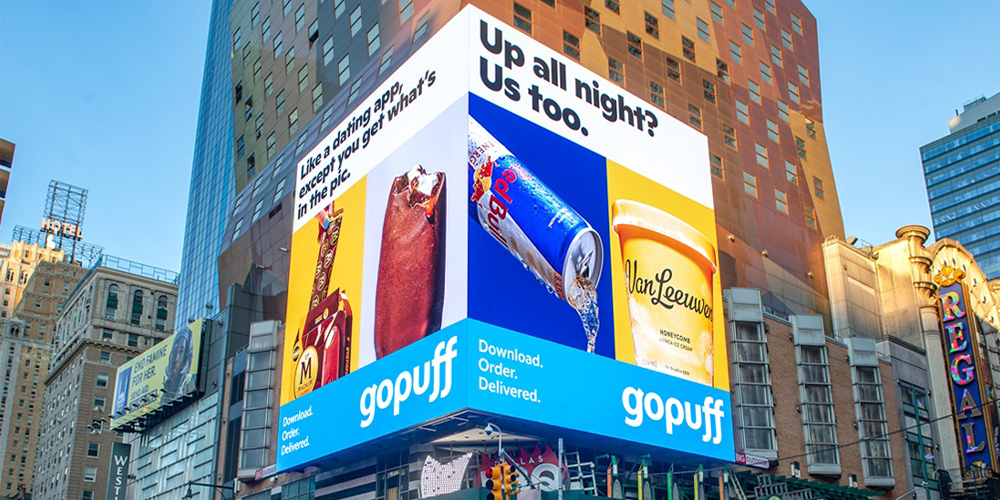
- Branding & Advertising:Entertainment districts like Times Square and the Las Vegas Strip are global showrooms for brands, using largest LED display to launch products and build identity.
4.2 Entertainment & Sports
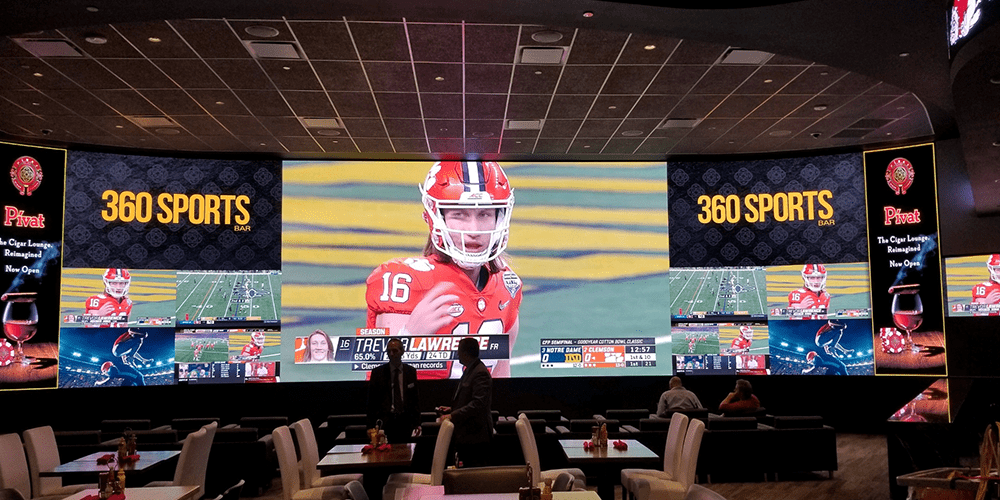
In stadiums and arenas these largest LED displays are essential for live streaming, instant replays and fan engagement, creating an electric atmosphere.
4.3 Tourism
A largest LED display often becomes a landmark in its own right. The Fremont Street canopy and the Beijing LED sky screen are examples of screens that have become part of a city’s tourism strategy.
5. Key Benefits of the Largest LED Display Technology
Why do companies and cities spend tens of millions on these projects? The benefits are as big as the screens.
- Unbeatable Visual Impact:Their size and brightness is an immersive, attention grabbing experience that can’t be ignored, 24/7 visibility.
- Infinite Scalability:LED technology is modular, there is no theoretical limit to how big a screen can be. If you can imagine it (and fund it), you can build it.
- Durability & Longevity:Built for constant use in harsh environments, these displays can withstand weather, crowds and time, often lasting over 10 years.
- Massive Marketing ROI:A largest LED display in a prime location attracts top advertisers, drives tourism revenue and boosts a city’s global brand, huge return on investment.
6. The Future of Largest LED Screens
The largest LED display is not done evolving. The next gen will be smarter, more immersive and more integrated into our environment.
- Trends:
- Ultra High Res:8K and 16K will be the norm, hyper realistic images on a massive scale.
- AR/VR:Screens will be interactive portals, blending digital content with the real world to create mixed reality experiences for the audience.
- AI Driven Content:AI will personalise content in real time, advertising and information will be tailored to the demographics of the crowd watching at that moment.
- Eco Friendly:As sustainability becomes more important, expect to see more energy efficient LED and sustainable materials used in construction and maintenance.
- Smart Cities:These screens will be the communication tool for smart cities, for emergency alerts, public transport updates and civic engagement initiatives.
7. Cost and Feasibility of the World’s Largest LED Displays
Building the largest LED display is a big job that comes with a big price tag.
- Investment Costs:Design, manufacturing, construction and installation costs can range from a few million for a stadium screen to over $100 million for a city wide facade or canopy. The MSG Sphere for example cost $2.3 billion in total.
- Operational Costs:Beyond the initial investment there are ongoing costs for power consumption, cooling systems, maintenance and content creation.
- Return on Investment (ROI):Despite the huge costs cities and companies continue to invest because the ROI is massive. The advertising revenue generated by a landmark digital signage installation can be huge and the boost to tourism and local economy can be billions over the life of the screen.
- Comparison:For giant projects LED is the only option. LCD screens can’t get bright enough for outdoor and are not practical to build at this scale.
8. FAQs
1.Where is the largest LED display in the world?
The MSG Sphere in Las Vegashas the largest and most advanced LED screen ever made. For sheer size in a canopy installation, the Suzhou Sky Screen in Chinais recognized by Guinness World Records.
2. What’s the difference between the biggest LCD screen and an LED screen?
LCD screens rely on a liquid crystal layer with a backlight, which restricts brightness and scalability. In contrast, an LED display is direct-view — each pixel functions as its own tiny LED light. This makes the largest LED displays brighter, more durable, and scalable to virtually any size.
3. How much does a large-format LED display cost?
Pricing depends on size, pixel pitch (resolution), and design complexity. A stadium-sized largest LED display might cost between \$5 million and \$20 million, while massive architectural projects like Resorts World Las Vegas or giant LED sky canopies can exceed \$50 million.
4. Can LED screens be built without size limits?
Yes. Since LED displays are made up of modular panels, they can be seamlessly connected in endless configurations. This allows for the creation of the largest LED displays imaginable, with limitations only coming from budget, engineering, and available space.
5. What is the LED Sky Screen and why is it so popular?
An LED Sky Screen is a massive overhead canopy display, often installed above pedestrian streets or shopping areas. Iconic examples in Beijing and Suzhou are among the largest LED displays in the world, turning public spaces into immersive digital experiences that combine art, entertainment, and advertising while attracting millions of visitors.
9.Conclusion
The world’s largest LED displays are no longer just showpieces — they’ve become strategic assets that shape cityscapes, energize stadiums, and deliver unparalleled brand visibility. From immersive sky canopies to high-resolution stadium walls, each largest LED displaydemonstrates the unmatched power of LED technology in creating experiences that reach millions.
As demand for large-format digital signage continues to grow, businesses, governments, and developers are increasingly seeking partners capable of delivering reliable, innovative, and future-proof solutions.
EagerLED specializes in designing and supplying LED displays of every scale — from architectural facades to record-breaking outdoor screens — ensuring that clients achieve the impact of the largest LED display with cutting-edge technology, modular design, and proven durability.
 Floor LED Screen: The Ultimate Guide (2025)
 Novastar MCTRL4K – The Ultimate LED Display Controller Guide