

NovaStar TU40 Pro Specifications: Everything You Need to Know
2026-02-26T03:52:39+00:00February 26, 2026|Tags: FAQs NovaStar|
Colorlight X8m Ultra-4K LED Video Processor Review: Performance, Features & Advantages
2026-02-02T03:18:55+00:00February 13, 2026|Tags: FAQs Colorlight|
HUIDU HD-VP620 LED Display All-In-One Video Processor
2026-02-02T03:02:40+00:00February 2, 2026|Tags: FAQs HuiDu|
- 1.What Are Transparent LED Screens?
- 2.Key Benefits of Transparent LED Screens
- 3.Applications of Transparent LED Screens
- 4.How Transparent LED Screens Work
- 5.Benefits of Using Transparent LED Screens for Product Launches
- 6.Transparent LED Screens for High-Traffic Areas
- 7.Waterproofing and Durability of Transparent LED Screens
- 8.Transparent LED Screens Pricing
- 9.How to Install Transparent LED Screens
- 10.Choosing the Right Transparent LED Screen for Your Business
- 11.Why Choose EagerLED for Your Transparent LED Screen Manufacturer?
- 12.Future of Transparent LED Screens
- 13.Conclusion
- Get Quote Free
In the age where being noticed is all that matters, there is always something that a business could do that will make it stand out. The conventional displays and stationary signages are simply inadequate. And step into the next big display technology; Transparent LED screens. Such game-altering exhibitions are transforming the way brands communicate with their clients by integrating digital media with the real world. Transforming a regular surface of glass into a dynamic visual experience, the technology offers a unique opportunity in advertisement, branding and architecture design.
This guideline will take you through what you should know. We are going to discuss their advantages, uses, prices and installation. When you want to make an impression that people will never forget, whether you are a retailer that wants to use a Transparent LED screen to make your shop an unforgettable spirit, an event manager that wants to impress the audience or an architect that wants to create a building of the future, you will find the information that you need to unleash your capabilities with a Transparent LED Screen..
Table of Content
- 1.What Are Transparent LED Screens?
- 2.Key Benefits of Transparent LED Screens
- 3.Applications of Transparent LED Screens
- 4.How Transparent LED Screens Work
- 5.Benefits of Using Transparent LED Screens for Product Launches
- 6.Transparent LED Screens for High-Traffic Areas
- 7.Waterproofing and Durability of Transparent LED Screens
- 8.Transparent LED Screens Pricing
- 9.How to Install Transparent LED Screens
- 10.Choosing the Right Transparent LED Screen for Your Business
- 11.Why Choose EagerLED for Your Transparent LED Screen Manufacturer?
- 12.Future of Transparent LED Screens
- 13.Conclusion
- Get Quote Free
1.What Are Transparent LED Screens?
A Transparent LED Screen is a type of high-tech screen that incorporates light-emitting diodes (LEDs) on a thin, transparent substrate, most often glass or a flexible film. Such a special construction enables the screen to produce high-resolution images, videos, and animations while maintaining the see-through effect. Compared with the traditional LED display, which is characterized by the use of an opaque background, the Transparent LED Screen is characterized by a high rate of transparency and, in most cases, is over 70 percent.

This implies that viewers can view the digital content on the screen while also seeing behind it. The technology is distributed as an inflexible panel or, more frequently nowadays, as the flexible LED Film Screen. The film is boastingly thin, as it may be only a few millimeters, and this film can be secured on the already available glass surface, thus being a flexible and retrofittable product. The outcome is a presentation, which looks like an extension of the setting to give it a touch of a futuristic style that not only catches the eye but is not enclosed or obstructive with regard to natural light. A Transparent LED Screen is an emerging visual communication medium for any business.
2.Key Benefits of Transparent LED Screens
Putting a Transparent LED Screen into your business strategy goes way beyond just looks. It has real benefits that can increase engagement, improve operations, and enhance your brand.
2.1 Unobstructed View and High Transparency
The biggest benefit is, of course, transparency. For retail stores, this is a game-changer. A Transparent LED Screen on a storefront window can run promotions while customers can still see the products and layout inside. This keeps the open feel and preserves the natural light, which is known to improve the customer experience and reduce energy costs for lighting. It combines the best of digital advertising with the fundamentals of visual merchandising.
2.2 Flexibility and Architectural Versatility
Modern transparent displays are not just flat panels. The LED Film Screen andLight Film Screen have brought incredible flexibility. These films can be applied to curved glass, wrapped around columns, or cut to fit unique architectural shapes. This flexibility frees designers and businesses from the constraints of traditional rectangular screens, allowing for truly creative and integrated installations that become part of the building’s design DNA. A Transparent LED Screen can be applied to almost any glass surface.
2.3 Superior Brightness and Image Quality
A common concern with transparent technology is whether the image quality can match standard displays, especially in bright conditions. High-end Transparent LED Screens address this with incredible brightness levels, often 5,000 nits or more. This means content is vivid, sharp, and visible even in direct sunlight, perfect for outward-facing window displays and outdoor architectural applications. The high contrast ratios also deliver deep blacks and vibrant colours, so your content always looks great.
2.4 Energy Efficiency and Sustainability
Compared to traditional digital billboards and many LCD video walls, a Transparent LED Screen is super energy efficient. Because the LEDs only consume power when showing content (pixels showing black are simply off and transparent), the overall power consumption is much lower. This not only saves operational costs over the life of the display but also aligns with corporate sustainability goals, a greener alternative for digital signage.
2.5 Enhanced Customer Engagement and “Wow” Factor
In a world of digital advertising, a Transparent LED Screen is a new experience that stops people in their tracks. The floating image effect is inherently fascinating and makes people look. This wow factor can be used to create interactive experiences, tell brand stories, and drive more foot traffic and brand recall. It turns a passive viewing experience into an active moment of engagement.
3.Applications of Transparent LED Screens
Transparent LED Screen has many uses, each using its core benefits in different ways.
3.1 Retail Displays and Window Advertising
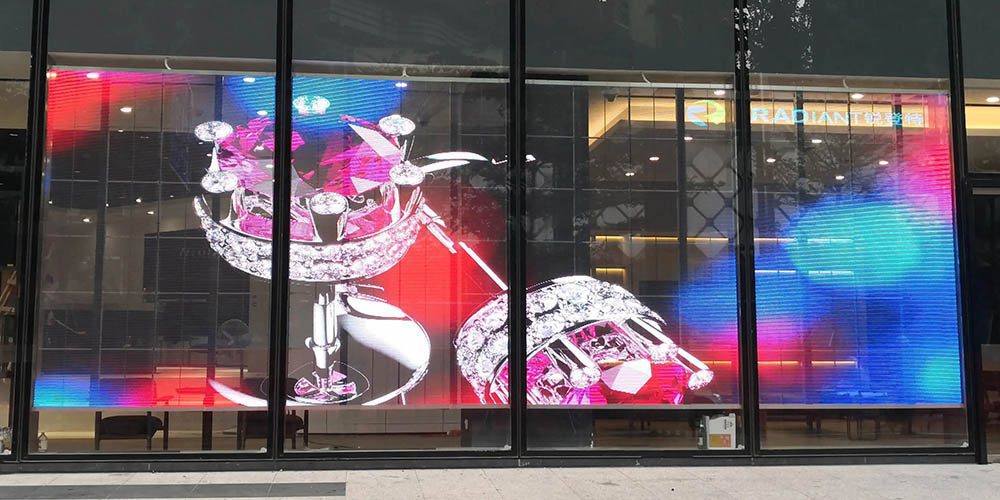
The most common use is for retail displays and advertising. Retailers can turn their whole storefront into a digital wall. An LED Window Display can show new arrivals, announce sales, or display brand content without blocking the view into the store. Imagine a fashion retailer showing a video of a model walking the runway on their front window, with the actual dress on a mannequin just behind the screen. This digital and physical layering is a marketing magic due to which a huge market shift is seen in the Transparent LED Display used in retail.
3.2 Corporate Environments and Office Spaces
In the corporate world, a Transparent LED Screen can look modern and cool. They can be used for the display of company events, news, or show brand achievements and installed on glass walls in offices or lobbies to welcome guests. In conference rooms, they can be used as futuristic presentation screens that don’t take up space when not in use. This is a company being forward-thinking and techy.
3.3 Events, Exhibitions, and Trade Shows
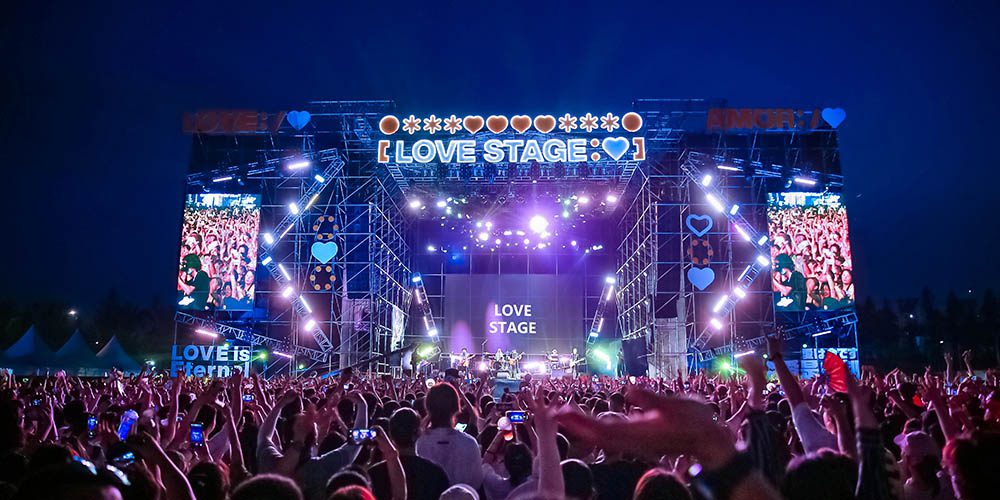
At trade shows and events, being seen is key. A Transparent LED Screen can be used to create stunning backdrops, product showcases, and information displays that draw visitors to a booth. They are lightweight and modular, so easy to set up and transport. They can be used to create immersive experiences or display information in an open and non-obtrusive way, which is crucial in crowded event halls.
3.4 Architectural Integration and Public Venues
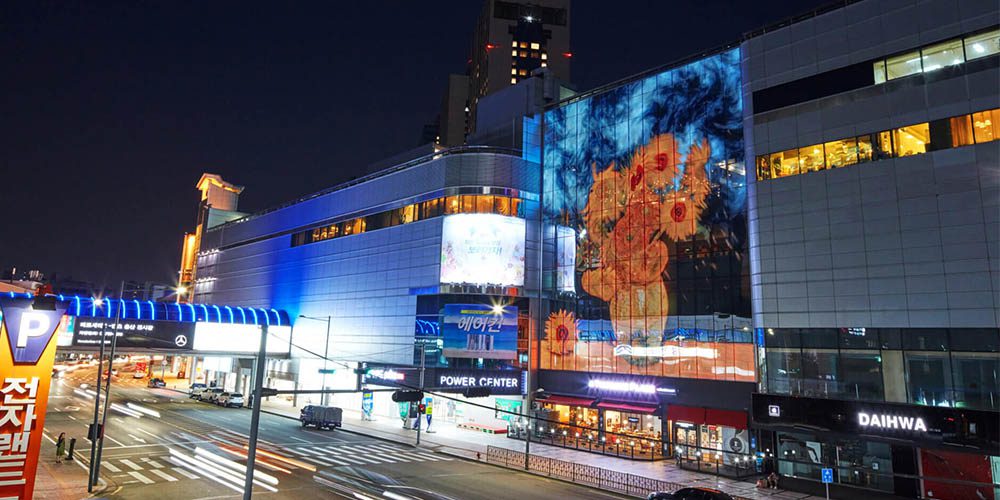
Architects and designers are increasingly incorporating Transparent LED Screens into the facades of buildings, turning entire buildings into media displays. This is popular for landmark buildings, shopping malls, airports, and museums. The screen can display art, public information, or large-scale advertising without compromising the building’s architecture or the views from inside. It allows the building to communicate and interact with the urban environment.
4.How Transparent LED Screens Work
The magic of a Transparent LED Screen is in the engineering. Unlike traditional screens that mount LEDs on an opaque circuit board, transparent displays do it differently. The core components are the tiny LEDs, which are mounted onto super-thin, transparent conductive lines etched onto a glass or film substrate.
These conductive lines are almost invisible from a distance, so it looks like the LEDs are floating in mid-air. The space between these lines is what makes it transparent. The density of the LEDs (known as pixel pitch) determines the resolution and transparency of the screen – lower pixel pitch means higher resolution but slightly less transparent, and vice versa.
The rise of the LED Film Screen has made this technology even more accessible. These self-adhesive films have all the circuitry and can be applied to an existing glass surface and powered from a discreet edge frame. This plug-and-play approach has made installation much simpler and cheaper for many applications. The technology behind a Transparent LED Screen is amazing.
5.Benefits of Using Transparent LED Screens for Product Launches
How do transparent LED display screens help with product launches?
This is the question many marketing managers are asking, and the answer is to create an unforgettable story. A product launch is all about building hype and showcasing innovation. A Transparent LED Screen is the tool for this.
Imagine launching a new luxury car. Instead of just having the car on a stage, you could have it behind a large Transparent LED Screen. The screen could display dynamic content—the car speeding down a winding road, technical specs appearing and disappearing, or artistic particles swirling around it.
This creates a multi-layered experience where the audience sees both the amazing digital visuals and the physical product at the same time. It adds drama and sophistication that a simple screen or static display can’t match. This is why you should use a Transparent LED Screen for high-stakes events.
6.Transparent LED Screens for High-Traffic Areas
It’s a combination of durability, performance, and design. In busy areas like shopping malls, airports, or transit hubs, a display needs to be bright enough to overcome ambient light, tough enough to withstand the environment, and designed in a way that doesn’t block movement or sightlines.
A Transparent LED Screen ticks all these boxes. It’s bright enough to be seen, tough enough to withstand the environment, and most importantly, it’s see-through so it can be installed in central locations – like across a large atrium or along a glass walkway – without making the space feel smaller or blocking navigation paths. It delivers impact without being a physical obstruction.
7.Waterproofing and Durability of Transparent LED Screens
Among the most frequently asked questions, one may mention: Are the transparent LED displays waterproof? The response is: this is product and application dependent. The majority of the indoor models are not completely waterproof, but can endure the test of time, are dust and humidity-proof.
However, a lot of manufacturers provide models with particular IP (Ingress Protection) ratings to be used semi-outdoors or outdoors. An example of such is an IP 65-rated Transparent LED Screen, which is dust-proof and low-pressure water jet resistant at all angles.
This qualifies it to be used in other applications, such as shop windows or facades, which can be rained upon. Electronics are sealed and protected in special coatings and encasings against moisture and corrosion to ensure that the screen has a long and stable life under adverse weather conditions. When selecting a Transparent LED screen, make sure the IP rating is matched to the environment it is used in.
8.Transparent LED Screens Pricing
The cost of a Transparent LED Screen is not one number but a range of numbers. Knowing these numbers is key to budgeting and getting the right one for you.
| Factor | Impact on Cost | Key Considerations for Businesses |
| Pixel Pitch | High | A smaller pixel pitch (e.g., P2.9mm) means higher resolution and a higher cost. A larger pitch (e.g., P10mm) is more affordable. |
| Brightness (Nits) | Medium-High | Screens for outdoor or sun-facing windows need >5,000 nits and cost more than standard indoor screens (~1,000-1,500 nits). |
| Size & Customization | High | Cost is often calculated per square meter. Custom shapes or large, seamless installations increase the price due to engineering and materials. |
| Transparency Rate | Medium | Higher transparency (90%+) can sometimes be more expensive due to the advanced manufacturing required. |
| IP Rating (Durability) | Medium | Outdoor-rated screens (IP65) with weather and dust protection are more expensive than indoor-rated (IP30) models. |
| Brand & Quality | Medium | Established brands may have a higher initial cost but often provide better reliability, warranties, and support, reducing long-term TCO. |
9.How to Install Transparent LED Screens
The installation process for a Transparent LED Screen depends on the product—a flexible film or a rigid cabinet system.
For a self-adhesive LED Film Screen, it’s pretty straightforward:
- Surface Preparation:The glass surface must be spotless and dry for proper adhesion.
- Application:The film is unrolled and applied to the glass, squeezed just like a window tint.
- Wiring:A thin power and data cable is run from the edge of the film to the power supply and media player, which can be hidden in the ceiling or a nearby enclosure.
For larger cabinet-based systems, it’s more involved:
- Frame Mounting:A frame is first mounted to the building structure.
- Cabinet Installation:The individual Transparent LED Display cabinets are then installed one by one onto the frame.
- Cabling:Data and power cables are connected between the cabinets and back to the central controller.
- Calibration:Once installed, the entire screen is calibrated for color and brightness uniformity across all cabinets.
While smaller film installations can be a DIY project, for any large or complex Transparent LED Screen installation, we highly recommend professional installation for safety, performance, and longevity.
10.Choosing the Right Transparent LED Screen for Your Business
Choosing the right Transparent LED Screen is all about your specific needs. Here are the key things to consider:
- Viewing Distance: This will determine your pixel pitch. For close-up viewing (e.g., a retail window), you’ll need a smaller pixel pitch (P2.8 or P3.9) for a sharp image. For distant viewing (e.g., a building facade), a larger pixel pitch (P10 or higher) will do and be more cost-effective.
- Location and Ambient Light: An indoor screen in a dimly lit mall has different brightness requirements than an LED Window Display facing the afternoon sun. Make sure to choose a screen with enough nits for your environment.
- Content Strategy:What will you be displaying? High-resolution video requires a finer pixel pitch than text or abstract patterns.
- Physical Environment:Is the surface flat or curved? Is it weather-exposed? This will determine if you need a flexible film or a rigid cabinet and what IP rating you need.
By considering these factors, you can choose a Transparent LED Screen that fits your budget and meets your strategic goals.
11.Why Choose EagerLED for Your Transparent LED Screen Manufacturer?
Since 2009, EagerLED has been a global leader in LED display solutions with over 16 years of experience, serving more than 120 countries. We are here for your success through technology and partnership.
Advantage:
- Unbeatable Quality:Our products go through 72 hours aging test and hold major international certifications (CE, RoHS, FCC, UL) for top performance and safety.
- One Stop Partner:We provide one stop solution from design and consultation to installation and free, responsive after-sales technical support.
- Full Customization:We offer OEM & ODM services to create a transparent LED screen that fits your project perfectly.
- Top Grade Components:We use only the best components from industry leading partners like Nationstar, Epistar, Novastar, Meanwell to ensure reliability and longevity.
Choosing EagerLED means choosing a partner that cares about quality, innovation and your long term success.
12.Future of Transparent LED Screens
The Transparent LED Screen technology is moving fast. We’ll see some big trends in the next few years. Transparency will get closer to 100% so the screens will be almost invisible when off. Resolutions will go up to 4K and even 8K.
More flexible and stretchable Light Film Screen materials will open up new surfaces to apply to. We’ll see more integration with other tech like touch interactivity, augmented reality overlays, and IoT connectivity, and turn these screens into smart surfaces. The future of the Transparent LED Screen is looking good.
13.Conclusion
In today’s market, just showing a message isn’t enough. Businesses need to create experiences. The Transparent LED Screen is the game changing technology that lets them do just that. By combining digital dynamism with physical transparency, these displays are the perfect platform to capture audiences, enhance environments and build stronger brand connections.
From boosting retail sales with an interactive LED Window Display to making an architectural statement with a full media facade, the applications are endless. While the initial investment requires consideration, the long term benefits – better engagement, energy efficiency and a better ROI – make a Transparent LED Screen a smart choice for any forward thinking business.
Ready to transform your business space with the latest display technology? Enter the see through future. Get in touch with EagerLED today and find out how a Transparent LED Screen can take your brand to new heights.
 LED Display Sizes: The Ultimate Guide to Choosing the Right Size ( 2025 )
 Rental LED Wall Guide: What to Know Before You Book in 2025