
2026-10-25T15:12:48+00:00October 25, 2026|
2026-10-25T14:51:00+00:00October 25, 2026|
2026-10-25T14:41:18+00:00October 25, 2026|
LED screen quote area should state exactly which dimensions and quantities a supplier uses to calculate the screen charge. For a flat rectangular wall assembled from fully active cabinets, multiply the confirmed cabinet count by each cabinet’s active area. Keep that result separate from the architectural opening, decorative frame, and spare components.
This explanation is for a project contractor checking a proposal before approving the budget. A price per square meter becomes comparable only after its area basis and included equipment are clear. A small change in cabinet rows can change the quantity being purchased, even when two drawings use the same rounded screen-size description.
Define the LED screen quote area before comparing rates
The active display area is the surface that can show the image. The installation envelope describes the space occupied by the complete assembly, including whatever frame, trim, and clearances the project requires. An architectural opening is a space available for the installation. These dimensions may be related, but they are not interchangeable.
Ask the supplier to show active width and height on the same drawing as cabinet columns and rows. For a regular rectangular matrix, multiplying the dimensions and multiplying the individual cabinet areas should produce the same answer. If the drawing includes inactive edges, special corner sections, or mixed cabinet types, request the actual active dimensions rather than assuming the outer rectangle is fully illuminated.
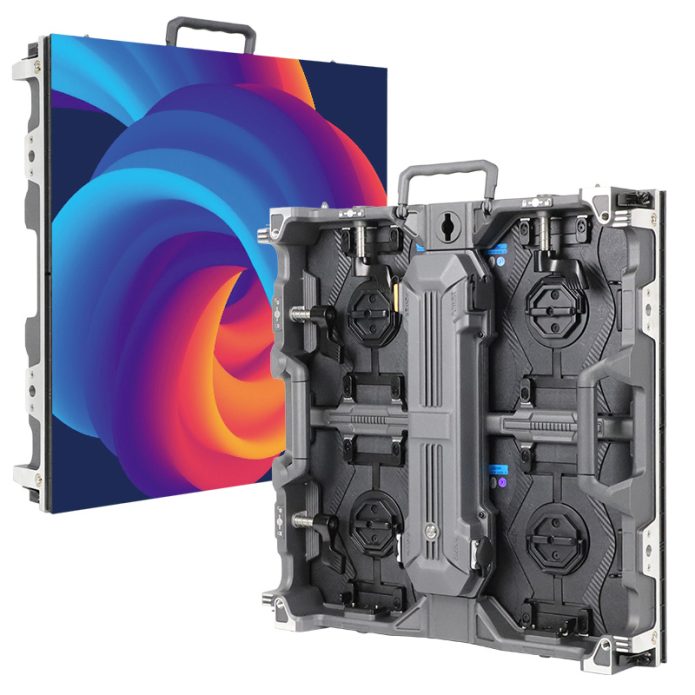
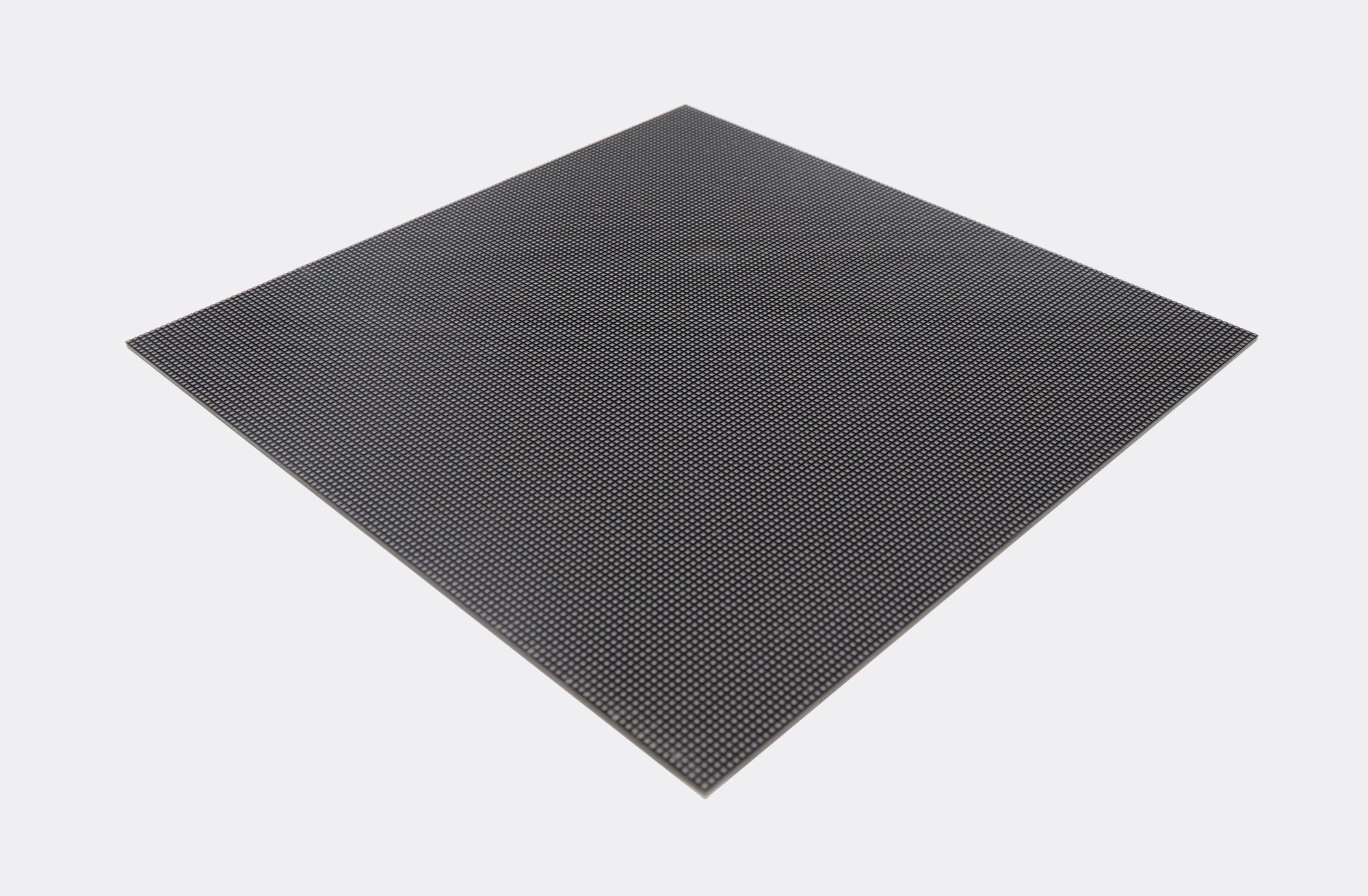
EagerLED’s EA500H9 rental board page provides a concrete cabinet-size reference. A 500 × 500 mm format is approximately 19.7 × 19.7 inches. Its nominal rectangular footprint is 0.25 m², but the quotation should still identify the specific configuration rather than relying on a family name alone.
LED screen quote area is a commercial measurement, so the supplier must confirm the basis it is charging against. An active-area calculation helps audit the quantity; it does not establish a universal invoicing rule. A proposal priced by cabinet, complete system, or rental package needs its own stated quantity and scope.
Why a whole row changes the purchased quantity
Consider a hypothetical flat wall using fully active 0.5 × 0.5 m cabinets. Ten columns and six rows create a 5 × 3 m screen, approximately 16.4 × 9.8 ft. There are 60 installed cabinets, covering 15 m². This is an arithmetic example, not a current quotation or a promised configuration for every venue.
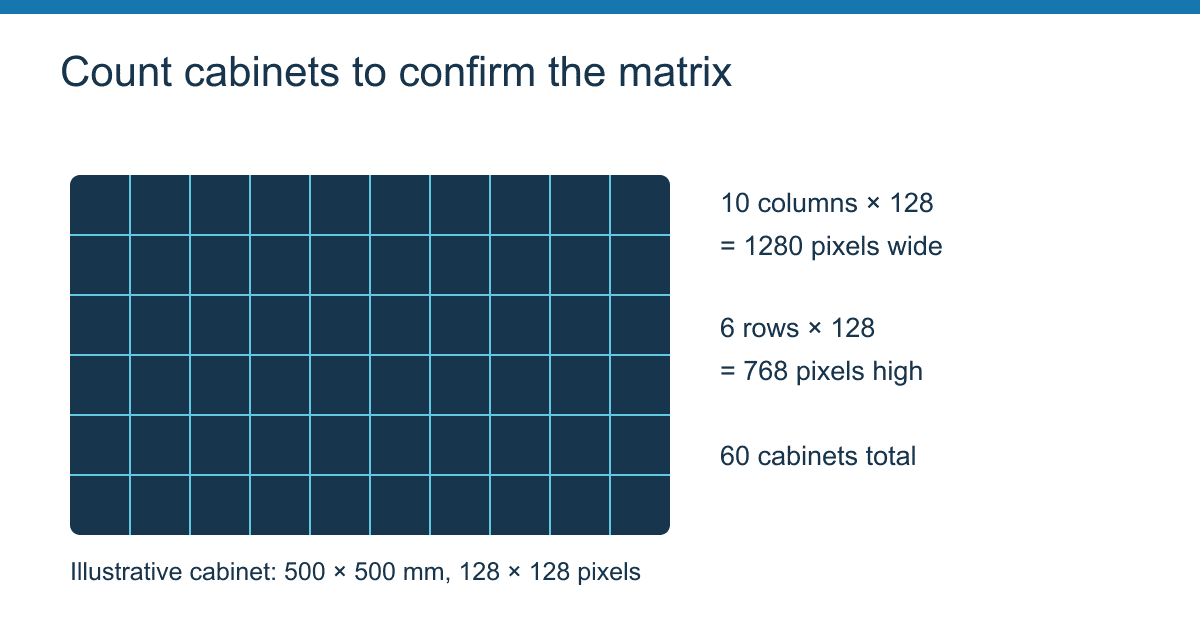
Suppose the client instead requests a screen approximately 5 × 2.8 m, or 16.4 × 9.2 ft. That requested rectangle is 14 m². With the assumed cabinet family, five rows produce a 2.5 m height and six rows produce a 3 m height. Neither equals 2.8 m. The buyer must approve a buildable alternative or investigate a different cabinet format.
| Option | Physical image size | Cabinets | Active area | Decision needed |
|---|---|---|---|---|
| Requested rectangle | 5 × 2.8 m | Not an integer grid in this example | 14 m² | Do not treat the request as a confirmed build. |
| Ten columns, five rows | 5 × 2.5 m | 50 | 12.5 m² | Confirm whether the reduced height is acceptable. |
| Ten columns, six rows | 5 × 3 m | 60 | 15 m² | Confirm available height and approve the larger area. |
In the larger option, LED screen quote area is 15 m² under the stated active-area basis, not the original 14 m² request. The area increases by about 7.14%. That percentage describes the hypothetical area change only; it does not predict the percentage change in the complete project price.
Controllers, installation work, packing, and other items may not vary in direct proportion to area. Ask for a revised total with the final quantities instead of multiplying the first total by the area percentage. For pixel-count consequences of the same cabinet arrangement, use the separate LED display resolution calculation explanation.
Keep the unit conversion visible
One square meter equals approximately 10.764 square feet. A 15 m² wall therefore has an area of approximately 161.46 ft². Convert area units directly; multiplying a square-meter value by the linear meters-to-feet factor gives the wrong result.
For the same included screen equipment, a rate per square meter divided by 10.764 gives the equivalent rate per square foot. No currency conversion is involved in that operation. If two proposals use different currencies, record the separate exchange-rate assumption and date rather than hiding it inside the area conversion.
Preserve exact dimensions in the underlying calculation and round only the displayed result. A rounded description such as “roughly sixteen feet wide” is useful in conversation, but it should not replace the approved metric cabinet drawing. LED screen quote area should be traceable back to quantities that can be counted at delivery.
Audit the scope beside the area
A lower area rate does not establish a lower price for the same deliverable. Compare the active surface, cabinet configuration, and included equipment on matching terms. Confirm whether any spare cabinets or modules are separate line items; spares do not enlarge the installed image simply because they are supplied with it.
Use this short reconciliation checklist before approving LED screen quote area:
- Drawing: approved active dimensions, cabinet layout, and overall installation envelope.
- Quantity: installed cabinets, separately supplied spares, and any special sections.
- Rate: measurement unit, currency, configuration, and the equipment included in that rate.
- Other costs: processing, structure, accessories, packing, freight, and installation identified as included, excluded, or separately priced.
- Revision: one matching proposal and drawing revision so a changed matrix is reflected in the total.
For a curved wall, ask whether the dimensional basis is the developed display surface or a projected front-view measurement. For separate screen sections, request each section’s dimensions and subtotal. Applying a bounding rectangle over gaps can overstate the actual image surface, so the drawing must explain how the quoted quantity was derived.
Record the approved LED screen quote area in the order confirmation and compare it with the delivery list. If the proposal contains sixty installed cabinets plus two spares, the receiving team should expect sixty units assigned to the image and two separately identified spare units. The example does not prescribe a spare ratio; it shows why the roles must be labeled. A total carton count cannot replace this distinction.
Also separate a minimum size requirement from a maximum space limit. Rounding up to the next cabinet row can satisfy a minimum image-height request while exceeding an available opening. Ask the installation designer to confirm clearances and support requirements for the selected alternative before the purchase quantity becomes final.
Frequently asked questions
Does changing pixel pitch change the area of the same wall?
Not if the confirmed active width and height remain identical. Pitch changes the pixel arrangement and may change the product configuration and price. Compare those specifications separately rather than using the same area as proof that the hardware is equivalent.
Should black bars in the displayed content reduce the purchased area?
No. An unused part of a functioning LED surface remains installed hardware. Content formatting does not remove cabinets. If the intent is to buy a smaller physical screen, request a revised cabinet layout and quotation.
Can I verify the quantity from a diagonal screen size?
A diagonal alone is insufficient. You also need the image proportions to derive width and height, and then a cabinet-confirmed layout. Request the actual active dimensions rather than treating a rounded diagonal as the commercial measurement.
Request a proposal with a clear area basis
Provide the installation country, available width and height, indoor or outdoor environment, viewing distance, and any strict size limits. State whether the requested dimensions describe an opening, an active image, or the complete installation envelope. Attach the drawing revision your team intends to approve.
Ask EagerLED to review the proposed screen dimensions and request the cabinet layout, LED screen quote area, included equipment, and separate project costs in the same proposal. That gives your team a quantity it can verify before comparing the final totals.