
November 23, 2026|
November 20, 2026|
November 19, 2026|
A giant LED screen quote is useful only when it identifies the complete display system and the work needed to put it into service. Compare active dimensions, native pixel resolution, cabinets, control equipment, structure, electrical work, installation, delivery, and support on the same basis. A low price per square meter may exclude much of the finished project.
This guide is for a buyer planning a permanent large-format display for a venue, stadium, auditorium, or commercial building. It is a quote comparison method, not a catalog of screen types or a published price list. Temporary event rental has a different scope because transport, crew, repeated assembly, and event operation may be bundled into the hire fee.
Before asking for prices, define where the audience stands, what content must be readable, whether the wall is exposed to weather, and how the installation will be serviced. Give every bidder the same brief. That makes differences in specification visible rather than hiding them behind different assumptions.
1. Specify the giant LED screen you are pricing
“Giant” describes scale, but it does not define a product class or an installed price. Begin with active width and height in meters and feet, the nearest normal viewing position, and a drawing of the mounting location. Note whether the site is indoors, outdoors, or sheltered but still exposed to moisture and temperature changes. An indoor cabinet should not be assumed suitable for an exposed facade.
Tell the supplier whether the screen will show large video, live camera feeds, scores, fine text, or detailed graphics. A giant LED screen for a distant stadium audience may be specified differently from a display in a close-viewed lobby. Request a test using real content at the nearest important viewer position; pixel pitch alone cannot prove that the smallest text will be readable.
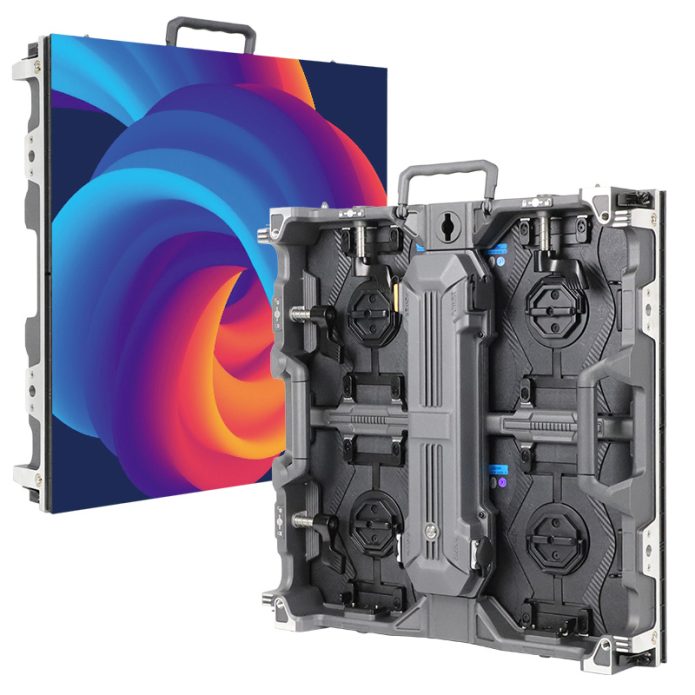
The brief should also define operating hours, expected ambient light, camera use, and access for repairs. Ask for the proposed cabinet model and documented brightness, pixel pitch, service method, and environmental protection for that exact configuration. If two bids use different cabinet families, compare the functional requirements before comparing their totals.
Define the commercial boundary in the request for quotation as well. State whether you want supply-only equipment, equipment delivered to the venue, or a fully installed and commissioned system. If local contractors will handle steelwork and electrical work, name the handoff documents they need from the display supplier. Keep an assumptions register with each bid: an assumption about an existing wall, spare circuits, or unrestricted access can change the final cost more than a small difference in cabinet rate.
2. Check area, cabinet count, and native pixels
A giant LED screen can be priced by square meter, but area does not tell you its resolution. Request the active dimensions, cabinet size, cabinet count, pixel pitch, and final pixel map on one drawing. The LED screen quote area guide explains why active screen area must be reconciled with the number of cabinets being supplied.
Consider a purely illustrative 8 m × 4.5 m (26.2 × 14.8 ft) screen: its active area is 36 m² (about 388 sq ft). At a hypothetical 4 mm pitch, simple division gives 2,000 × 1,125 native pixels. At a hypothetical 2 mm pitch, the same dimensions give 4,000 × 2,250 pixels. These are arithmetic examples, not specifications for a particular cabinet. Actual cabinet dimensions and product options must be checked before either layout is quoted.
This matters when a proposal says “4K ready.” A controller may accept a 4K input while the installed giant LED screen has fewer native pixels and scales the image. Ask for the screen’s actual pixel map, controller loading plan, and demonstration with the intended source. More pixels can add hardware and processing cost, so choose the pitch that serves the content and viewer rather than buying the smallest available pitch by default.
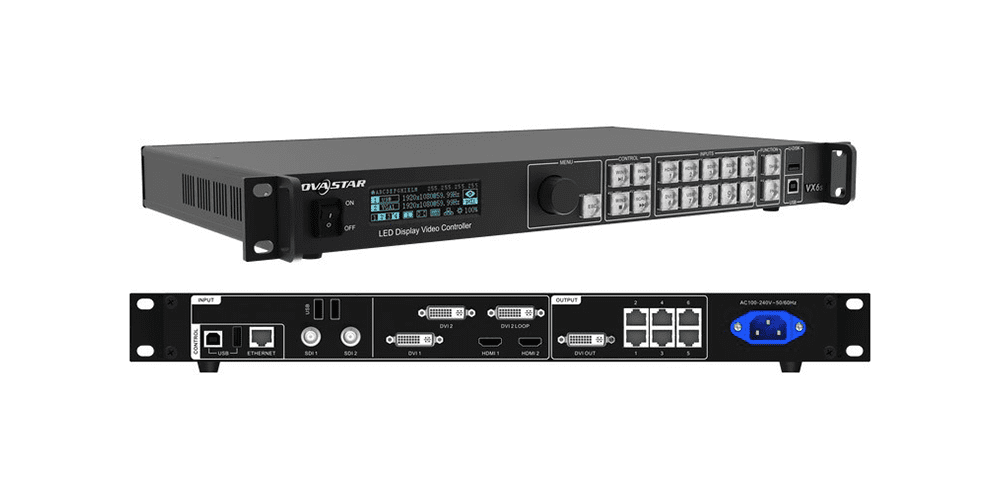
Ask how the proposed pixel map is divided among controllers, output ports, and data runs. The quotation should identify the control equipment required for the final cabinet layout, including any additional sender, processor, fiber conversion, or backup path. The installation team should receive a signal diagram showing cable lengths and where power and data are distributed. A bid that lists a controller model without a load calculation leaves a material compatibility question open; the buyer should request the calculation before accepting a cheaper equipment total.
3. Compare every giant LED screen quote line
For a permanent giant LED screen, request an itemized proposal rather than one combined “screen price.” The table below turns a supplier quotation into a comparison sheet. Record whether each line is included, excluded, or supplied by another contractor; a blank field is not the same as a zero cost.
| Line item | Evidence to request | Common boundary to clarify |
|---|---|---|
| LED cabinets and modules | Model, pitch, active dimensions, quantity, spare units | Cabinet-only versus complete display hardware |
| Processing and signal | Input list, native pixel map, controller capacity, signal paths | Source equipment, software licenses, backups |
| Mount and structure | Drawings, load data, engineer’s scope, attachment method | Building reinforcement and approvals |
| Electrical and environment | Maximum demand, distribution, cabling, ventilation plan | Local electrician and cooling work |
| Installation and access | Labor, lift or scaffold, commissioning, site restrictions | After-hours work and operator hire |
| Freight and delivery | Named delivery place, packing, unloading, taxes and duties | Who pays at the destination |
| Service and handover | Warranty, spares, training, as-built files, response process | Labor, travel and shipping during claims |
Use the same currency, quotation date, delivery place, and scope when comparing bids. If a supplier offers a per-square-meter hardware rate, calculate the hardware subtotal from the stated active area, then add processing, structure, site work, logistics, and service. Without those additions, the rate is not an installed giant LED screen price.
A practical comparison uses three columns for each bidder: included in the signed scope, priced by another named party, and unpriced or excluded. Put a locally obtained allowance beside the third category before calculating a planning total. Do not replace an unknown crane, permit, tax, or electrician charge with a generic percentage. For example, if Bid A includes commissioning and Bid B excludes it, request a separate commissioning price for Bid B and compare the same acceptance tasks. Keep the original bid prices visible so the adjustment can be audited rather than silently changing a vendor’s offer.
Ask each bidder to mark responsibility for every interface: who connects the venue’s power, who supplies the signal source, who provides the mount, and who tests the final image. The installation cost guide gives a deeper breakdown of site work, while the delivery terms guide explains why a named handover point matters to the landed cost.
4. Price the building and installation separately
On a giant LED screen, support structure and access can be substantial project items. Provide a measured site plan, wall or steelwork details, cable routes, loading point, and working hours to the local design and installation team. A qualified structural and electrical professional should confirm the attachment, loads, distribution, protection, and any permits for the actual location. The display supplier’s cabinet quote cannot replace that project-specific design.
For outdoor work, the final enclosure and mounting need to suit the exposure, and wind load must be assessed for the site. For indoor work, check maintenance clearance, ventilation, and whether a lift can reach the screen. Request a drawing that shows front or rear service access, not just the visible image size. A cheaper cabinet can become costly to maintain if the installed wall blocks the required removal path.
Electrical planning needs two different numbers. Use the manufacturer’s maximum demand for circuit and distribution design, subject to the electrical engineer’s review. Estimate running expense from expected average consumption at representative content and brightness, operating hours, and the local tariff. The LED screen electricity cost guide shows this separation. Do not substitute maximum power for a measured or documented average when estimating annual energy expense.
Project cost also continues after commissioning. Create a separate operating worksheet for energy, routine inspection, cleaning where appropriate, replacement spares, software support, and access equipment for repairs. Ask who holds spare modules and how a replacement will be matched to the installed batch and calibration data. A warranty that covers a part may still leave the owner paying for travel, removal, a lift, or return shipping. Keeping these lines outside the initial hardware subtotal prevents the procurement team from treating an attractive purchase price as a complete ownership budget.
5. Agree on acceptance and service before signing
A quote should state what makes the giant LED screen ready for handover. Ask for an as-built cabinet map, controller configuration backup, signal test, brightness and color checks under agreed conditions, and a demonstration of representative content. If cameras will record the display, test the intended camera and screen together; a refresh-rate claim alone cannot establish the final footage quality.
Request the warranty term for the actual supplied components, the spare-part identity and quantity, and the process for a failed module or power supply. Separate replacement parts from on-site labor, lift hire, travel, and freight. The warranty checklist helps turn broad promises into written coverage terms.
Finally, agree who owns commissioning records, operator training, and support contacts. A giant LED screen is a system that must keep running after the installation crew leaves. A proposal with a clear handover and a service route can be easier to evaluate than one that describes only panel specifications.
Write a short acceptance schedule into the purchase documents before installation begins. It can identify the test content, viewing positions, lighting conditions, signal sources, operating mode, and the person who records the result. It should also say how cabinet alignment, dead or abnormal pixels, brightness uniformity, and visible color differences will be assessed under agreed conditions. The exact thresholds belong in the contract for the selected product; a generic claim of “perfect image” cannot serve as a measurable pass criterion. Keep signed test records and the final configuration backup with the venue’s maintenance documents.
Frequently Asked Questions
1. Is the lowest price per square meter the cheapest giant LED screen?
Not necessarily. A per-square-meter figure may cover only cabinets. Compare the full installed scope, including control equipment, structure, electrical work, access equipment, delivery, commissioning, and support. Confirm that the bids use the same active dimensions and technical requirements.
2. Should the buyer specify a pixel pitch before requesting quotes?
Give suppliers the nearest viewing distance, smallest important text, content type, and site conditions first. They can then propose a pitch and demonstrate the result. If your design team has already specified a pitch, ask bidders to quote that baseline and identify any alternative separately.
3. How should taxes and import charges appear in the comparison?
Record the quotation currency, named delivery place, applicable trade term, and which party handles import clearance, duties, taxes, and unloading. Ask a local logistics or tax adviser to confirm the project-specific charges. A “delivered” label without a named place and responsibility list is too vague for a fair comparison.
4. What if the screen dimensions change after the first quote?
Ask for a revised cabinet layout, active area, native pixel map, controller capacity check, structure review, and itemized price. A small dimensional change can alter cabinet count or require a different signal configuration, so a simple area multiplier may not produce a valid revised total.
Request a comparable project proposal
Prepare one brief with the display width and height, site location, indoor or outdoor conditions, nearest viewer, content examples, operating schedule, access drawings, and preferred delivery place. Ask each supplier to complete the same line-item comparison and identify exclusions. That gives you a defensible basis for comparing a giant LED screen project, even when the cabinet prices differ.
To discuss a configuration for your site, contact EagerLED with your project brief. Include the proposed dimensions, installation photos, and any structural or electrical constraints so the quotation can address the complete scope.